
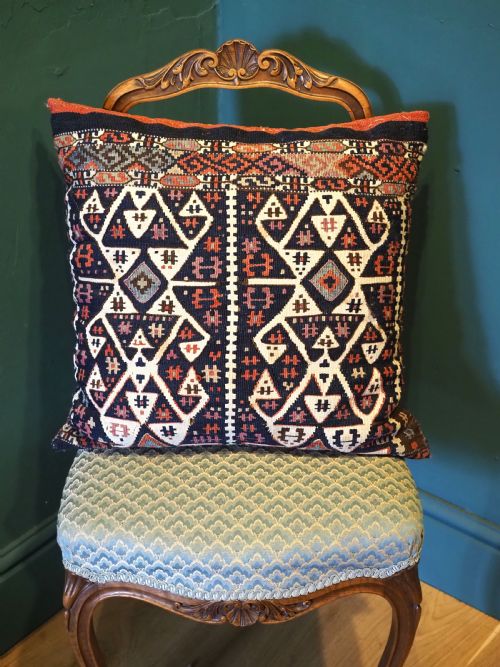


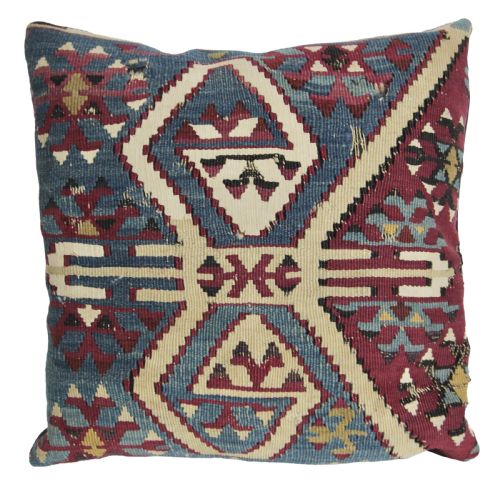

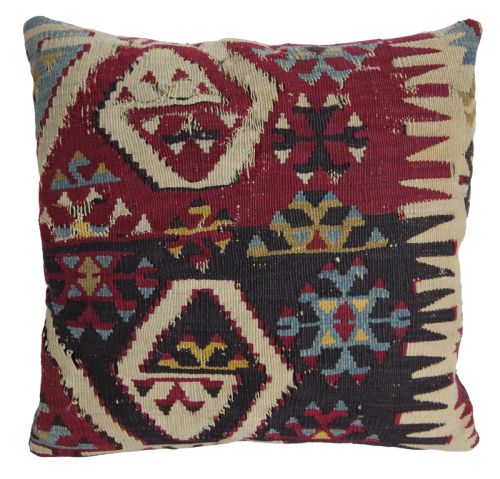


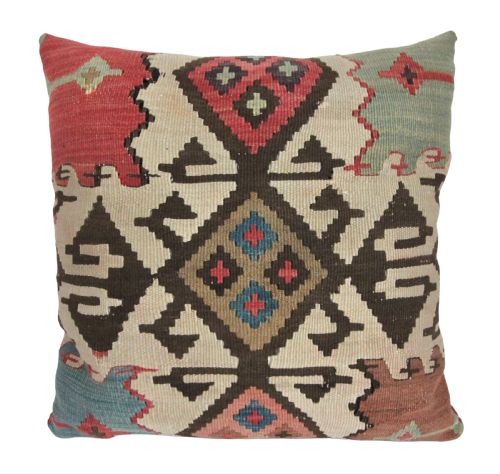
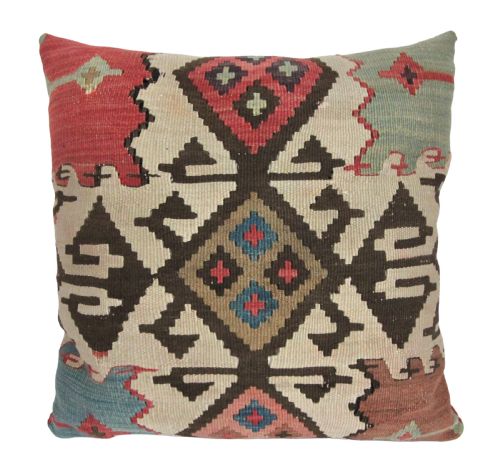


Antique Turkish Pillow
These antique turkish pillow pieces bring honest tribal texture and rich wool warmth into a room.
Antique Turkish Pillow
An antique turkish pillow forms part of a practical tradition of domestic textiles created across Anatolia. Buyers searching for an antique turkish pillow most frequently encounter kilim cushions fashioned from mid nineteenth century to early twentieth century flatwoven fragments.
The objects take the form of square throw cushions and decorative soft furnishings repurposed from older nomadic textiles. Pieces range from simple traditional kilim cushions to those utilising bag faces and saddle bag fragments dated between eighteen fifty and nineteen twenty.
How they were made
The textiles rely on hand woven wool and cotton construction methods rooted in nomadic craft. Weavers built these flatwoven structures on traditional vertical or horizontal looms using dyed wool yarns for the patterned face.
Makers integrated durable cotton for structural support and backing integrity. The resulting flatweave surface provides both flexibility and resilience without the pile found in knotted carpets.
Current listings feature pieces spanning four distinct decades from eighteen fifty to nineteen twenty, utilising wool and cotton across traditional Anatolian styles.
What varies in quality
The character of the weave and the depth of the wool dictate the standing of each piece. Finer examples display tightly packed warp and weft threads that preserve crisp geometric motifs from the original tribal design.
Age and provenance further differentiate the examples, with mid nineteenth century pieces carrying distinct signs of early hand production. The integrity of the original bag face or saddle bag fragment determines the visual weight of the finished cushion.
The Antique Turkish Pillow Glossary
- Kilim
- A flatwoven textile produced without a pile by tightly interlacing warp and weft strands. This technique creates a lightweight fabric with identical patterns visible on both sides.
- Anatolian
- Pertaining to the geographic region of Asia Minor encompassing modern Turkey. The term groups together the rich textile traditions of various regional tribes.
- Tribal
- Describing designs and methods originating from nomadic or village groups rather than urban workshops. These pieces showcase vernacular patterns handed down through generations.
- Bag face
- The decorative front panel of a utilitarian storage sack created by nomadic weavers. These panels are frequently salvaged to make durable decorative cushions.
Antique Turkish Pillow: Frequently Asked Questions
What is an antique turkish pillow?
An antique turkish pillow is a decorative cushion made by repurposing hand woven flat textile fragments from Anatolia. These pieces transform traditional nomadic weaving into functional home accessories.
Most examples utilise wool and cotton kilim remnants or bag faces dating from the mid nineteenth century to the early twentieth century.
How do I care for wool kilim cushions?
Wool and cotton flatweaves require gentle treatment to preserve the historical fibres and natural dyes. Light vacuuming with a low suction attachment helps remove dust without catching the weave.
Professional specialist cleaning is recommended for any deeper maintenance to protect the integrity of the antique fabric.
How can I tell the age of these pieces?
Dating relies on examining the characteristics of the wool, the natural dyes, and the specific weaving structures. Pieces from eighteen fifty display distinct structural markers compared to later nineteen twenty examples.
The style of the Anatolian tribal motifs also points toward the operational period of the original textile.