
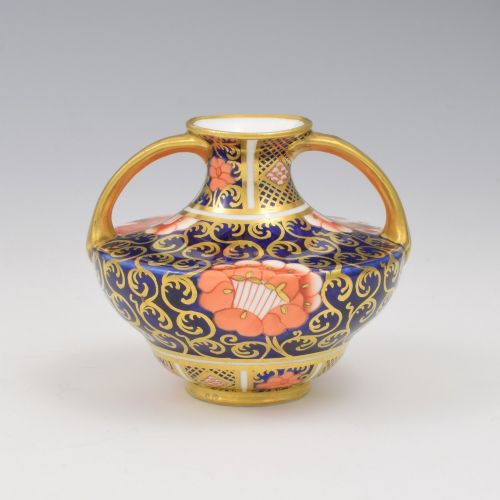

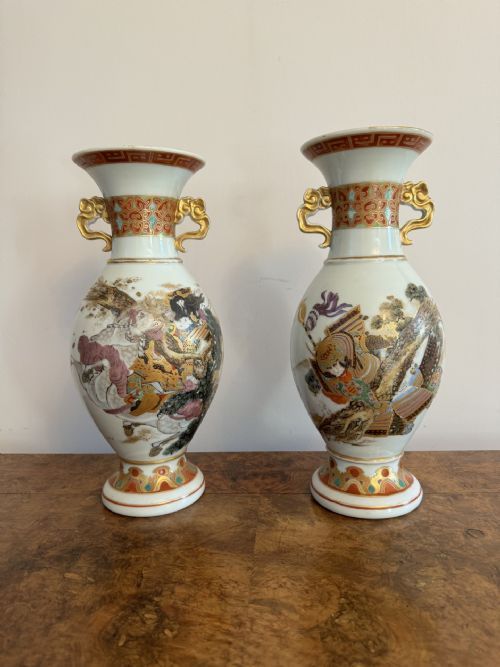
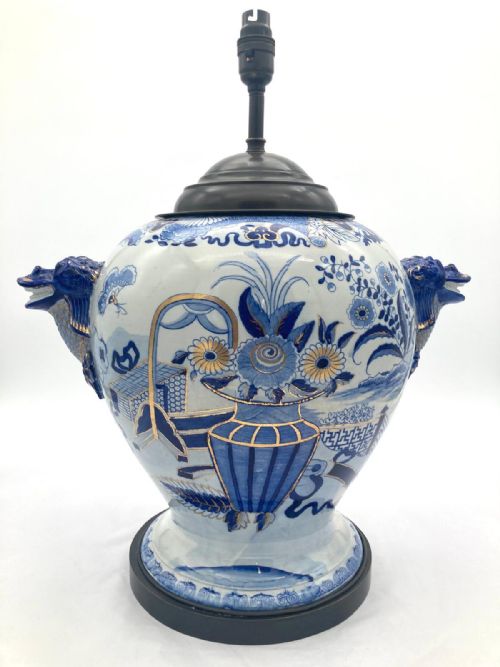
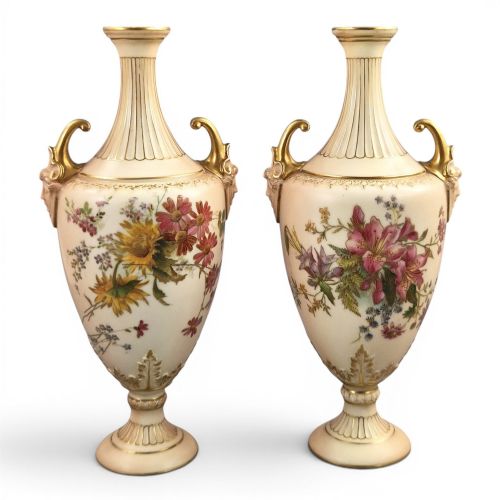


Handled Porcelain Urn
When you handle a handled porcelain urn, you touch centuries of painted decoration and ceramic form designed for display.
Handled Porcelain Urn
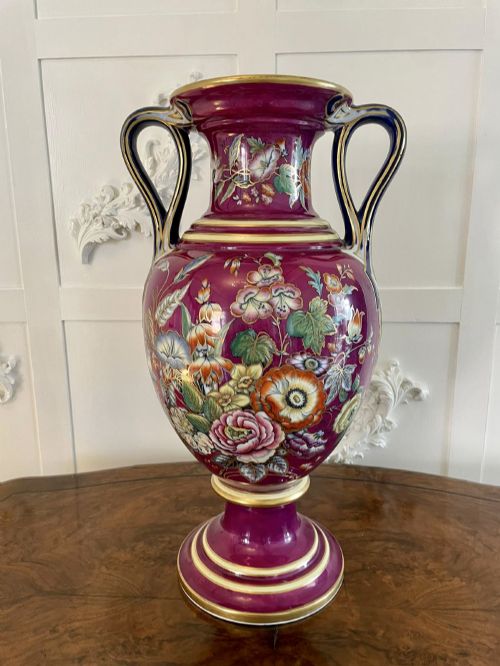
A handled porcelain urn is a vessel shaped for display, often featuring twin handles and raised on a pedestal or base. When you search for a handled porcelain urn, you encounter works spanning the nineteenth century through the Edwardian period, alongside Japanese and Chinese export pieces.
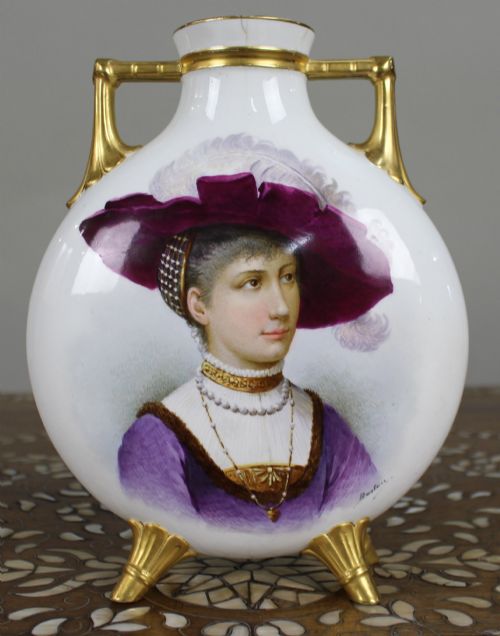
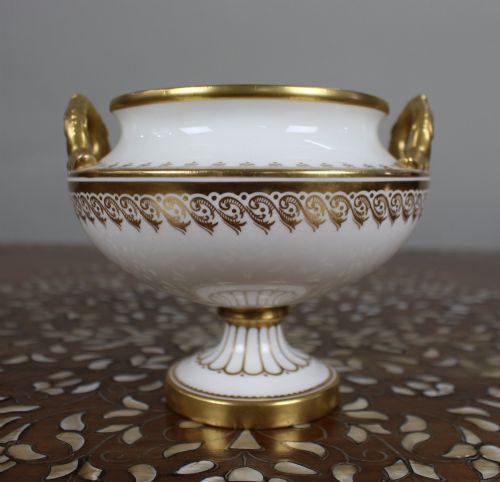
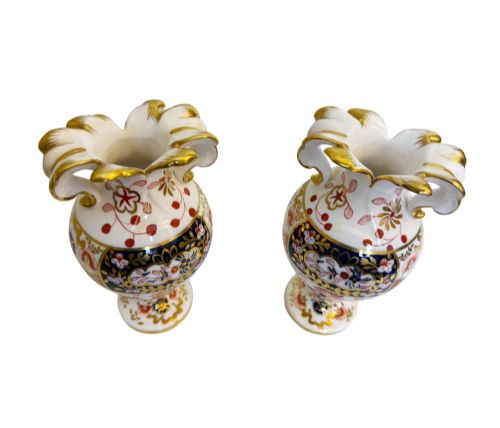
The forms on this page range from covered lidded vases and moon flasks to ewers and loving cups. English factories like Spode and Royal Worcester dominate alongside continental makers and Asian ceramic traditions.
How they were made
Potters shaped porcelain, ironstone, and earthenware bodies before applying intricate glazes, enamel colours, and raised gold leaf gilding. Hand-painted decoration by named artists distinguishes the finer pieces.
Handles were often moulded separately as dolphins, bamboo, or pierced scrollwork and attached prior to firing. Gilding and enamel details required secondary low-temperature firings to fix the metallic and coloured pigments.
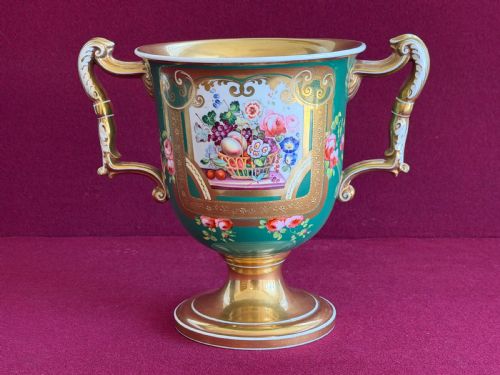
Forms include ewers, moon flasks, loving cups, and lidded vases fitted with twin handles.
What varies in quality
Quality rests in the crispness of the porcelain body and the precision of the hand-painted brushwork. Pieces decorated by documented studio artists carry greater distinction than factory stock.
The weight and detail of the gilding, the symmetry of the twin handles, and the preservation of the enamel surface set the finest examples apart from standard production.
Spode·Royal Worcester·H & R Daniel·Makuzu Kozan·Kinkozan·Chamberlain Worcester·Flight Barr And Barr
The Handled Porcelain Urn Glossary
- Porcelain
- A hard, white, translucent ceramic fired at high temperatures. It forms the primary white body for European and Asian urns.
- Gilding
- The application of gold leaf or gold paint to ceramic surfaces. It highlights handles, rims, and borders.
- Enamel
- Opaque glass-like pigments fused to the ceramic body during firing. It provides vibrant surface colours.
- Moriage
- A Japanese ceramic technique using layers of slip to create raised, textured decoration. It frequently appears on Satsuma wares.
- Moon Flask
- A flattened circular flask form supported on a base. It references ancient pilgrim flask shapes.
Handled Porcelain Urn: Frequently Asked Questions
How were porcelain urns used?
These vessels served primarily as decorative garniture on mantelpieces, sideboards, and pedestals. They demonstrated the wealth and taste of the owner through artistic painting and costly gilding.
Some forms functioned as lidded containers or were later adapted into table lamps. Their substantial presence made them focal points in Victorian and Edwardian interiors.
How do I identify the maker?
Look for factory marks, pattern numbers, or hand-written inscriptions painted or impressed on the base. British factories often used printed crown or shield stamps that changed across decades.
Signatures from individual artists like Walter Powell or John Plant also appear near the base of painted scenes. Comparing pattern numbers helps date the piece accurately.
How do I care for antique porcelain?
Keep urns out of direct sunlight to prevent the fading of enamel colours and gilding. Dust them gently with a dry, soft brush rather than chemical cleaners.
Avoid submerging pieces with old gilding or delicate raised enamel in water. Secure the base if the vessel is heavy or top-heavy.
What is blush ivory?
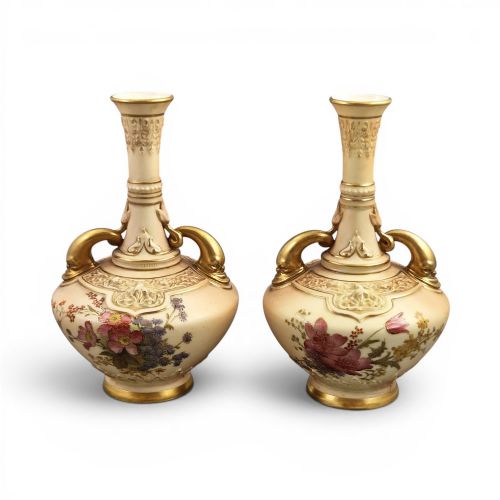
Blush ivory is a soft, matte cream-coloured ceramic body developed by Royal Worcester in the late nineteenth century. It provided a neutral background for naturalistic floral painting.
This finish is characteristic of the aesthetic movement and Edwardian decorative arts. It highlights the subtle contours of handles and moulded bodies.