
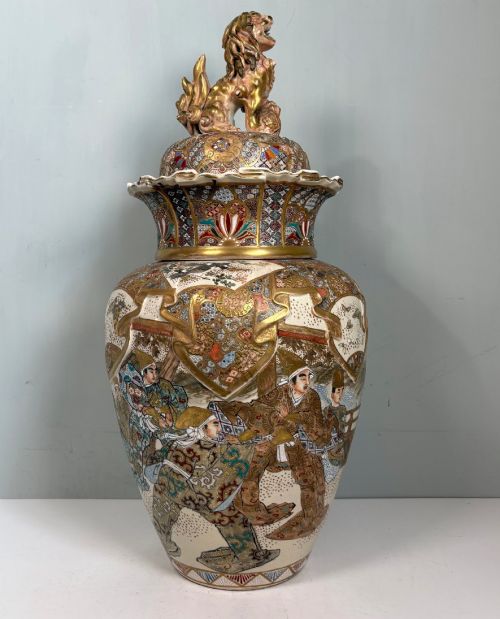


19th Century Satsuma Vase
A 19th century satsuma vase brings intricate Meiji artistry into a room, offering collectors rich figurative scenes and classic earthenware forms.
19th Century Satsuma Vase
A 19th century satsuma vase is a piece of Japanese ceramic work created during the Meiji period, often taking forms such as large lidded vessels, bottle vases, or garlic head shapes. These objects reflect the craftsmanship of Kyoto makers and other regional kilns during the late 19th century.
Buyers encounter items ranging from miniature vessels with detailed figural processions to substantial pairs with elephant handles or samurai scenes. Some pieces arrive adapted as table lamps alongside traditional lidded urns.
Materials and construction
Makers shaped these vessels primarily from earthenware and porcelain, applying fine glazes as a base for subsequent decoration. Gold leaf and enamel work then built up the intricate patterns.
Artisans applied delicate gilt bronze highlights and incorporated wooden stands or silk fittings where appropriate. The detailed figural scenes required steady brushwork over prepared ceramic surfaces.
Object forms include standard vases, lidded urns, bottle shapes, and pieces adapted as table lamps.
Factors determining quality
Quality rests in the precision of the figural processions and samurai scenes painted across the surface. Finer examples display meticulous control over gold leaf and enamel details.
The sophistication of the vessel form, such as polygon shapes or garlic head profiles, also separates standard items from exceptional pieces. Signed works by noted makers demonstrate superior technical skill.
Hayakawa·Dozan·Taizan
The 19th Century Satsuma Vase Glossary
- Meiji Period
- The era in Japanese history spanning from 1868 to 1912, associated with the opening of trade and distinct ceramic styles. Many pieces on this page originate from this time.
- Earthenware
- Porous pottery fired at lower temperatures, commonly used for traditional satsuma bodies before glazing and decoration. It provides a distinct matte or textured base.
- Garlic Head Vase
- A vessel featuring a constricted neck that swells into a bulbous upper section resembling a garlic bulb. This traditional form appears frequently in nineteenth century Japanese ceramics.
- Shimazu Crest
- The heraldic symbol of the Shimazu clan, often found on satsuma ware to indicate patronage or origin from the Satsuma domain. It adds historical context for collectors.
19th Century Satsuma Vase: Frequently Asked Questions
How do I identify a Meiji period piece?
Look for specific stylistic indicators such as dense figural processions, samurai motifs, and the use of gold leaf over earthenware. Dates around the late nineteenth century typically align with the Meiji era.
Examine the baseline materials and decorative execution to confirm the period characteristics. Signatures or crests can also point toward specific regional production dates.
Were these vases used for display or function?
Most of these vessels were created as decorative display items for export and high-status interiors rather than for holding water. Their elaborate enamel and gold decoration required careful handling.
Some larger lidded pieces served as focal points in Victorian and Meiji period rooms. Later adaptations sometimes converted them into table lamps for domestic utility.
What is the difference between earthenware and porcelain items?
Earthenware bodies are more porous and formed the traditional base for classic satsuma crackle-glaze decoration. Porcelain versions offer a harder, non-porous white ceramic support.
Both materials received similar detailed enamel and gilt painting during the nineteenth century. Collectors often distinguish between the two by examining the weight and body translucency.
How should I care for a painted ceramic vase?
Keep the vessel away from direct sunlight to protect the delicate enamel colours and gold leaf highlights. Dust the surface gently with a soft, dry cloth without using liquid cleaners.
Avoid placing the item near heat sources that might affect the ceramic body or historic glazes. Handle the piece by the body rather than delicate handles or applied elements.