


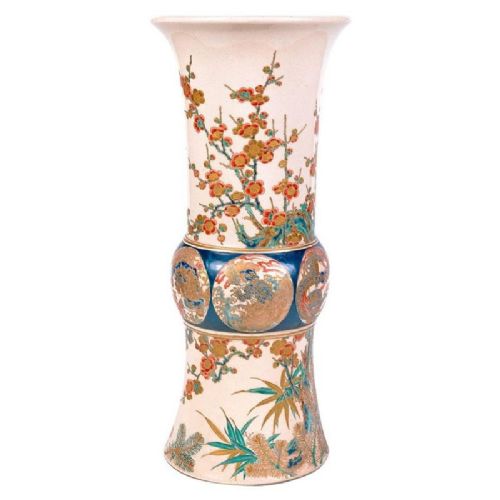
Cream Satsuma Earthenware Jar
These cream satsuma earthenware jar examples are distinguished Japanese ceramics from the Meiji period, prized for their intricate enamel and gilt detailing.
Cream Satsuma Earthenware Jar
A cream satsuma earthenware jar is typically a Meiji period ceramic piece originating from Japan, often created as a tea caddy, lidded jar, vase, or koro incense burner. These vessels showcase traditional forms from the late nineteenth century, including pieces dated around eighteen eighty, eighteen ninety, and nineteen hundred.
The objects available on this page encompass various utilitarian and decorative ceramic types such as tea caddies, sugar bowls, miniature vases, and large lidded vessels. Each cream satsuma earthenware jar reflects the distinctive aesthetic of Japanese studios based in locations like Kyoto and Tokyo during the Victorian era.
Makers and studios represented across these listings include named artists such as Kizan, Shuzan, Yamashu, Tokyo Taizan, Shizan, and Shozan. Collectors encounter both small miniature vessels and substantial lidded vases measuring up to eighty four centimetres in high proportions.
Materials and construction
Each cream satsuma earthenware jar is constructed from porous earthenware pottery as the foundational ceramic body. This absorbent base is typically coated with a characteristic cream-coloured crackle glaze before surface decoration takes place.
Artisans applied polychrome enamel paints and delicate gold leaf or gilding to ornament the ceramic surface. Many pieces incorporate detailed figurative scenes featuring figures like Rakan, alongside elaborate landscape motifs characteristic of Japanese Meiji period craftsmanship.
Materials recorded across these ceramic listings include earthenware, enamel, gold leaf, wood, gilt, polychrome enamel, and gilding.
Assessing quality in Satsuma ceramics
The refinement of the painted decoration distinguishes different grades of a cream satsuma earthenware jar, particularly the precision of the polychrome enamel and gold leaf application. Finer pieces display meticulously rendered figures such as Rakan and detailed landscape scenes painted by known studio masters.
The presence of artist signatures from respected Kyoto or Tokyo studios, including makers like Kizan, Yamashu, and Shozan, elevates the standing of a cream satsuma earthenware jar. Overall scale and proportion also vary, ranging from delicate miniature vases to large lidded vessels.
Kizan·Shuzan·Yamashu·Tokyo Taizan·Shizan·Shozan
The Cream Satsuma Earthenware Jar Glossary
- Satsuma
- A type of Japanese earthenware originating from Satsuma Province, traditionally characterised by an ivory or cream-coloured crackle glaze.
- Meiji Period
- The era in Japanese history spanning from eighteen sixty-eight to nineteen twelve, during which these decorative ceramics were produced.
- Koro
- A traditional Japanese incense burner, often featuring a pierced lid and three or more feet.
- Natsume
- A small Japanese tea caddy typically used in the Japanese tea ceremony, named for its resemblance to a jujube fruit.
- Rakan
- Arhats or enlightened followers of Buddha, frequently depicted in traditional Japanese art and ceramic decoration.
- Polychrome
- Decoration executed in multiple distinct colours, commonly utilised alongside gilding on Meiji period ceramics.
Cream Satsuma Earthenware Jar: Frequently Asked Questions
What is a cream satsuma earthenware jar?
These pieces are traditional Japanese ceramic vessels made during the Meiji period, featuring an ivory or cream-coloured crackle glaze decorated with enamel and gold.
They take various forms including lidded jars, tea caddies, sugar bowls, and vases created in studios across Kyoto and Tokyo.
How do I identify a Meiji period piece?
Meiji period ceramics typically date between eighteen sixty-eight and nineteen twelve, aligning with the late nineteenth century and the Victorian era.
Many pieces bear artist signatures or studio marks from makers active during this specific timeframe in Japanese history.
Were these jars used for tea?
Certain forms like tea caddies and sugar bowls served functional roles in storing tea leaves or dry goods during traditional Japanese gatherings.
Other larger lidded vessels and vases functioned primarily as decorative display items within domestic interiors.
What materials make up the glaze?
The base material consists of an absorbent earthenware body covered in a characteristic cream-coloured glaze featuring fine crackle lines.
Surface enrichment is achieved through the application of polychrome enamel pigments and intricate gold leaf or gilding details.