





Gilded Japanese Pottery Vase
A gilded japanese pottery vase brings intricate Meiji and Showa period craftsmanship into a room through rich ceramic forms and elaborate metallic decoration.
Gilded Japanese Pottery Vase
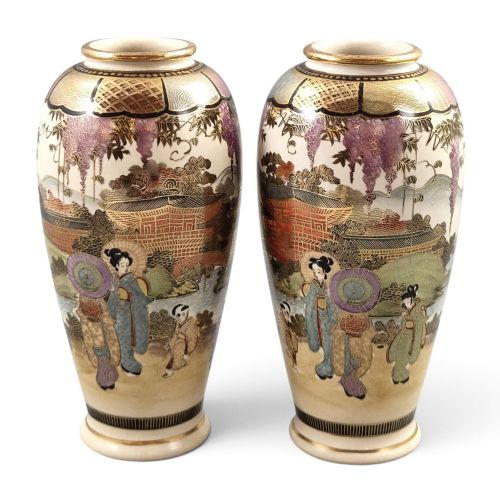
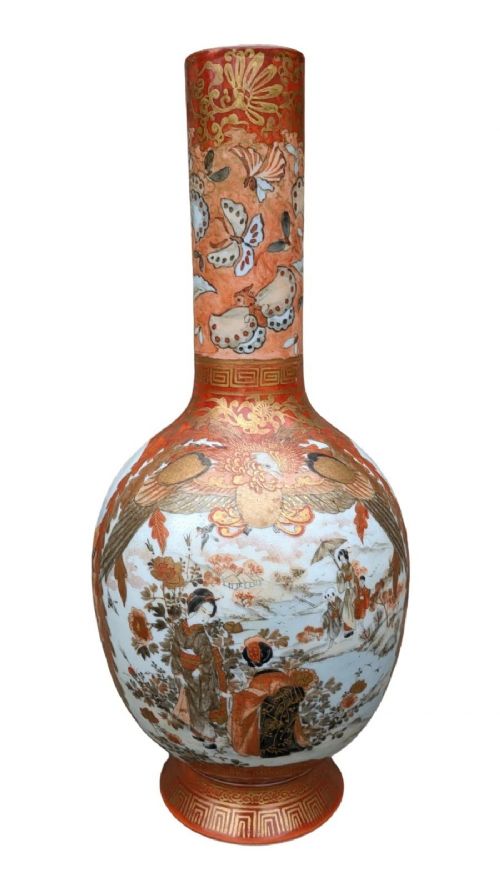
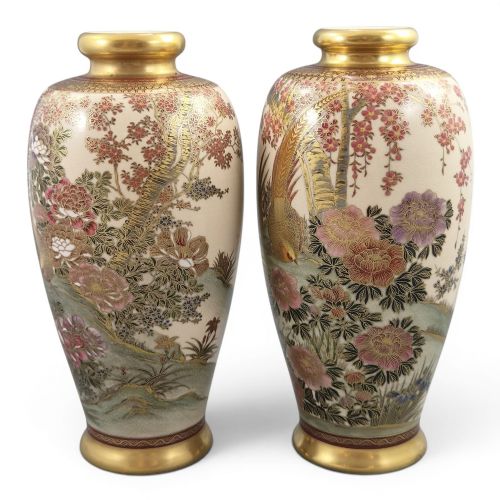
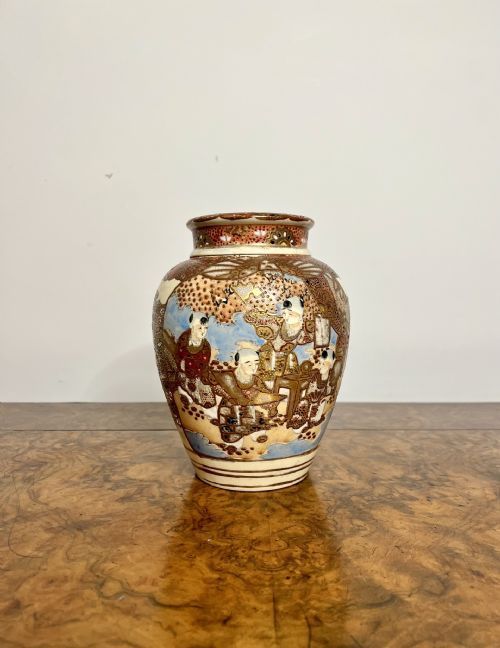
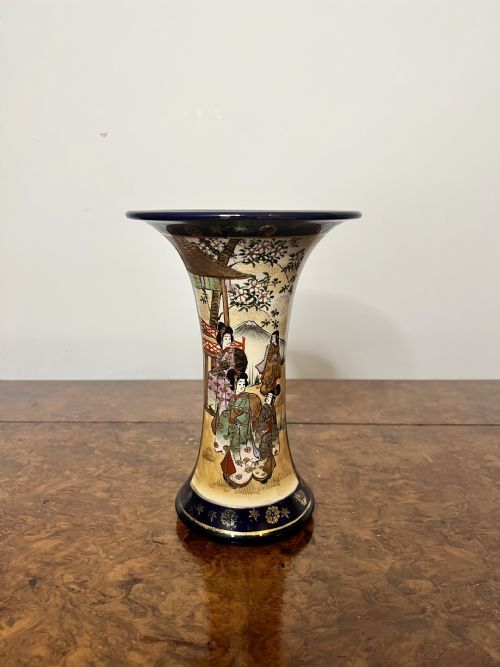
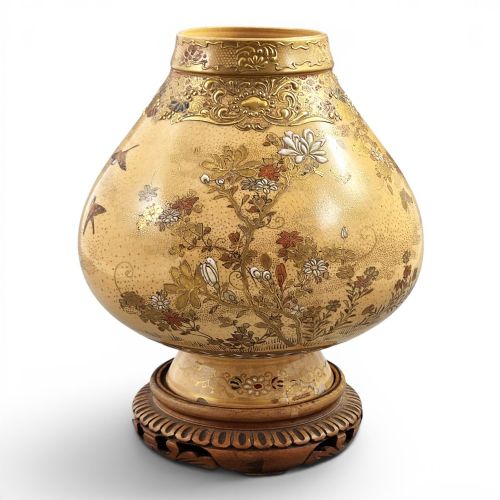
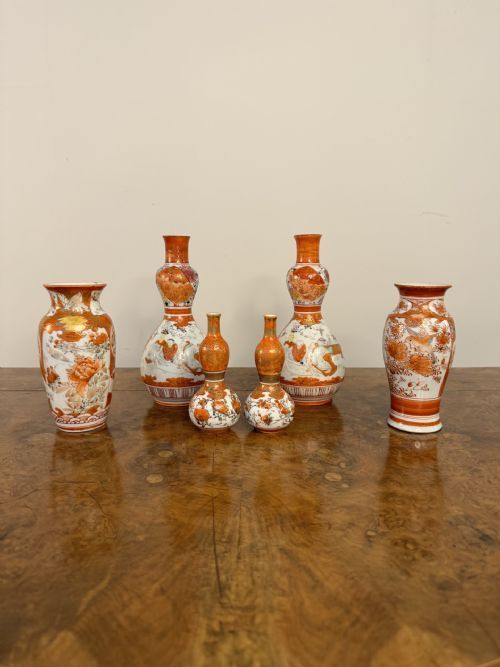
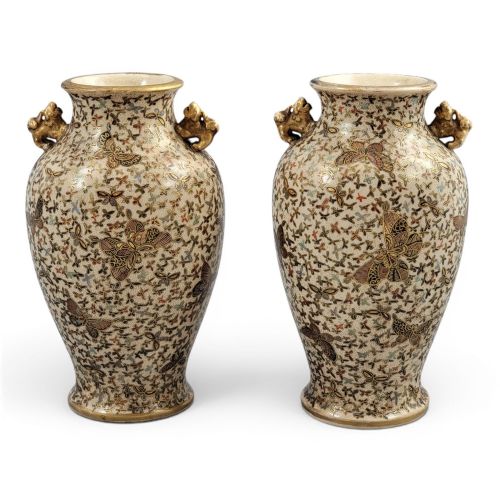
When you search for a gilded japanese pottery vase, you encounter ceramic vessels created across the nineteenth and twentieth centuries, predominantly featuring Satsuma earthenware and Kutani porcelain. The selection on this page consists heavily of Satsuma ware pieces from the Meiji and Edwardian eras, alongside Kutani and Imari examples.
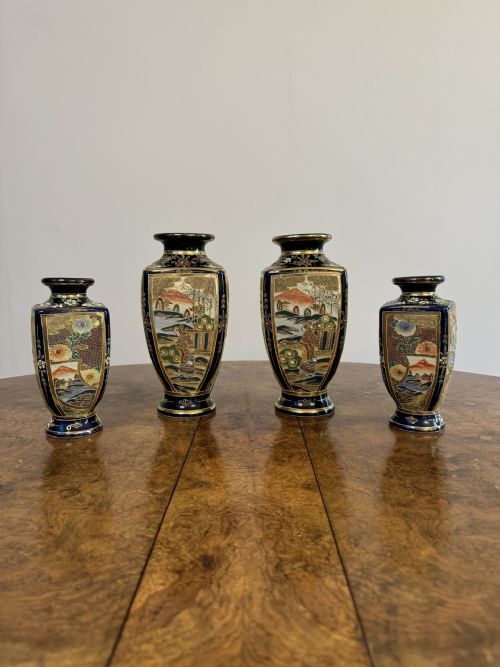
Forms range from small ginger jars and slender neck vessels to monumental garnitures, hexagonal shapes, and table lamps. These objects originate from major production centres such as Kyoto and Kobe, often displaying detailed court figures, landscapes, or religious motifs.
How they were made
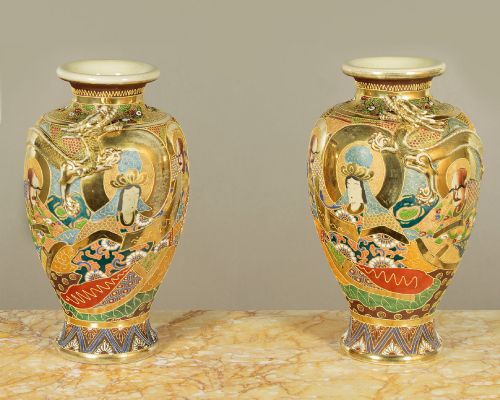
Potters shaped earthenware and porcelain bodies before applying intricate glazes, enamel colours, and extensive gold leaf or gilt details. Artisans utilised techniques like moriage to build up raised decorative surfaces that stand out against cobalt grounds or crackle glazes.
Workshops employed specialised painters to execute minute figural scenes, dragons, arhats, and botanical patterns by hand. Many pieces carry signatures or workshop marks from notable makers inscribed on the base.
Objects catalogued under this heading include ginger jars, shaped vases, garnitures, and converted table lamps.
What varies in quality
The standard of painting on these ceramics separates standard output from exhibition pieces, with superior examples exhibiting immense precision in facial expressions and botanical detail. The density and application of the gilding also define the grade of an object, ranging from simple gold accents to heavy, intricate gold leaf work.
Artistic attribution plays a major role, as signed pieces from recognised workshops command greater attention than unsigned commercial wares. The crispness of the moulded forms and the complexity of the compositional layout further distinguish the finer vessels.
Shozan·Manpei·Kinkōzan·Kinzan·Hotoda·Chosei·Shuzan·Seiko-en Chokei·Tagawa·Tashiro·Kinrin
The Gilded Japanese Pottery Vase Glossary
- Satsuma
- A type of Japanese earthenware originating from Satsuma Province, traditionally characterised by a fine ivory crackle glaze and elaborate polychrome and gilt enamel decoration. These ceramics became widely exported during the Meiji period.
- Kutani
- Japanese porcelain and stoneware produced in Kaga province, known for bold colour palettes featuring iron red, greens, purples, and rich gilding. The designs often incorporate figural panels and intricate borders.
- Moriage
- A ceramic technique where slip is piped onto the unglazed or glazed surface to create raised, three-dimensional decorative patterns before firing. This method adds tactile depth to drapery, borders, and floral elements.
- Imari
- A traditional style of Japanese export porcelain featuring deep underglaze blue and iron red overglaze, frequently enriched with gold highlights. These vessels display symmetrical floral and geometric panel designs.
- Meiji Period
- The era of Japanese history lasting from 1868 to 1912, marked by the opening of trade with Western markets that fueled a surge in highly detailed decorative arts. Works from this period are celebrated for technical mastery.
Gilded Japanese Pottery Vase: Frequently Asked Questions
What is Satsuma ware?
Satsuma ware is a distinct style of Japanese earthenware featuring a pale, crackled glaze that serves as a canvas for dense polychrome enamel and gold decorations. Makers produced these decorative pieces in large quantities for international export throughout the late nineteenth and early twentieth centuries.
The style evolved from quiet provincial pottery into elaborate, highly ornamented art objects depicting court figures, deities, and natural scenes. Collectors prize them for their miniature detail and historical connection to the Meiji period.
How do I care for antique Japanese ceramics?
Display these vessels away from direct sunlight to protect the stability of the enamel colours and the brightness of the gold leaf over time. Dust them gently with a soft, dry cloth without applying water or chemical cleaning agents.
Because many of these bodies consist of porous earthenware, moisture can damage the internal clay and cause the glaze to craze further. Handle the pieces by the body rather than delicate handles or rims to prevent accidental strain.
Are these pieces signed?
Many Japanese pottery vases carry painted, impressed, or incised signatures and workshop marks on their undersides. These inscriptions often identify the individual artist, the specific studio, or the kiln responsible for the production.
Signatures can range from simple two-character names to long historical and geographical credits. Researching these marks helps establish the origin and approximate decade of manufacture.
What is moriage decoration?
Moriage is a decorative technique where clay slip is applied in raised dots or lines before the piece is fired and painted. This creates a textured, three-dimensional relief that stands proud of the ceramic surface.
Artisans frequently highlighted these raised areas with thick gold gilt to catch the light and add a luxurious finish. You will often find moriage framing figural panels or outlining dragons and floral motifs.