




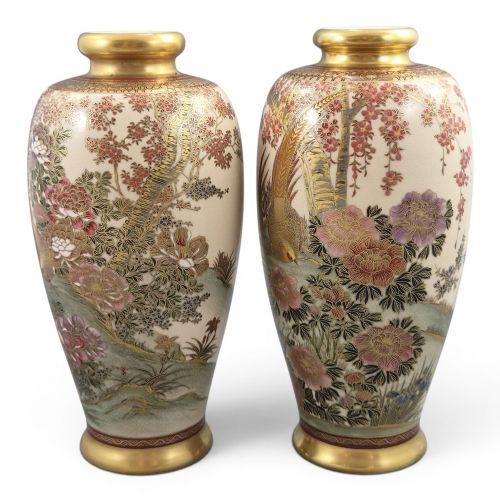


Gilded Japanese Satsuma Pair
These gilded japanese satsuma pair selections offer matched earthenware vessels painted with enamel and heavy gold leaf, bringing Meiji and Showa period craftsmanship into a room.
Gilded Japanese Satsuma Pair
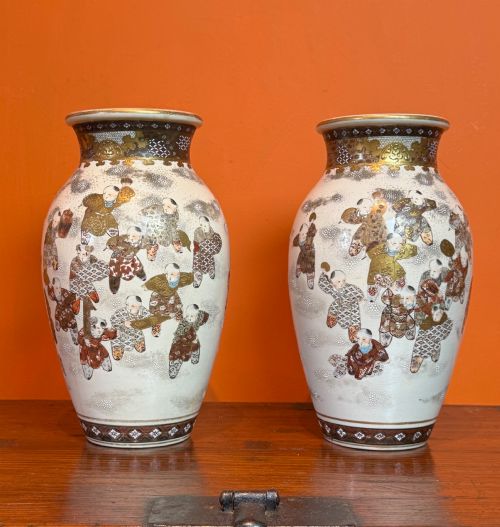
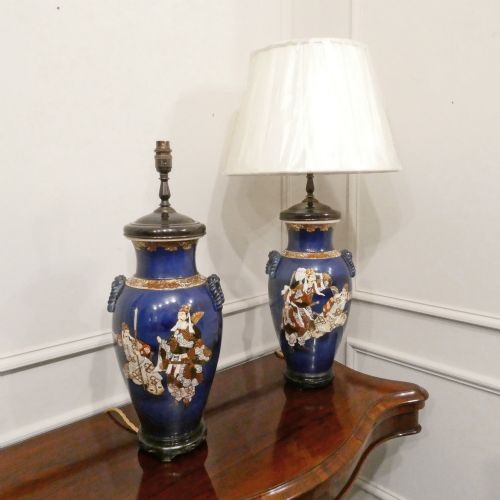
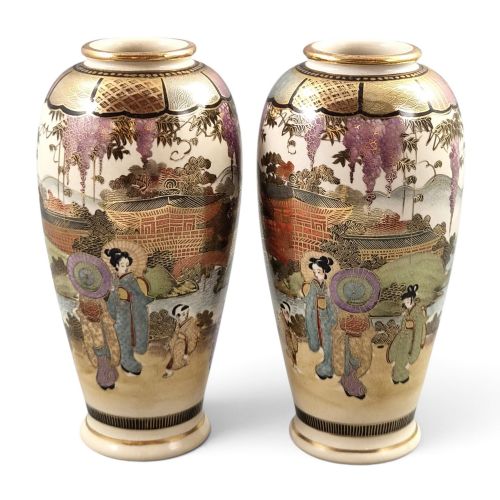
A gilded japanese satsuma pair consists of matching ceramic vessels created in Japan during the nineteenth and early twentieth centuries. These objects typically take the form of vases, lidded jars, decorative dishes, or table lamps adapted for domestic display.
The selections span distinct historical phases, including the Meiji, Taisho, and Showa periods. Buyers frequently encounter nineteenth-century pieces alongside Edwardian examples and later productions from the 1920s and 1930s.
Motive and subject matter range from landscape scenes and flora such as wisteria to figural compositions depicting women, children, and religious figures like Rakan. Many items carry signatures or maker marks associated with Kyoto and Kobe workshops.
How they were made
These items rely on an earthenware body coated with a characteristic cream-coloured, crackle-glazed ceramic surface. Artisans then applied detailed enamel painting directly over this glaze.
Gold leaf and gilt embellishments provide the metallic highlights seen across the panels and borders. Certain pieces incorporate moriage technique, building up raised enamel and gilt dots to create a textured, tactile surface.
Gilded Japanese Satsuma Pair Retail Price Guide 2026
Typical asking prices for gilded japanese satsuma pair among the pieces listed under this phrase on Sellingantiques today, from the lower quarter to the upper quarter. They describe what is for sale here now, not the wider market.
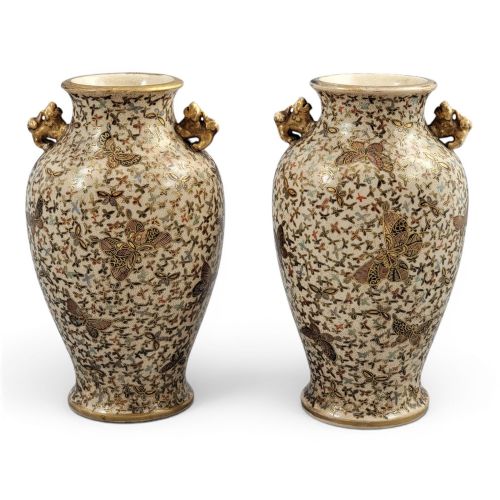
Mandarin ducks occasionally make an appearance among the thousand butterflies and dragons, bringing a touch of waterfowl romance to the gold leaf.
What varies in quality
Quality rests upon the precision of the hand-painted brushwork and the density of the gilding across the ceramic surface. Master workshops achieved finer detail in figural panels, landscapes, and intricate motifs like thousand butterflies patterns.
The scale of the vessels and the complexity of the form, such as hexagonal bodies or fitted lids, influence the character of the pair. Exhibition pieces and items bearing recognised studio signatures display superior execution in enamel and gold leaf application.
Shozan·Manpei·Kinkōzan·Kinzan·Hododa·Makuzu Kozan II·Shuzan·Tagawa·Kinkozan·Tashiro·Kizan
The Gilded Japanese Satsuma Pair Glossary
- Satsuma
- A type of Japanese earthenware featuring a pale, crackled glaze that accepts enamel and gilt decoration. It originated in Satsuma Province before expanding to major pottery centres like Kyoto and Kobe.
- Moriage
- A decorative ceramic technique using piped clay or thick enamel to create raised, three-dimensional patterns. This method adds a tactile, ornamental relief beneath the gilding.
- Meiji Period
- The era of Japanese history spanning from 1868 to 1912, characterised by the opening of trade with the West. Many of the finest decorative ceramics originate from this time.
- Mon
- A Japanese heraldic badge or emblem used to identify families or clans. The Shimazu mon frequently appears on Satsuma ceramics associated with the ruling house of the Satsuma Domain.
- Rakan
- A term for enlightened followers of Buddha, often depicted in groups on Satsuma vases. These figures appear alongside dragons, landscapes, and narrative scenes.
Gilded Japanese Satsuma Pair: Frequently Asked Questions
What is a gilded japanese satsuma pair?
A gilded japanese satsuma pair comprises two matching ceramic vessels decorated with enamel and gold leaf. They were produced primarily for export and display during the late nineteenth and early twentieth centuries.
These matching items often share identical decorative motifs, dimensions, and maker signatures. Their shared design makes them suitable for symmetrical placement on mantelpieces or tables.
How do I date a satsuma pair?
Dating relies on stylistic markers, signature types, and historical periods such as the Meiji or Showa eras. Nineteenth-century pieces typically feature denser hand-painted detail and heavier crackle glazes.
Later items from the 1920s and 1930s often reflect evolving aesthetic influences or show modern adaptations like electrical fittings for table lamps. Examining any accompanying mon or workshop signatures helps narrow the production window.
Were these pieces made in Japan?
Yes, these items originated in Japan, created in important ceramic production centres such as Kyoto and Kobe. Many workshops focused specifically on producing decorative wares for international export markets.
Artisans combined traditional local pottery techniques with elaborate enamel work to satisfy overseas demand for Japanese craftsmanship during the Meiji period.
How should I display these lamps and vases?
These decorative objects work well on stable surfaces where their enamel panels and gold leaf catch natural light. Table lamps require secure placement near electrical outlets with compatible shades that respect the period style.
Vessels without electrical conversion suit mantelpieces, cabinets, or sideboards. Keeping them away from direct sunlight protects the delicate enamel colours and gilt detailing over time.