






Japanese Bird Painted Vase
These japanese bird painted vase pieces bring detailed avian scenes and rich porcelain or earthenware into a room.
Japanese Bird Painted Vase
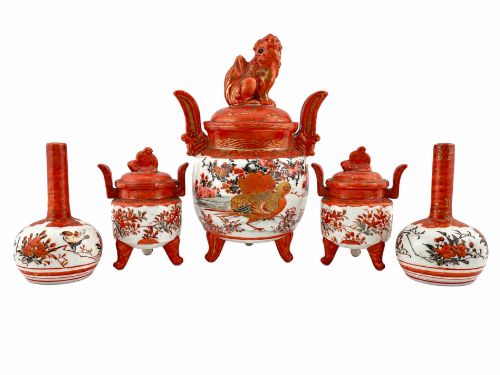
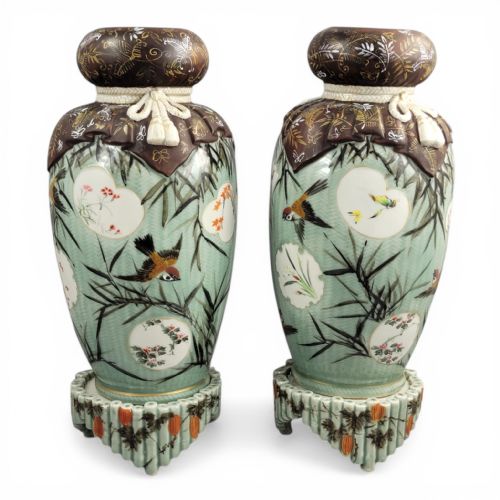
A japanese bird painted vase is a decorative ceramic vessel created in forms such as bulbous, flared, and tall shapes, often paired with matching stands. These pieces predominantly date from the nineteenth century, including the Meiji period and Edwardian era, alongside early Showa period examples.
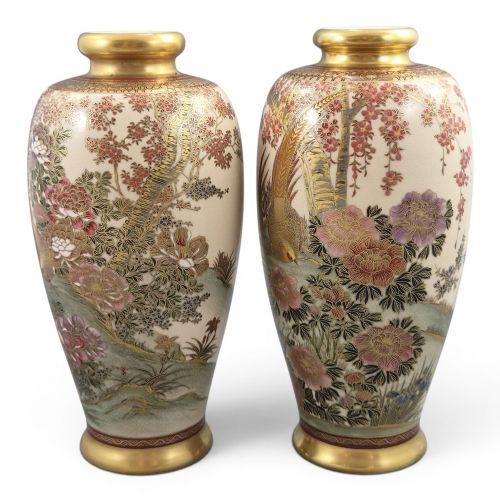
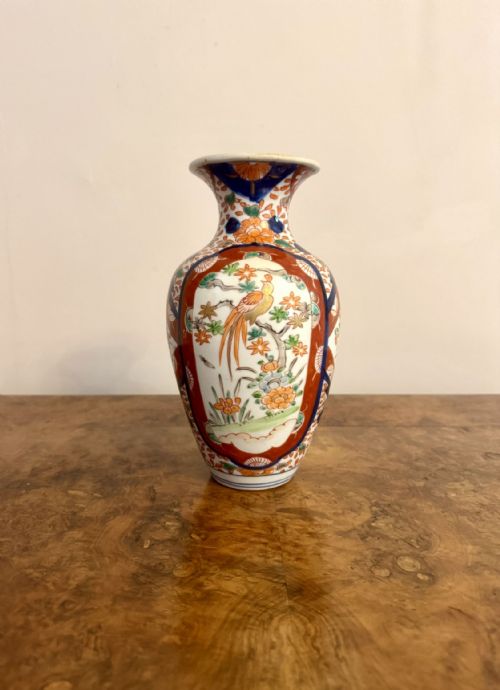
Buyers encounter distinctive regional styles such as Satsuma earthenware, Imari patterns, and Seto or Fukagawa porcelain. The surface decoration focuses on painted birds integrated with floral motifs, geometric inset panels, and heraldic crests like the Shimazu mon.
How these vases were made
Makers utilised porcelain and earthenware as the primary ceramic bodies, shaping them into bulbous or flared vessel forms. These bodies were then decorated using painted enamels, glaze, and occasionally gold leaf or gilt highlights.
Certain examples incorporate wood stands or specialised surface treatments, such as lacquer applied over black paint. Workshops employed skilled hand-painting techniques to render intricate bird subjects and geometric inset panels across the ceramic surface.
Japanese Bird Painted Vase Retail Price Guide 2026
Typical asking prices for japanese bird painted vase among the pieces listed under this phrase on Sellingantiques today, from the lower quarter to the upper quarter. They describe what is for sale here now, not the wider market.
Materials recorded across the inventory include enamel, gold leaf, porcelain, earthenware, wood, glaze, lacquer, and gilt.
What varies in quality
Quality rests in the precision and complexity of the hand-painted bird motifs and the fineness of the ceramic body. Pieces carrying signatures from notable makers or workshops demonstrate a higher degree of artistic execution in the enamel and gold leaf work.
The presence of original matching stands, unusual geometric inset panels, or exhibition-quality provenance elevates a piece above standard decorative production. The depth of the glaze and the intricacy of underlying styles like Satsuma or Imari further distinguish superior examples.
Manpei·Kinkōzan·Kato Sanhei·Hododa·Kizan
The Japanese Bird Painted Vase Glossary
- Satsuma
- A type of Japanese earthenware featuring an ivory-coloured, crackled glaze that serves as a canvas for detailed enamel painting. It originates from the Satsuma Province and became prominent during the Meiji period.
- Imari
- A traditional style of Japanese porcelain decorated in underglaze blue and overglaze red, gold, and green. This style gained international renown for its bold palette and ornate patterns.
- Mon
- A Japanese heraldic badge or crest used to identify families or clans. The Shimazu mon frequently appears on Satsuma wares associated with that ruling house.
- Meiji Period
- The era of Japanese history spanning from eighteen sixty-eight to nineteen twelve, characterised by openness to Western trade and exceptional craftsmanship in decorative arts.
Japanese Bird Painted Vase: Frequently Asked Questions
What periods do these vases date from?
The pieces span the nineteenth century, the Meiji period, the Edwardian era, and the early Showa period. Most examples originate from the late eighteen hundreds up to nineteen twenty.
Specific dates are often tied to the reign of Japanese emperors or distinct stylistic phases like Meiji and Edwardian production.
How are birds depicted on these ceramics?
Birds appear within hand-painted scenes using enamel, gold leaf, and glaze over porcelain or earthenware. They often mingle with floral backgrounds and geometric inset panels.
Artists rendered these avian subjects with great precision, particularly on exhibition-quality Satsuma and Fukagawa pieces.
What is the difference between Satsuma and Imari?
Satsuma ware is typically an earthenware body with a fine, crackled ivory glaze designed for intricate enamel painting. Imari is a porcelain style defined by rich underglaze blue and vibrant red and gold decoration.
Both styles were produced during the Meiji period and served different aesthetic roles in export markets.
Are these vases displayed with stands?
Several pieces include matching original porcelain or wood stands designed specifically for the vessel. These stands elevate the vase and complete the intended silhouette.
Finding a vase with its original matching stand adds to the historical integrity of the object.
How should I care for a painted ceramic vase?
Keep the vessel away from direct sunlight to preserve the delicate enamels, gold leaf, and lacquer over-paint. Dust gently with a soft, dry cloth without using liquid cleaners.
Display the vase on a stable surface, especially if it rests upon a separate matching stand.