



Meiji Period Satsuma Vase
Discover a fine meiji period satsuma vase, defining an era of intricate Japanese ceramic craftsmanship prized for rich figurative detail.
Meiji Period Satsuma Vase
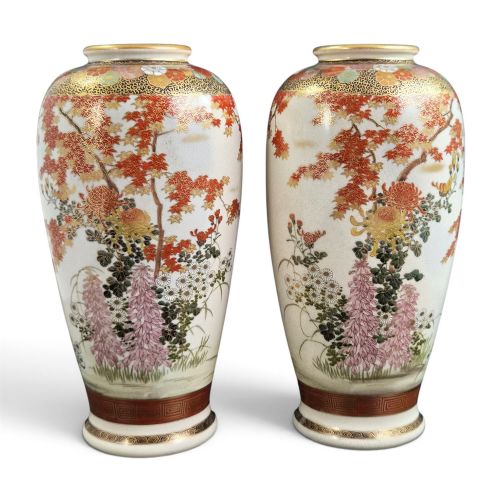
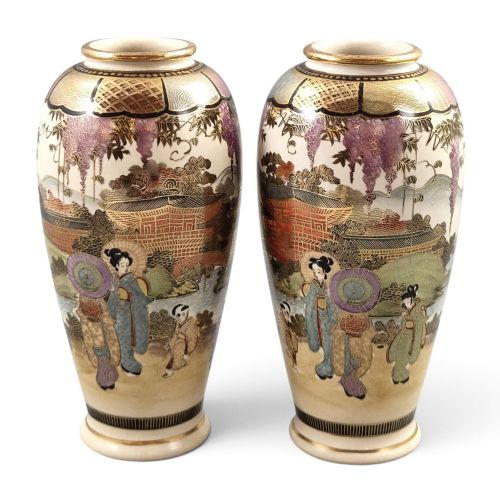
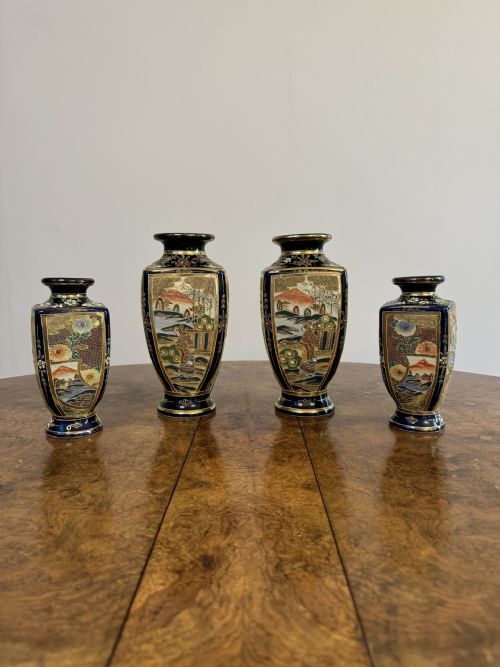
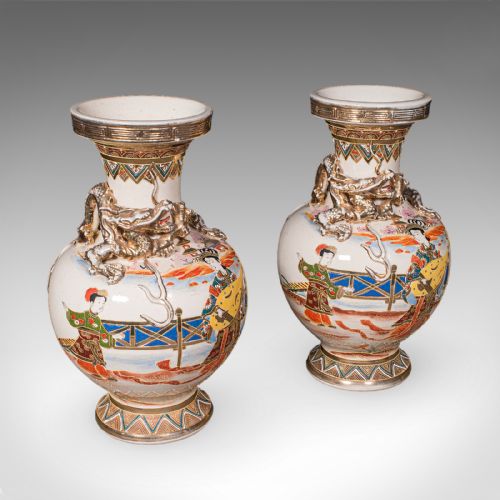
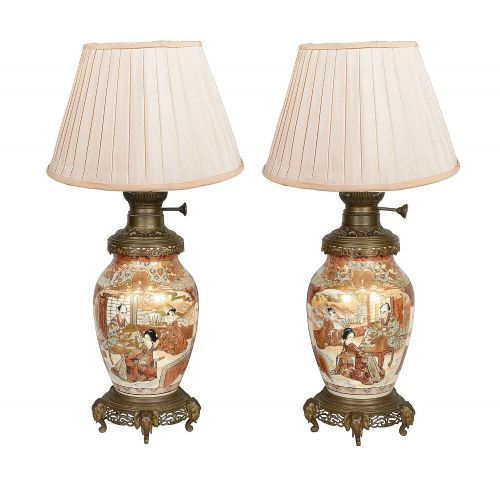
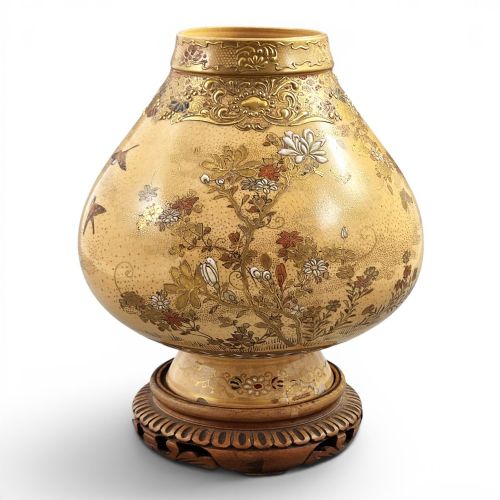
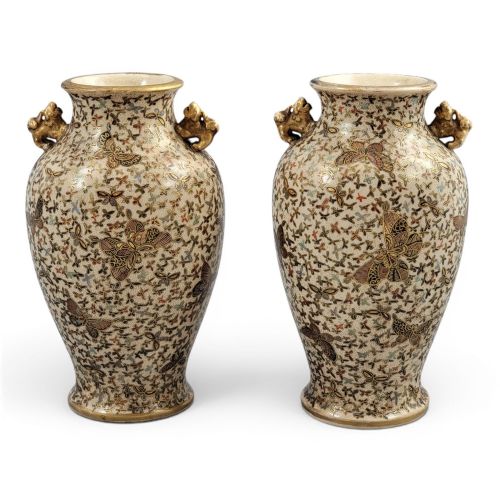
A meiji period satsuma vase represents a pinnacle of late nineteenth and early twentieth century Japanese ceramic artistry. These pieces range from delicate miniature vessels to monumental garnitures and adapted table lamps.
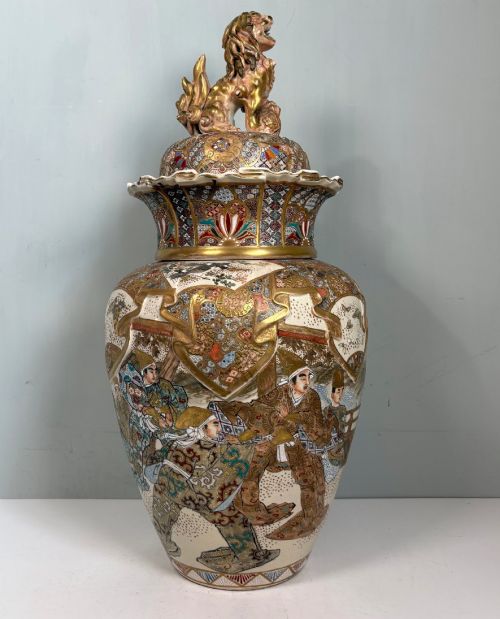
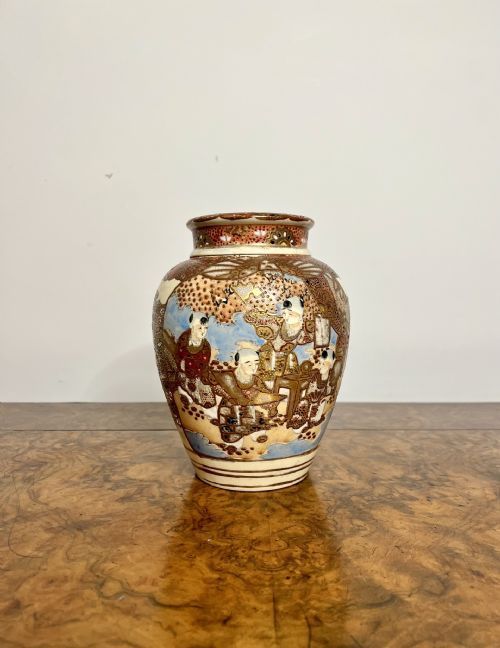
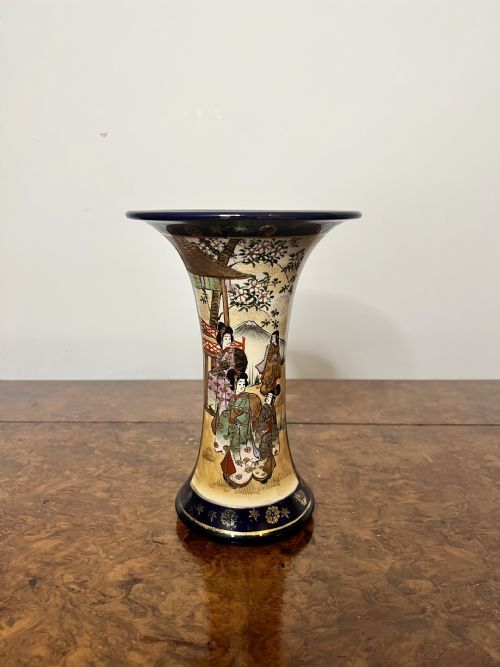
Makers produced these works primarily during the Meiji and Taisho periods, utilising traditional forms like baluster vases, ginger jars, and tripod koro incense burners. Collectors encounter diverse decorative motifs including court figures, arhats, dragons, and dense floral patterns such as wisteria and butterflies.
How They Were Made
Artisans formed these vessels using earthenware and ceramic bodies, often applying a characteristic crackle glaze to the surface. Painters then used enamel, gold leaf, and gilt details to build up elaborate figural processions and landscapes.
Advanced workshops incorporated raised moriage decoration to create tactile, three-dimensional effects on the pottery. Skilled decorators signed their work with artist seals or workshop marks, indicating the provenance of Kyoto and other production centres.
Meiji Period Satsuma Vase Retail Price Guide 2026
Typical asking prices for meiji period satsuma vase among the pieces listed under this phrase on Sellingantiques today, from the lower quarter to the upper quarter. They describe what is for sale here now, not the wider market.
Keep an eye out for hidden crickets perched on miniature lids, adding a tiny touch of nature to grand imperial pottery.
What Varies in Quality
The standard of painting determines the desirability of a piece, separating mass-produced export wares from master-signed exhibition items. Precision in the application of gold gilt and the complexity of figural groupings distinguish superior examples.
The finesse of the crackle glaze and the clarity of the underlying ceramic body indicate workshop competence. Works associated with renowned names like Kinkozan or Yabu Meizan demonstrate exceptional control over enamel saturation and compositional balance.
Kinkōzan Workshop·Hotoda·Chosei·Kinkozan·Yabu Meizan·Shozan
The Meiji Period Satsuma Vase Glossary
- Moriage
- A decorative technique using slip applied in dots or lines to build up raised patterns on pottery. This method adds a distinct tactile dimension to the painted surface.
- Koro
- A traditional Japanese tripod incense burner featuring a pierced cover. These vessels frequently showcase guardian shishi lions on the lid.
- Shiro Satsuma
- A distinct type of white satsuma ware characterised by a clear, finely crackled glaze over a pale body. It serves as a canvas for polychrome and gilt painting.
- Shimazu Mon
- The crest of the Shimazu clan, featuring a cross within a circle, often found on high-quality satsuma pieces. Its presence marks a direct connection to the lords of Satsuma domain.
- Arhat
- Depictions of Buddhist disciples or enlightened beings commonly rendered in detailed groups on figurative vases. Artists often pair them with swirling dragons and intricate garments.
Meiji Period Satsuma Vase: Frequently Asked Questions
What are satsuma vases?
Satsuma vases are Japanese ceramic vessels featuring finely crackled earthenware bodies decorated with elaborate enamels and gold leaf. They emerged strongly during the Meiji period as major export items.
Craftsmen hand-painted these pieces with intricate scenes of court figures, deities, and natural motifs. Their distinctive aesthetic bridges traditional Japanese imagery with Western decorative tastes of the era.
How can I identify Meiji period pieces?
Meiji period items generally date between eighteen sixty-eight and nineteen twelve, aligning with the reign of Emperor Meiji. Look for stylistic indicators such as dense moriage work and complex figural groupings.
Many superior pieces carry signature marks from notable Kyoto workshops and master artists painted in gold or red enamel. The weight, fine crackle glaze, and stylistic maturity of the painting further help confirm this era.
Were these vases used for display?
These vessels served primarily as decorative display items in European and American drawing rooms during the late nineteenth century. Their rich gilding and narrative scenes suited the Victorian taste for ornate interior decoration.
Some forms, such as koro, functioned as incense burners, while others were made as ginger jars or lamp bases. Despite their decorative focus, the underlying ceramic traditions remained rooted in functional Japanese pottery.
How do I care for antique satsuma?
Protect these ceramics by placing them away from direct sunlight and areas subject to rapid temperature fluctuations. Dust them gently with a dry, soft cloth without using liquid cleaners.
Avoid abrasive materials that might damage the delicate enamel and gold leaf surface. If wired as a table lamp, ensure the electrical components are inspected by a professional to preserve the ceramic body.