


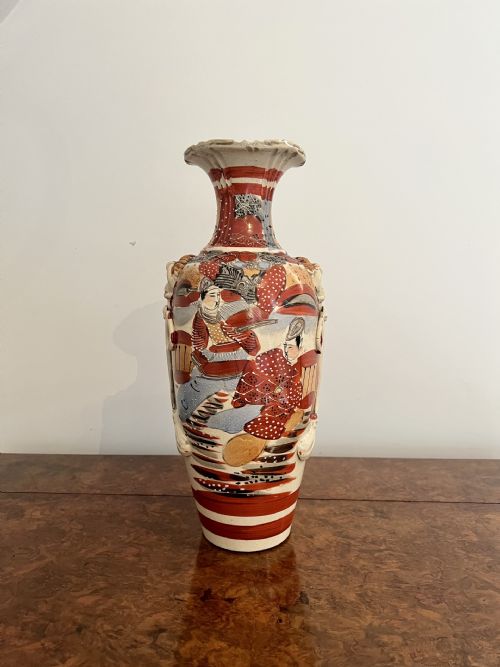
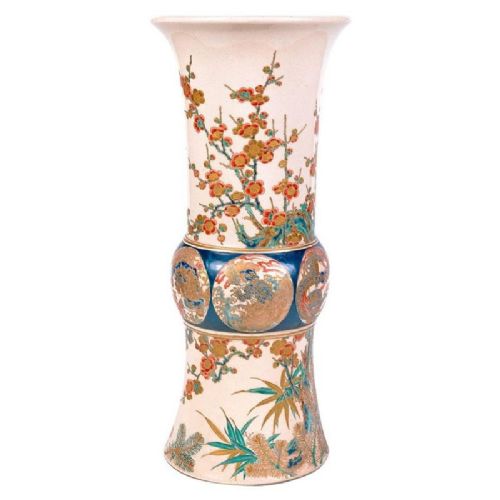

Satsuma Floor Vase
These large Satsuma floor vase pieces bring heavy scale and rich surface detail into a room.
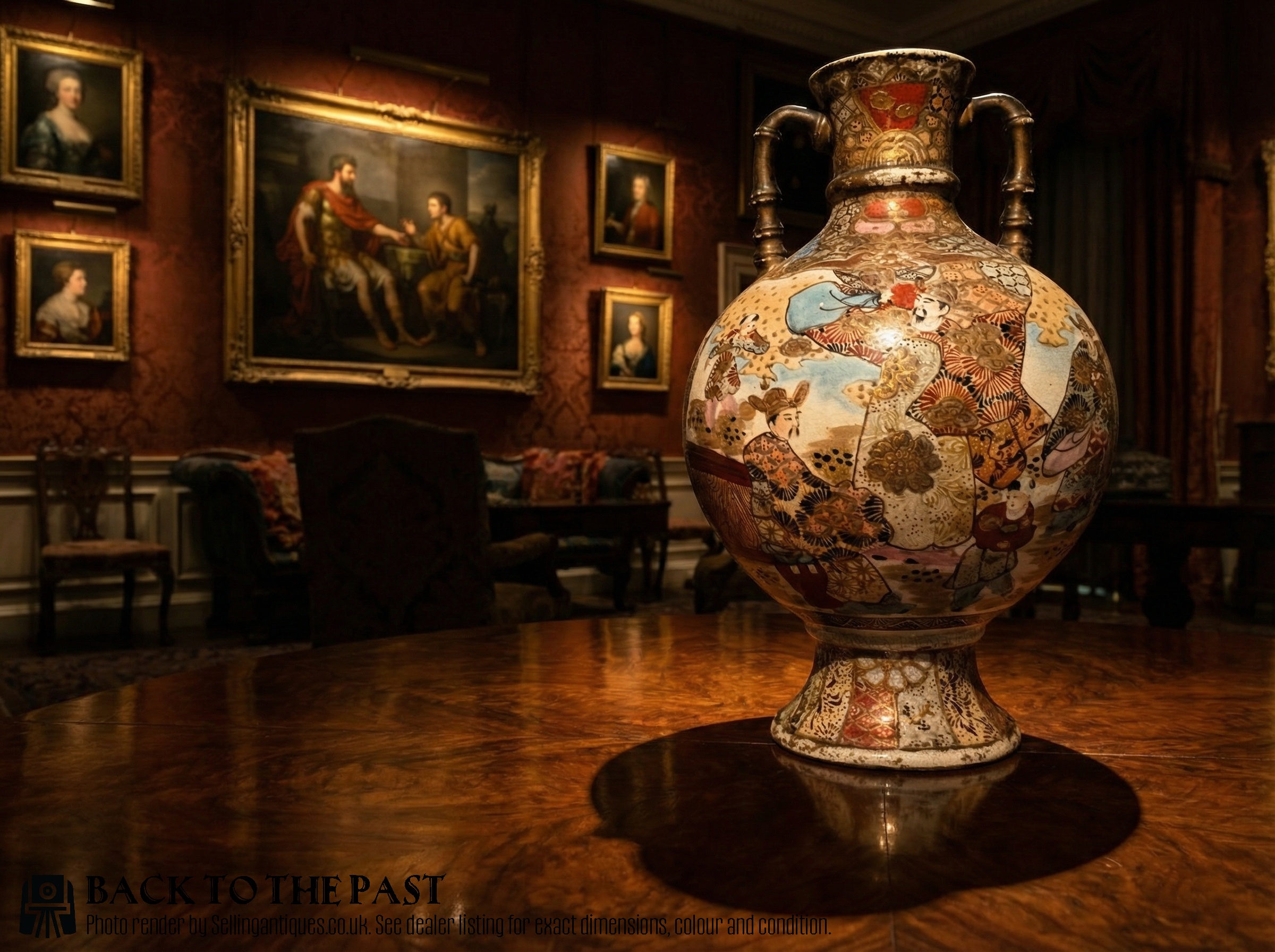
Satsuma Floor Vase
A satsuma floor vase is a substantial decorative vessel designed to stand directly on the ground rather than upon furniture. The examples seen here belong to the Meiji period, the nineteenth century, and the early decades of the twentieth century. They arrive as individual statements or in matched pairs.
The forms span bulbous bodies, lidded vessels, and two-handled shapes. Many reach impressive heights, such as thirty-eight inches or eighty-four centimetres, demanding significant space within a room.
Makers and workshops of the era produced these for export and domestic markets alike. Names like Kinkozan appear among the recorded makers, marking the higher tier of production.
How they were made
The foundation relies on earthenware and porcelain, shaped into tall, heavy vessels capable of supporting dense decoration. Potters built these large forms with thick walls to withstand the firing process.
Surfaces receive intricate work using enamel, gilt, and gold leaf. Artisans painted elaborate scenes and geometric inset panels directly onto the ceramic body before final firing.
The listings here draw from the nineteenth century, 1800, 1900, and 1920, utilising earthenware, porcelain, enamel, and gold leaf.
What varies in quality
Quality rests upon the precision and complexity of the enamel and gold leaf work across the surface. Finer pieces display meticulous control in their geometric inset panels and figural scenes.
Scale and presence also define the upper tier. Large pairs and lidded vessels with balanced proportions command greater visual weight than simpler single pieces.
Kinkozan
The Satsuma Floor Vase Glossary
- Meiji Period
- The era in Japanese history spanning from 1868 to 1912. Much of the export pottery seen in these listings originates from this dynamic time of craft production.
- Earthenware
- A porous pottery body fired at lower temperatures. It forms the core material for many traditional Satsuma vessels before glazing and enamelling.
- Gilt
- A thin layer of gold applied to the surface of the ceramic. This material catches the light and highlights key decorative motifs.
- Enamel
- Opaque glass paste fused to the ceramic body through firing. Artisans utilise varied colours to build up complex pictorial scenes.
Satsuma Floor Vase: Frequently Asked Questions
Where should I place a floor vase?
These large vessels demand open floor space where they can stand unobstructed by furniture. Corners of large reception rooms or wide hallways provide suitable settings for their considerable height.
Ensure the spot chosen protects the ceramic from foot traffic and accidental knocks. Their heavy scale requires a stable, flat surface.
How do I clean a Satsuma vase?
Dust the surface gently using a soft, dry brush to remove particles without disturbing the delicate enamel and gold leaf. Avoid liquid cleaners or abrasive cloths entirely.
Moisture can seep into unglazed areas or lift fragile gilding over time. Regular, gentle dry maintenance keeps the surface secure.
Are these pieces waterproof?
Most antique earthenware and porcelain vessels of this scale were built for decorative display rather than holding water. Placing stems inside risks moisture damage to the interior body.
Keep them dry and treat them as sculptural objects rather than functional containers for fresh flora.
How can I tell the period?
Examine the weight, the style of the enamel work, and any recorded historical markers associated with the piece. Nineteenth-century and Meiji period examples often exhibit characteristic hand-painted detail and dense gilding.
Compare the form against documented workshop output to confirm the era of production.