
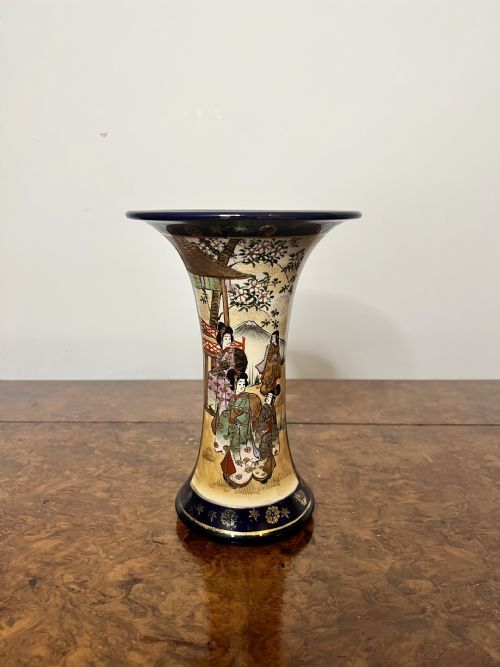


Satsuma Porcelain Vessel
These pieces of satsuma porcelain vessel bring intricate hand-painted enamel and gold leaf into rooms needing deep historical character.
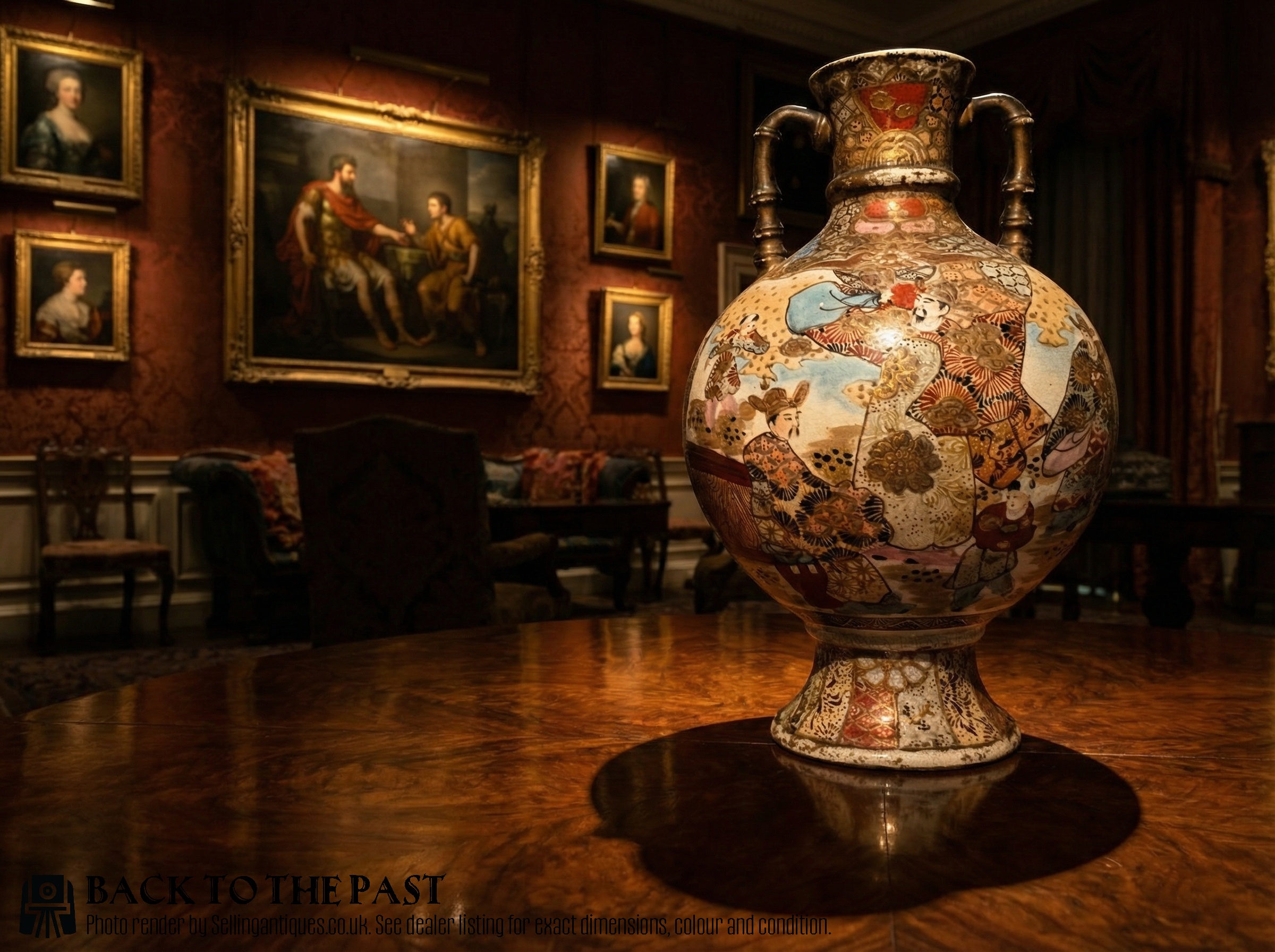
Satsuma Porcelain Vessel
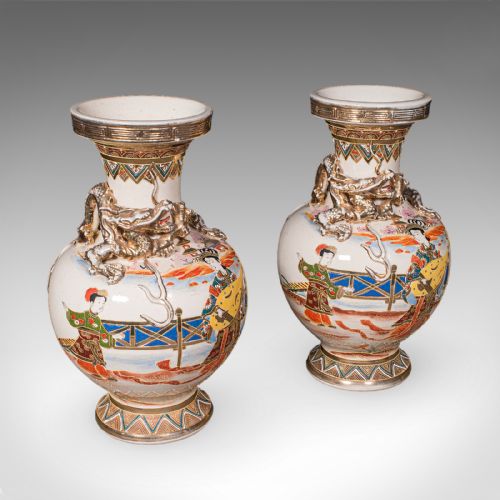
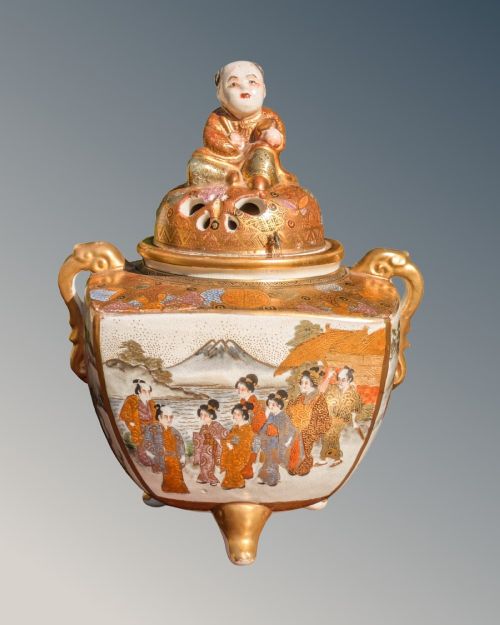
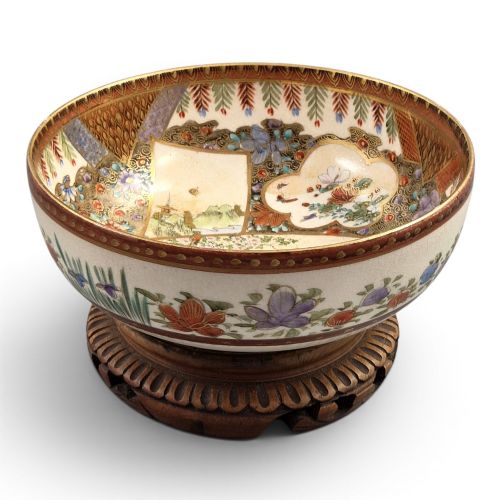
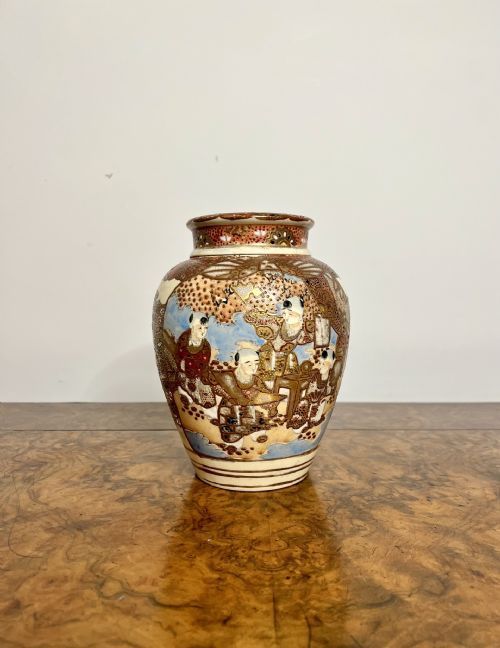
When searching for a satsuma porcelain vessel, buyers encounter an array of items spanning vases, koro incense burners, bowls, and tea jars from the nineteenth century into the early twentieth century.
The most common forms on this page originate in the Meiji period, featuring traditional Japanese ceramic work decorated with dense figural processions, samurai scenes, and floral motifs.
Makers produced these works in regional centres such as Kyoto and Tokyo, utilising earthenware and ceramic bodies designed for both export markets and domestic appreciation.
How they were made
Makers formed these pieces using earthenware and ceramic bodies, often applying a fine crackle-glaze underneath elaborate decoration.
Artisans built up the surface patterns using polychrome enamel and detailed gold leaf or gilding to delineate figures, garments, and backgrounds.
Many workshops incorporated structural elements like bronze components or carved wood bases to support larger vessels and lidded jars.
Some miniature vases manage to pack entire battles, mythical beasts, and processions into vessels no taller than a teacup.
What varies in quality
The precision and density of the hand-painted enamel work separate standard decorative items from exceptional studio pieces, particularly in the rendering of facial expressions and armour.
The application of gold leaf and gilding dictates the visual depth of a piece, with finer examples showing crisp borders and layered metallic accents that withstand close examination.
Signatures from established Kyoto studios and recognizable makers indicate higher artistic ambition and execution compared to unsigned or generic Satsuma-style output.
Kozan·Hotoda·Chosei·Kinkozan·Kizan·Tokyo Taizan·Shozan
The Satsuma Porcelain Vessel Glossary
- Koro
- A traditional Japanese incense burner fitted with a pierced lid. These often stand on three feet and feature guardian lion handles.
- Mon
- A Japanese heraldic badge or crest. Pieces frequently display the Shimazu family crest as part of their provenance.
- Baluster
- A vertical vase form with a rounded lower body that tapers towards the neck. This shape provides a stable canvas for narrative scenes.
- Enamel
- Opaque glass paste applied to the ceramic body and fired to hold brilliant colours. It forms the primary medium for figural decoration.
- Gilding
- The application of gold leaf or gold paint to highlight specific details. It accentuates borders and figural clothing.
Satsuma Porcelain Vessel: Frequently Asked Questions
What is a satsuma porcelain vessel?
A satsuma porcelain vessel is a decorated ceramic or earthenware piece originating largely from the Meiji period in Japan. These items utilise enamel and gold leaf to depict historical figures, samurai, and dense floral compositions.
They function primarily as decorative objects, taking forms such as baluster vases, ginger jars, tea caddies, and lidded koro incense burners.
How do I identify a Meiji period piece?
Meiji period items generally display intricate hand-painted figural processions, arhats, or mon crests executed in refined polychrome enamels. The ceramic bodies often carry a characteristic fine network of crackled glaze beneath the pigment.
Many superior examples also bear artist signatures or studio marks from production centres in Kyoto and Tokyo.
How were these vessels used originally?
Makers designed these items for domestic display, ceremonial use, and the burgeoning international export market during the late nineteenth and early twentieth centuries. Incense burners held aromatics, while tea jars and tea caddies stored dry goods.
Larger vases and decorative bowls served as ornamental centrepieces in Victorian and Meiji interiors.
What do the crests on these vessels mean?
Crests found on these pieces, such as the Shimazu mon, indicate patronage or a connection to historic Japanese clans. The Shimazu family notably supported the Satsuma domain kiln production.
Finding these crests adds documentary weight to a piece, linking it directly to specific regional manufacturing histories.
How do I care for antique satsuma items?
These ceramic and earthenware items require gentle dusting with a soft, dry cloth to protect the delicate enamel and gold leaf surfaces. Avoid using liquid cleaners or abrasive materials that might damage the crackle-glaze.
Keep them positioned away from direct sunlight and areas subject to sudden temperature shifts to preserve the integrity of the glaze and gilding.