



Gold Japanese Ceramic Jar
These gold japanese ceramic jar pieces bring intricate Meiji period hand-painted detail and rich gilding straight into a room.
Gold Japanese Ceramic Jar
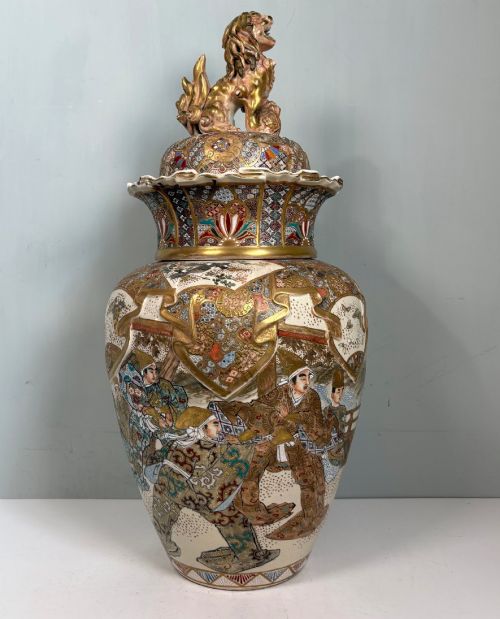
A gold japanese ceramic jar encompasses decorated earthenware and porcelain vessels originating from Japan, largely dating from the nineteenth century. Buyers searching this phrase typically encounter nineteenth century Meiji period tea jars, lidded vases, and miniature vessels featuring detailed hand-painted scenes enriched with gold leaf and gilt work.
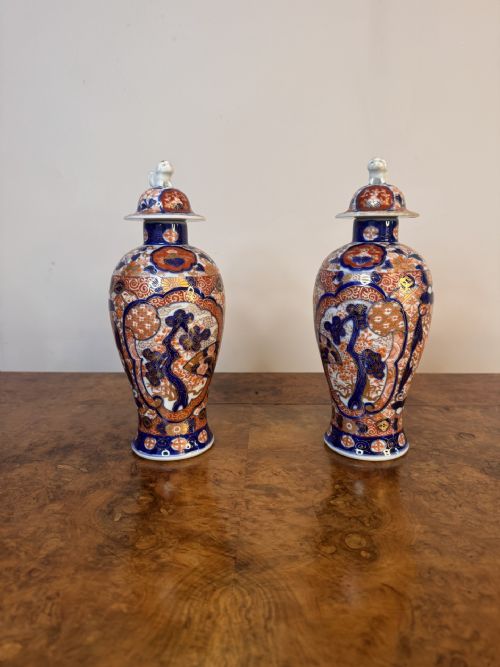
The selection includes specific regional styles such as Satsuma and Kutani wares, alongside Arita Imari lidded vases. Forms range from small tea caddies and sugar bowls to large lidded vases, koro incense burners, and decorative chargers.
Most pieces date specifically around eighteen eighty, eighteen ninety, and nineteen hundred, often bearing artist signatures or studio marks from centres like Kyoto and Kaga. The aesthetic relies heavily on elaborate pictorial panels paired with dense surface gilding and enamel highlights.
How They Were Made
Potters shaped earthenware and porcelain bodies before applying intricate hand-painted enamel designs. Artisans then integrated gold leaf, gilt, and ormolu details to accentuate specific pictorial elements and borders.
Some decorative vessels incorporated carved wood elements or lids alongside the ceramic body. Kiln firing fixed the coloured enamels beneath the final layers of detailed surface gilding.
Gold Japanese Ceramic Jar Retail Price Guide 2026
Typical asking prices for gold japanese ceramic jar among the pieces listed under this phrase on Sellingantiques today, from the lower quarter to the upper quarter. They describe what is for sale here now, not the wider market.
Some nineteenth-century tea jars managed to survive rigorous international trade journeys entirely intact, complete with their original carved wood lids.
What Varies In Quality
The precision and fineness of the hand-painted enamel work separate ordinary vessels from exceptional examples. Dense, multi-coloured figural scenes executed with meticulous brushwork indicate higher artistry.
The richness, placement, and preservation of the gold leaf and gilt decoration define the visual impact of each piece. Superior items maintain crisp definition in both the ceramic body and the applied surface gilding.
Tokyo Taizan·Shuzan·Shizan·Kinrin Workshop·Shozan
The Gold Japanese Ceramic Jar Glossary
- Satsuma
- A type of Japanese earthenware featuring a crackled ivory glaze decorated with enamels and heavy gold. It became immensely popular for export during the Meiji period.
- Kutani
- Japanese porcelain or earthenware recognised by its vibrant colour palette, particularly reds and greens, often framed with extensive gold detailing.
- Imari
- A traditional style of Japanese porcelain featuring underglaze blue and overglaze iron red, complemented by gold highlights. These wares were produced primarily in Arita.
- Meiji Period
- The era of Japanese history lasting from eighteen sixty-eight to nineteen twelve, noted for the opening of trade with the West and prolific export craft production.
Gold Japanese Ceramic Jar: Frequently Asked Questions
How do I identify Satsuma ware?
Satsuma pieces display a characteristic pale, crackled earthenware glaze that serves as a canvas for detailed enamel painting and gold highlights. They frequently depict figures, historical scenes, or nature motifs.
Most examples found today date from the nineteenth century Meiji period and often bear artist signatures or studio marks on the base.
How do I date Meiji period ceramics?
Dating relies on stylistic markers, historical context, and signature analysis associated with the Meiji era spanning eighteen sixty-eight to nineteen hundred and twelve. Nineteenth-century pieces often exhibit distinct regional painting styles from centres like Kyoto and Kaga.
Makers' marks and signatures painted in gold or enamel provide further clues to the specific decade of production.
Where were Kutani ceramics made?
Kutani wares originated in the Kaga province of Japan, where local kilns produced distinctive porcelain and earthenware. The style is recognised by its bold use of enamels and generous application of gold.
These pieces were widely exported during the late nineteenth century alongside Satsuma and Imari wares.