


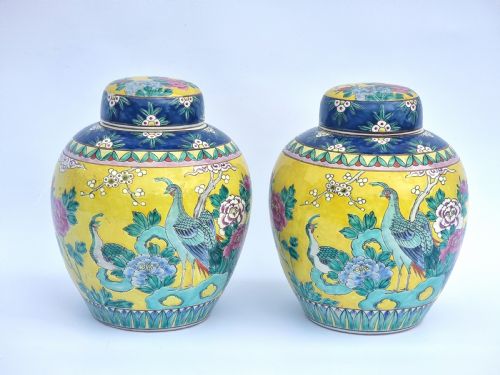


Oriental Lidded Temple Jar
An oriental lidded temple jar brings monumental presence and intricate hand-painted detail to a room, offering a striking focal point for traditional and eclectic interiors alike.
Oriental Lidded Temple Jar
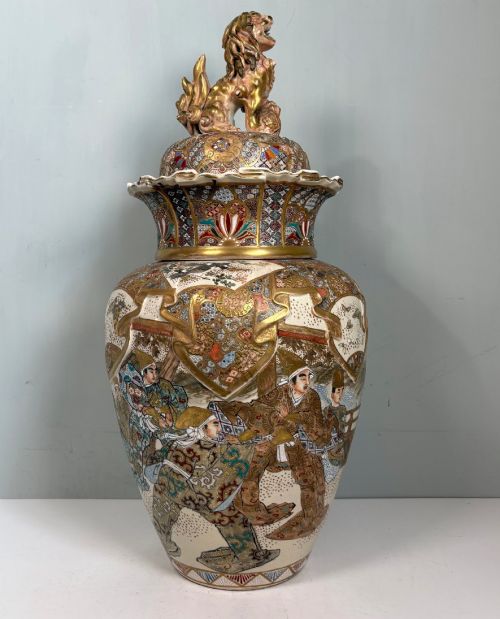
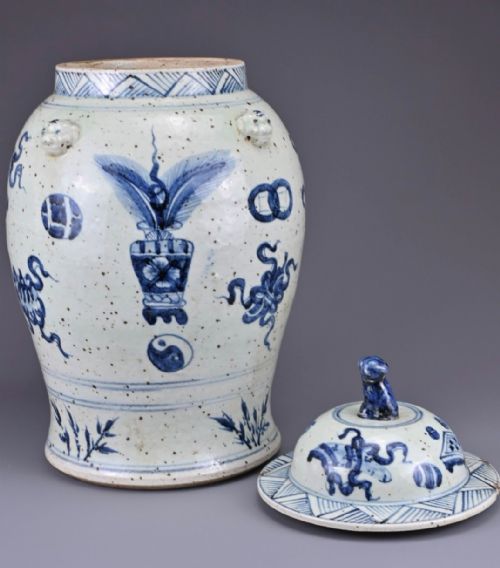
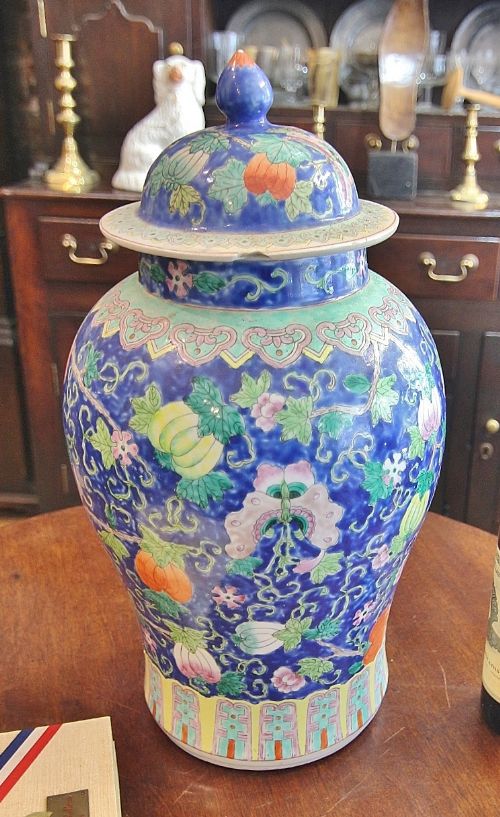
When you search for an oriental lidded temple jar, you are looking at substantial ceramic and metal vessels designed with fitted covers, originating primarily from Chinese and Japanese traditions. The forms span grand baluster shapes, ginger jars, and octagonal profiles that served decorative and utilitarian roles in domestic and ceremonial spaces.
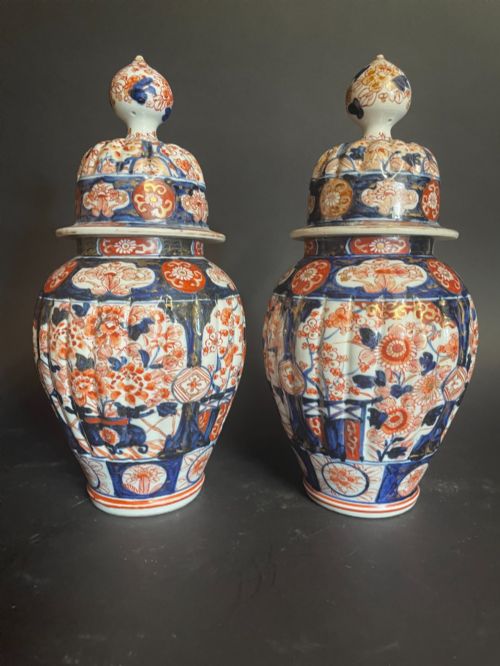
The pieces you are most likely to encounter on this page date predominantly from the nineteenth century, including the Meiji period, alongside examples stretching from the Victorian era into the mid-twentieth century. These range from imposing monumental cachepots and baluster vases to matched pairs of covered ginger jars.
Originating from renowned production centres such as Arita, Satsuma, and Kutani, these jars reflect diverse regional aesthetics. Chinese Qing Dynasty blue and white wares and Cantonese Rose Mandarin designs appear alongside Japanese Imari palettes and cloisonne creations.
How they were made
Makers utilised porcelain and earthenware as the foundational bodies for these jars, shaping them on the wheel or moulding them into complex octagonal and baluster forms before firing at high temperatures. Smooth transparent glazes or opaque coloured grounds were then applied to seal the clay and provide a canvas for decoration.
Surface ornamentation relied on meticulous hand-painting using cobalt blue, polychrome enamel palettes, and gold leaf highlights, often building rich layers of colour and pattern. For metal-based examples, artists soldered thin copper wires onto a metal body to create cellular compartments that were subsequently filled with enamel paste and fired.
Listings feature porcelain, earthenware, and copper materials decorated with enamel, gold leaf, and glaze across the 19th Century, Edwardian, and Victorian periods.
What varies in quality
The standard of execution in the hand-painting distinguishes finer examples, where brushwork displays precision, depth, and expressive detail in complex figurative or floral scenes. Inferior pieces often show rushed execution with heavy, uniform lines and lack the tonal nuance found in superior workshop output.
The richness and application of gilding and enamel work also determine visual distinction, with high-end pieces incorporating raised gold detailing and flawless glazing. Heavier, well-balanced potting and crisp definition in moulded elements indicate superior craftsmanship during the manufacturing process.
The Oriental Lidded Temple Jar Glossary
- Imari
- A style of Japanese porcelain decorated in underglaze blue, iron red, and gold, named after the port from which these wares were shipped. It remains one of the most recognisable decorative schemes found on antique lidded vessels.
- Cloisonne
- A technique where metal wires are applied to a base to form compartments, which are then filled with enamel and fired. This method creates vibrant, patterned surfaces across ginger jars and vases.
- Baluster
- A jar shape characterised by a rounded body that tapers toward the base, topped by a wide shoulder and a fitted cover. It provides a classic silhouette for large decorative vessels.
- Satsuma
- An earthenware type with a crackle glaze, typically decorated with intricate polychrome enamel and gilt designs depicting figures and nature. These pieces originate from Japanese kilns active during the nineteenth century.
- Doucai
- A Chinese porcelain technique involving underglaze blue outlines filled in with contrasting overglaze enamels on the surface. This method creates a vibrant, multi-layered effect seen on imperial-style dragon jars.
Oriental Lidded Temple Jar: Frequently Asked Questions
What is an oriental lidded temple jar used for?
These vessels were originally created to hold dry goods, spices, or ceremonial items, functioning as both storage containers and decorative focal points in interiors. Today, collectors display them as statement pieces on mantels, sideboards, or pedestals.
Their substantial scale and covered forms allow them to anchor a room's design scheme independently or in matched pairs. They bring colour, history, and architectural height to traditional and modern spaces alike.
How do I date an antique lidded jar?
Dating relies on examining the potting style, the composition of the base, and the characteristics of the glaze or enamel work. Nineteenth-century pieces often display specific reign marks or distinct regional palettes associated with the Meiji period or Qing Dynasty.
Comparing the hand-painted motifs against known historical styles provides further context. Subtle variations in the clay body and the weight of the piece also help narrow down the period of manufacture.
Are these jars always made of porcelain?
While porcelain and earthenware form the majority of ceramic vessels, some examples are constructed from copper using cloisonne enamel techniques. Each material requires distinct manufacturing methods that influence the weight and texture of the finished jar.
Ceramic versions rely on fired clay and glaze, whereas cloisonne pieces feature a metal foundation. Both material types support elaborate surface decoration including gold leaf and polychrome enamels.
How should I care for a porcelain temple jar?
Maintain these pieces by dusting them gently with a soft, dry cloth to prevent the accumulation of dirt on delicate enamel and gilt surfaces. Avoid using liquid cleaners or abrasive materials that could harm historical glazes or metal wirework.
Keep the jars away from direct sunlight and areas subject to sudden temperature fluctuations to protect the ceramic body and surface decoration over time. Handle the covers with care, as they are often the most vulnerable part of the vessel.