



Asian Earthenware Urn
These pieces called asian earthenware urn on this page are crafted vessels bringing distinct historic styles into domestic spaces.
Asian Earthenware Urn
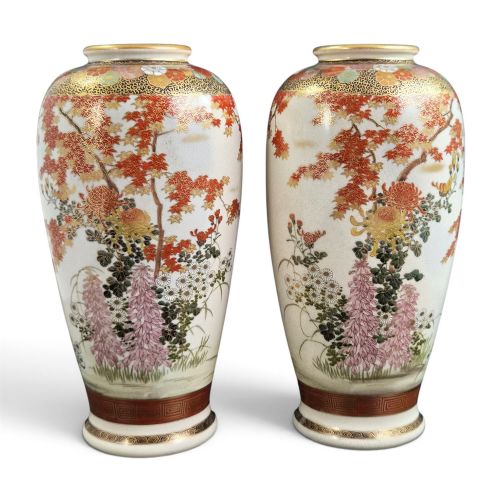
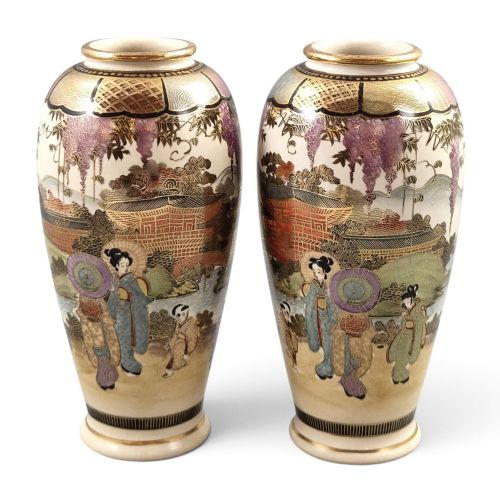
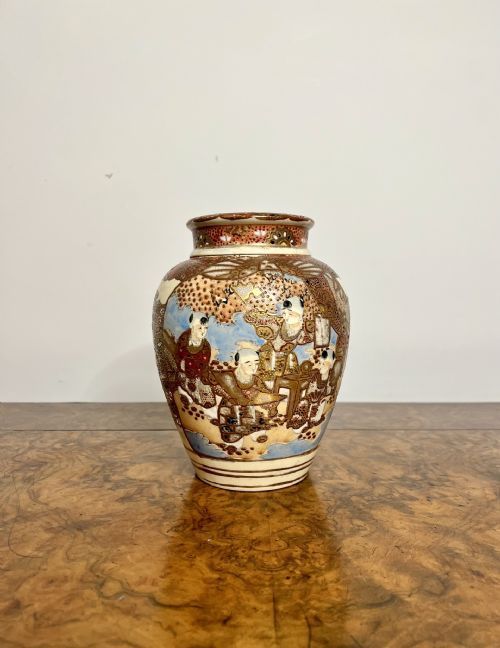
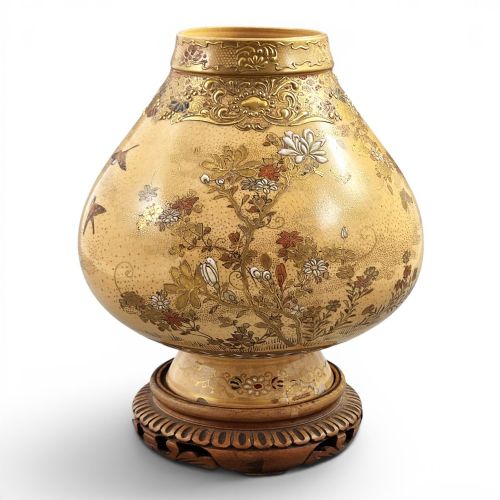
When searching for an asian earthenware urn, collectors encounter Japanese ceramic pieces spanning the late nineteenth century into the early twentieth century. The selection consists principally of Satsuma vases, jars, incense burners, and jardiniere forms originating from periods such as the Meiji and Taisho eras. Workshops in Kyoto produced many of these vessels, which often incorporate regional motifs like figures, landscapes, and floral patterns.
Vessels range from small miniature vases to monumental pairs designed for prominent display. Many examples date from the Victorian and Edwardian periods in European terms, aligning with late Meiji production in Japan. These items frequently take traditional vessel shapes, including hexagonal profiles, garlic head tops, and covered ginger jars.
How They Were Made
Makers utilised ceramic bodies finished with detailed glaze applications, incorporating enamel pigments and gold leaf accents. The decorative surface work frequently involves intricate hand-painted figural scenes, flora, and fauna executed with fine lines.
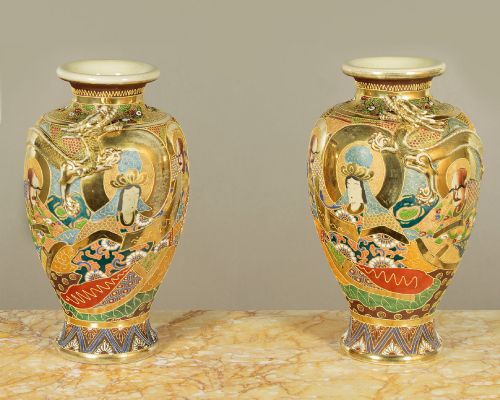
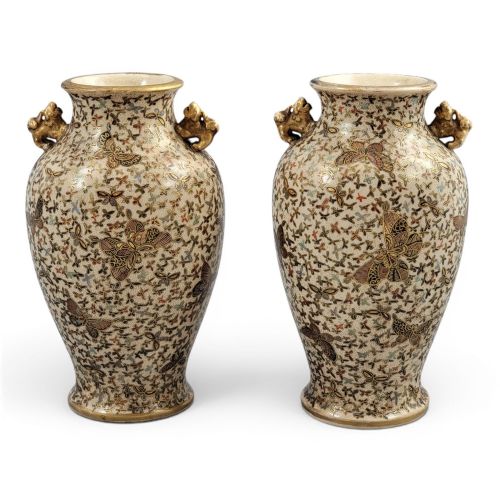
Workshops applied gilt decoration, including cobalt and gold combinations, to highlight specific motifs such as butterflies, dragons, and arhats. Certain pieces combine ceramic construction with wooden stands or mounts.
Listings feature ceramics from the Meiji, Taisho, and Showa periods, utilising earthenware, enamel, gold leaf, and glaze materials.
What Varies in Quality
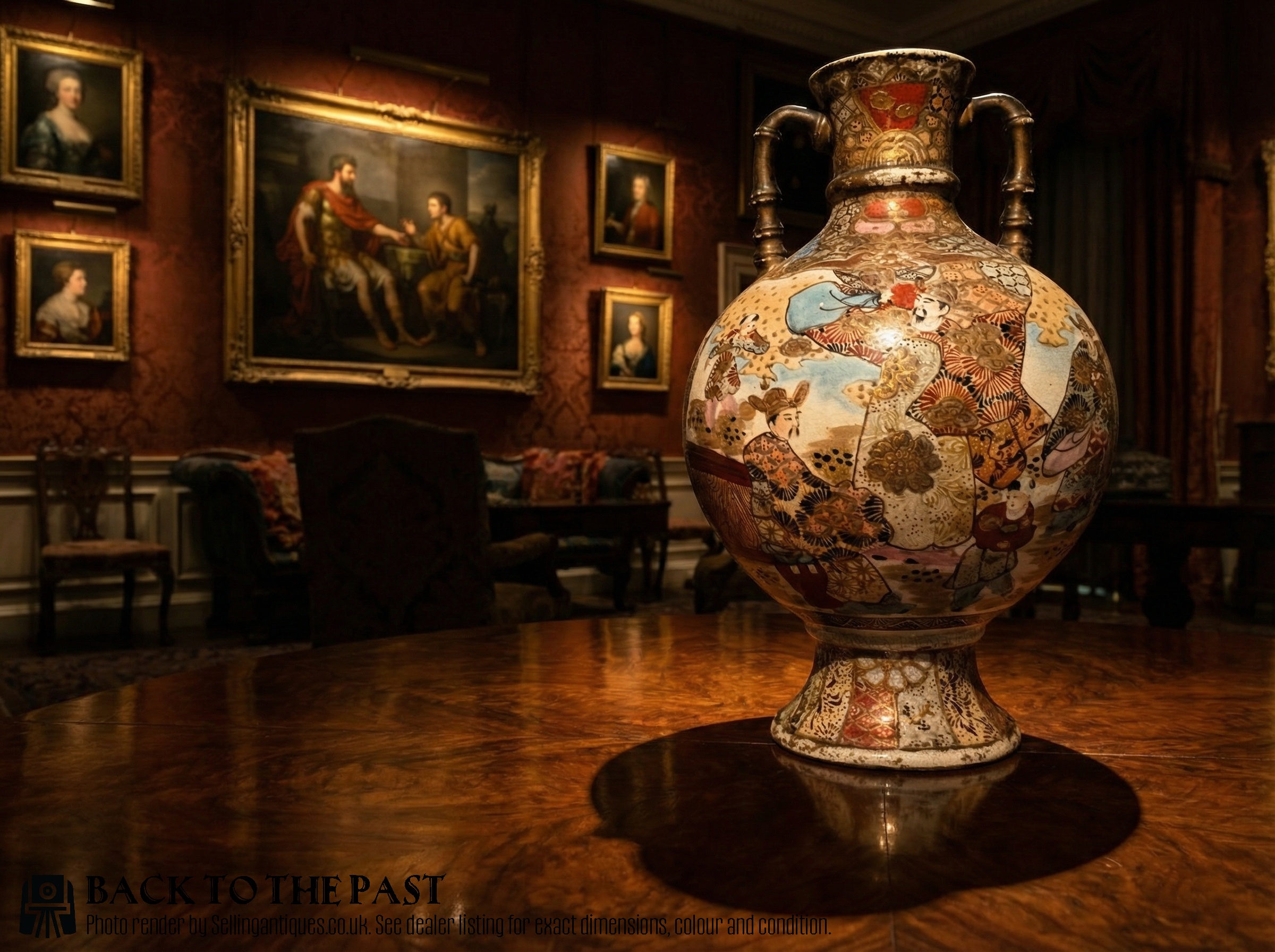
Distinction across these items rests upon the precision of the hand-painted brushwork and the complexity of the figural or landscape scenes. Master workshops executed compositions with immense detail in facial expressions, robes, and background elements.
The application of gold leaf and enamel determines the visual depth of a vessel. Pieces bearing signatures from recognised makers and specific Kyoto workshops reflect higher standards of regional ceramic artistry.
Maruni Kobe·Shozan·Kinkōzan·Hotoda·Chosei·Seiko-en Chokei·Yamashu·Kizan·Hakusan
The Asian Earthenware Urn Glossary
- Satsuma
- A type of Japanese pottery with a pale, ivory-coloured, crackled earthenware glaze. Artists decorated these surfaces extensively with enamel and gold.
- Koro
- A traditional Japanese incense burner fitted with a pierced cover. These ceramic or metal vessels often feature three legs and decorative handles.
- Meiji
- A period in Japanese history spanning from 1868 to 1912. Production during this era saw a surge in export ceramics destined for Western markets.
- Arhat
- One of the perfected followers of Buddha depicted in traditional Asian art. Ceramic representations frequently show groups of these figures alongside dragons.
Asian Earthenware Urn: Frequently Asked Questions
What is a Satsuma vase?
A Satsuma vase is a type of Japanese ceramic featuring a characteristic crackled earthenware body. Artisans painted these vessels with detailed coloured enamels and gold leaf.
Production flourished during the late nineteenth century, creating highly ornamental pieces intended for international export.
How do I identify Meiji period ceramics?
Meiji period ceramics date between 1868 and 1912, aligning with the reign of the Meiji Emperor. These items often display complex figurative scenes, rich gilding, and maker signatures from prominent Kyoto workshops.
Many pieces from this timeframe reflect the artistic exchange between Japanese makers and Western collectors.
Where were these ceramic urns made?
These vessels originated primarily in Japan during the late nineteenth and early twentieth centuries. Kyoto served as a major manufacturing centre for Satsuma ware.
Renowned workshops and individual artists in these regions produced marked pieces for both domestic use and global trade.
How should I display a jardiniere?
A jardiniere functions as an ornamental plant pot designed to rest on tabletops or floor stands. These ceramic vessels accommodate potted plants or floral arrangements.
Placement depends on the size of the piece, allowing the painted glazes and decorative motifs to remain visible.