
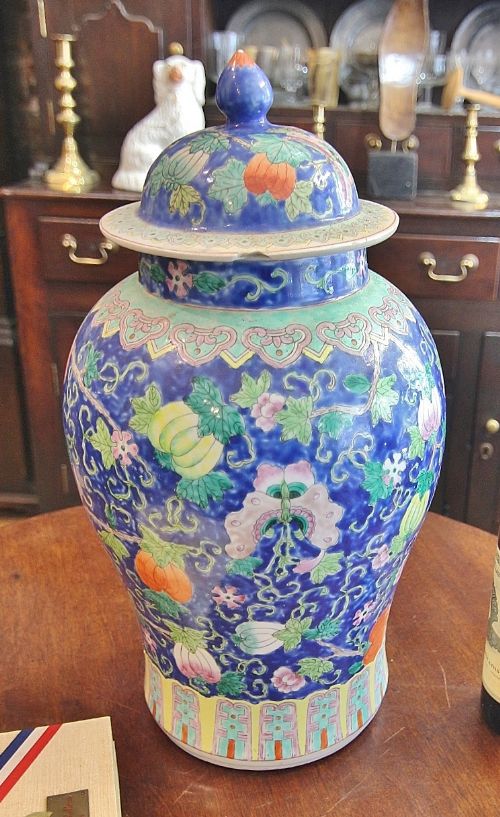


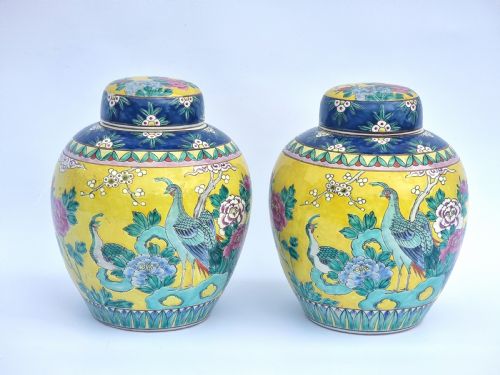


Oriental Lidded Ceramic Urn
An oriental lidded ceramic urn brings decorative weight and vibrant colour to a room, drawing the eye with intricate hand-painted detail.
Oriental Lidded Ceramic Urn
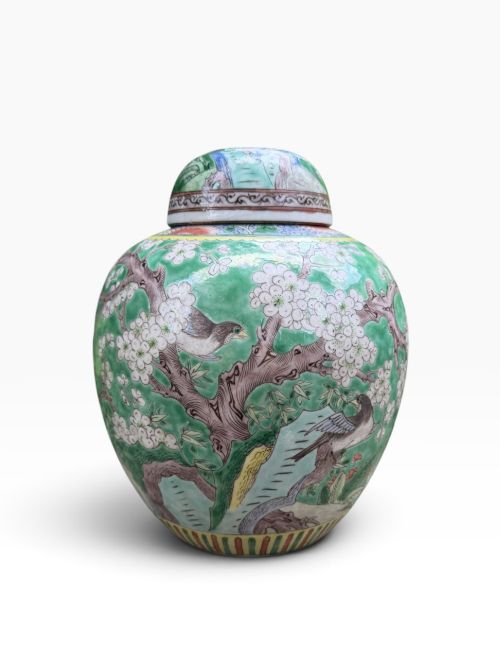
When buyers search for an oriental lidded ceramic urn, they encounter covered vessels originating from Japanese and Chinese kilns. The selection spans ginger jars, baluster vases with covers, and storage jars spanning several centuries.
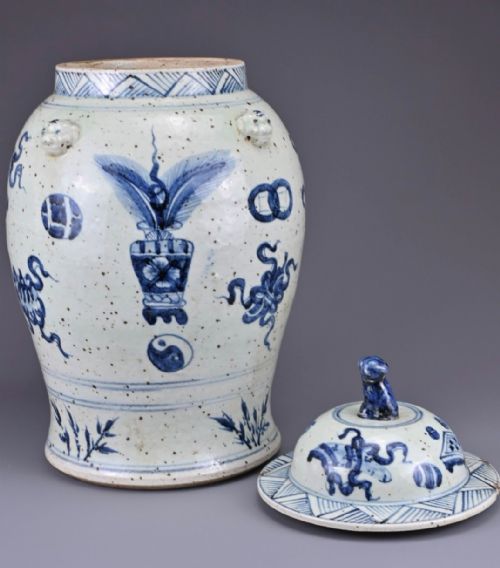
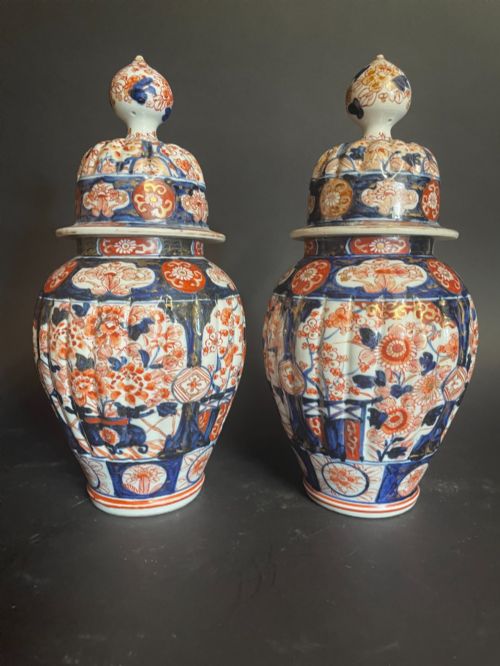
The version most frequently met on this page is the Japanese Imari lidded vase from the nineteenth century, alongside Chinese blue and white porcelain jars. These pieces range from substantial floor-standing urns down to domestic ginger jars.
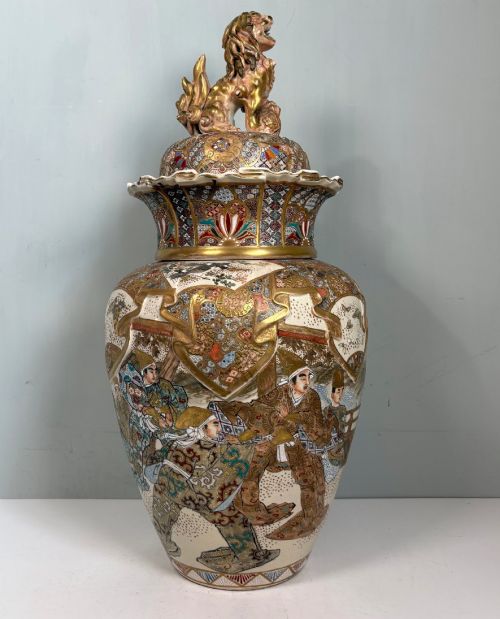
Origins include Arita, Satsuma, and Kutani production centres, reflecting diverse aesthetic traditions across East Asia. Makers utilised traditional forms adapted for both local use and export markets.
Materials and manufacture
Potters formed these pieces using porcelain and earthenware bodies, shaping them on the wheel or in moulds before applying ceramic glaze. Cobalt blue pigment under the glaze defines the classic Chinese blue and white pieces.
Overglaze enamel decoration, gold leaf, and gilding provide the rich palette seen on Imari and Satsuma wares. Artisans fired the vessels multiple times to fix the colours and metallic highlights onto the surface.
Five-claw dragons guard select Qing Dynasty jars, standing ready to pounce on any unsuspecting dust motes.
Judgements of quality
Quality rests in the precision of the hand-painted brushwork and the clarity of the ceramic glaze. Superior examples display disciplined control in complex floral, figurative, and geometric motifs.
The weight and balance of the lid relative to the body indicate the standard of production. Finer vessels maintain crisp detail in the gilding and enamels without blurring at the edges of the pattern.
Fukagawa
The Oriental Lidded Ceramic Urn Glossary
- Imari
- A style of Japanese porcelain decorated in underglaze blue, iron red, and gold. This palette originated in Arita and gained popularity across Europe.
- Satsuma
- A type of Japanese earthenware featuring a pale, ivory crackle glaze decorated with polychrome enamels and gold. It was widely produced for export during the nineteenth century.
- Ginger jar
- A ceramic vessel characterised by a wide body, high shoulder, and small mouth, typically fitted with a matching lid. Originally used for storing spices, they became decorative mantelpiece items.
- Baluster
- A vase form with a rounded lower body that tapers toward the neck, resembling an architectural baluster. This shape provides a stable base for intricate surface decoration.
- Doucai
- A Chinese porcelain technique combining underglaze blue outlines with overglaze polychrome enamels. Artisans fill in the blue-delineated designs with vibrant colours during a secondary firing.
Oriental Lidded Ceramic Urn: Frequently Asked Questions
How were oriental lidded ceramic urns used?
These vessels served practical functions for storing dry goods, spices, and tea leaves within traditional households. Over time, particularly in export markets, they transitioned into purely decorative display pieces.
Matching covers helped protect the contents while completing the symmetrical silhouette of the jar. Today, they remain decorative focal points on tables and mantelpieces.
How do I identify a Japanese Imari piece?
Japanese Imari porcelain is recognised by its distinct palette of cobalt blue underglaze combined with iron red and gold leaf overglaze. The patterns typically feature dense floral, landscape, or brocade motifs.
Most pieces date from the nineteenth century or earlier, reflecting the output of kilns centred around Arita.
What is the difference between Satsuma and Imari?
Satsuma wares utilise an earthenware body covered in a characteristic ivory-coloured crackle glaze, painted with detailed enamel and gold motifs. They have a matte, opaque finish compared to porcelain.
Imari pieces are hard-paste porcelain with a resonant ring, featuring glossy glazes and a brighter colour scheme dominated by blue and red.
How do I care for antique ceramic urns?
Dust these pieces gently with a soft, dry cloth to protect delicate overglaze enamels and gilding. Avoid using liquid cleaners or abrasive materials that can damage the surface.
Keep them away from direct sunlight and areas subject to sudden temperature changes to preserve the ceramic body and glaze.