


Satsuma Porcelain Jar
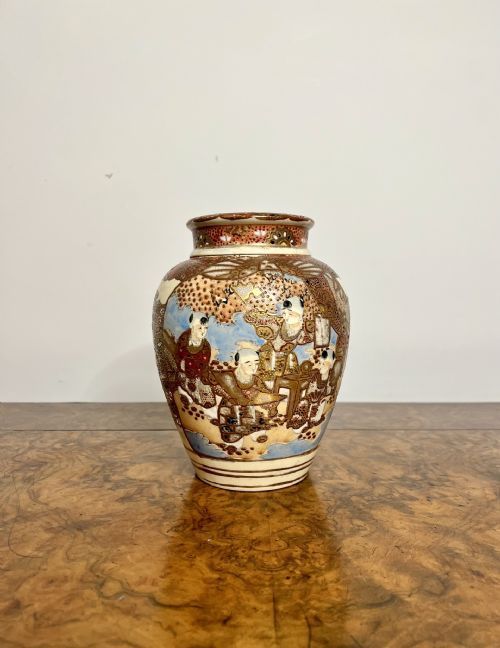
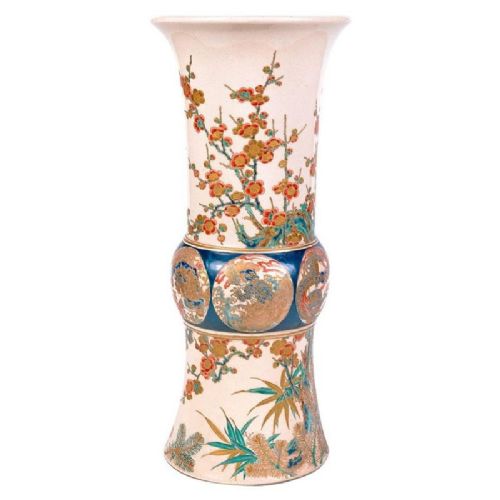
These satsuma porcelain jar pieces bring Meiji period craftsmanship to your room through intricate polychrome enamel and gold leaf.
Satsuma Porcelain Jar
A satsuma porcelain jar is typically encountered as a lidded ginger jar, tea caddy, or large decorative vase originating from the Meiji period.
The selections span from the 1880s through to 1910, reflecting Japanese Meiji period aesthetics alongside Victorian era appreciation.
Forms vary from miniature vases and sugar bowls to large lidded vases reaching eighty four centimetres in height, often accompanied by wooden elements.
How they were made
Maker workshops utilised earthenware and porcelain bodies as the foundation for detailed hand painted decoration.
Artisans applied polychrome enamel alongside gold leaf and extensive gilding to create rich surface patterns.
One towering lidded vase reaches eighty four centimetres high, demanding its own corner of the room.
What varies in quality
Distinction across the range rests on the precision of the hand painted brushwork and the clarity of the enamel work.
The presence of identifiable studio signatures, such as those from Kyoto studios or named makers, elevates individual examples.
Shuzan·Yamashu·Tokyo Taizan·Shozan
The Satsuma Porcelain Jar Glossary
- Meiji Period
- The era in Japanese history spanning from 1868 to 1912. Much of the decorative ceramics and Satsuma ware originate from this timeframe.
- Polychrome Enamel
- A technique involving multiple colours of glass paste applied to the ceramic body. This creates vibrant, multi-coloured decorative scenes.
- Gilding
- The application of gold leaf or gold powder onto the surface of an object. It highlights specific details and adds rich contrast to the enamel.
- Ginger Jar
- A globular vessel featuring a fitted cover, originally designed for storing spices. These forms became popular decorative items during the late nineteenth century.
Satsuma Porcelain Jar: Frequently Asked Questions
How do I date a Satsuma jar?
Dating relies on stylistic markers associated with the Meiji period and specific production decades like the 1880s or 1900s. Examining the base for signatures or studio marks provides further chronological context.
Changes in enamel saturation and gilding techniques across the late nineteenth and early twentieth centuries also help narrow down the period of manufacture.
Are all Satsuma pieces actually porcelain?
While often referred to under ceramic umbrellas, many traditional Satsuma pieces utilise a fine earthenware body rather than true porcelain. This earthenware base absorbs the distinctive crackle glaze characteristic of the style.
Individual listings reflect these material distinctions between earthenware and porcelain construction.
How were lidded jars used originally?
Lidded jars and tea caddies served practical functions for storing tea, sugar, or spices within households. Their decorative qualities meant they were also displayed prominently in reception rooms.
Over time, their role shifted primarily toward ornamental display as imported Japanese art gained popularity in Europe.
How should I display a large Satsuma vase?
Large lidded vases and jars require stable surfaces that can support their substantial weight, especially pieces reaching significant heights like eighty four centimetres. Placing them away from direct foot traffic protects the delicate enamel and gold leaf details.
Pairing them with wooden stands often used in presentation enhances their visual stability and protects the base.