



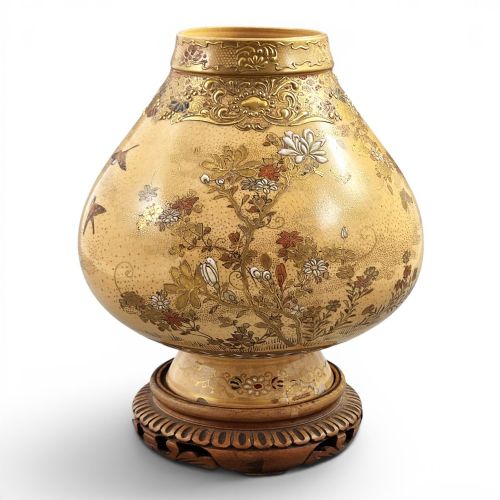
Satsuma Ceramic Vase
Satsuma ceramic vase pieces bring intricate Japanese artistry into a room through hand-painted earthenware decorated with enamel and gold leaf.
Satsuma Ceramic Vase
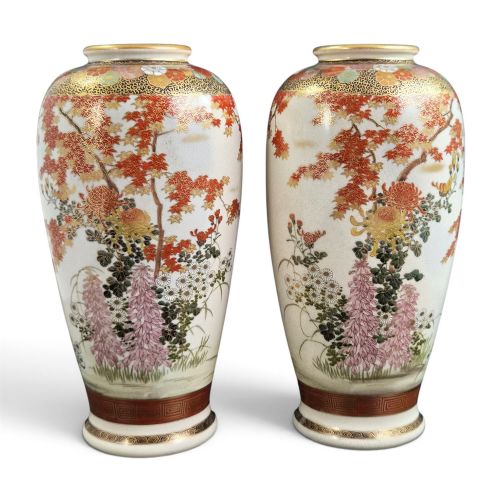
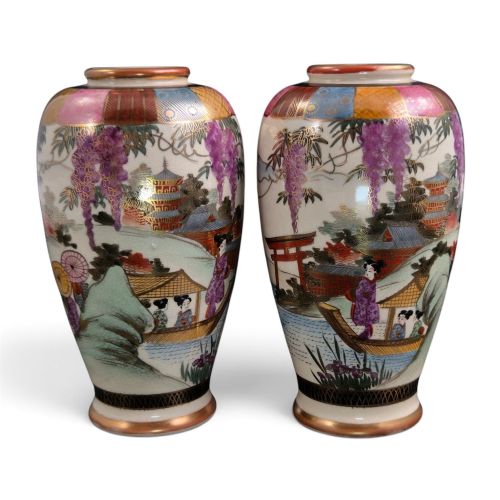
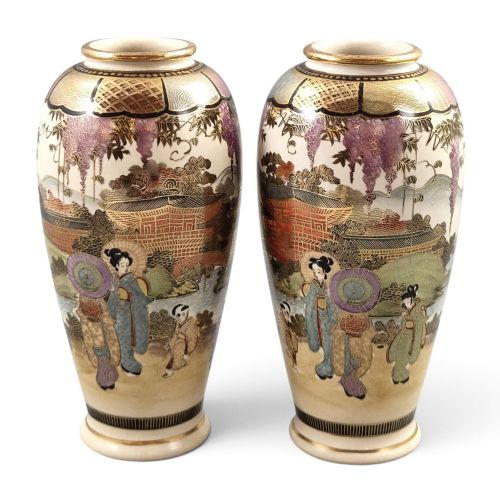
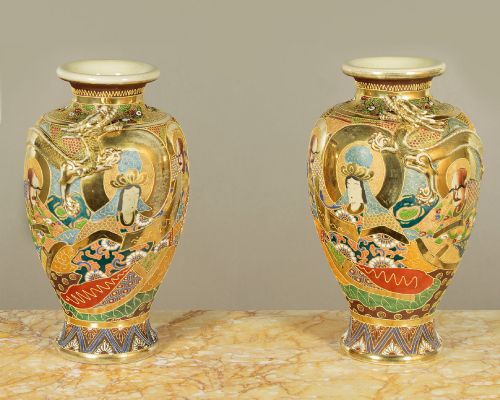
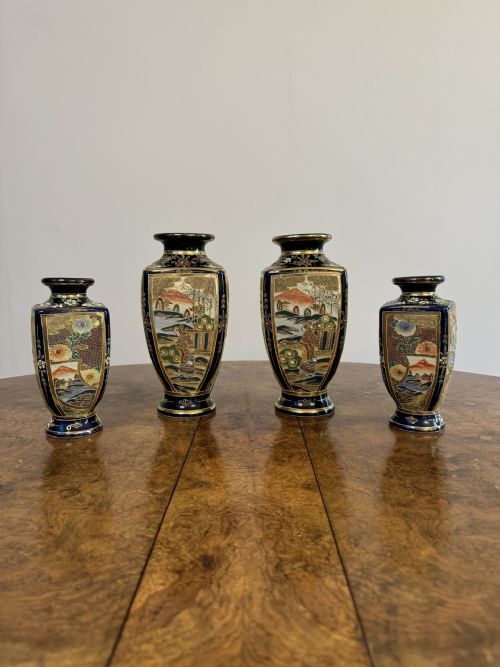
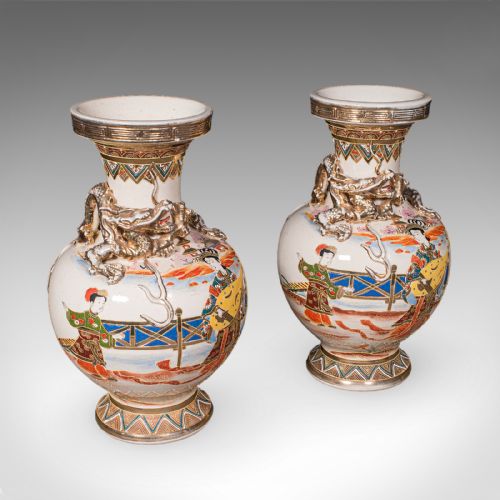
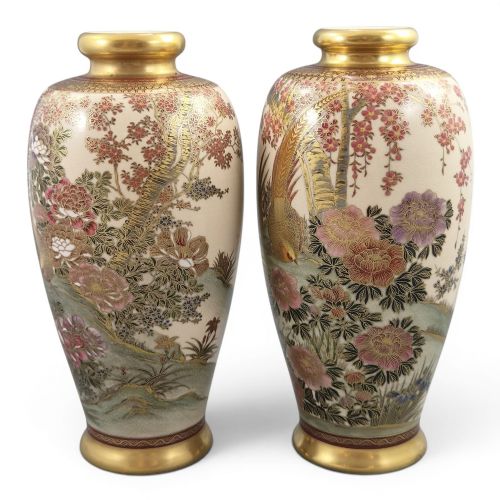
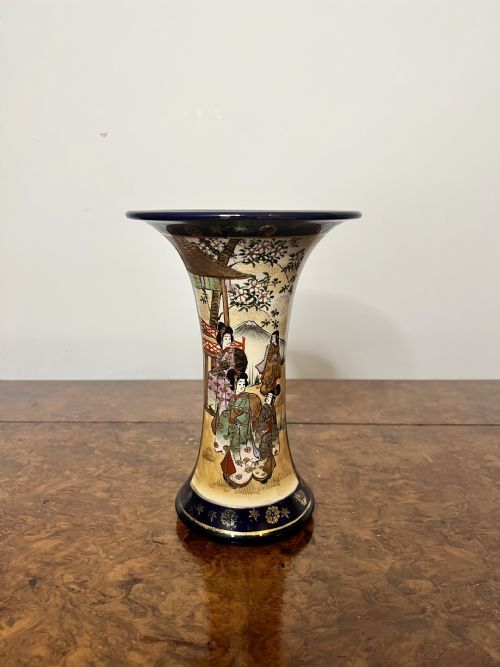
A satsuma ceramic vase typically presents detailed figurative or landscape scenes rendered in enamel and gold leaf over an earthenware body. The items on this page span the Meiji, Taisho, and Showa periods, capturing decades of historic Japanese ceramic production.
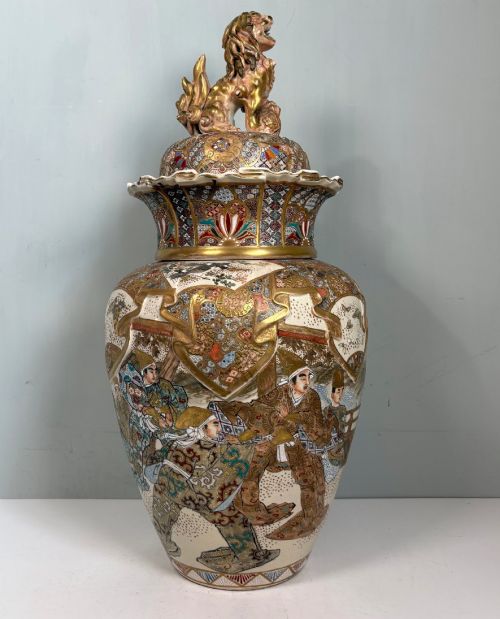
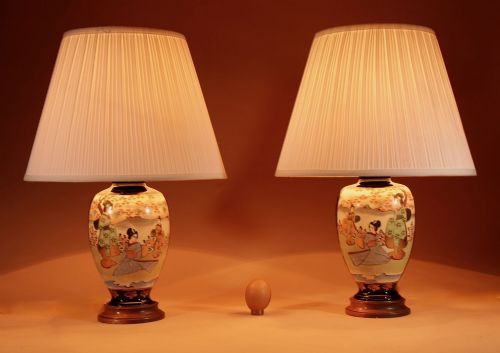
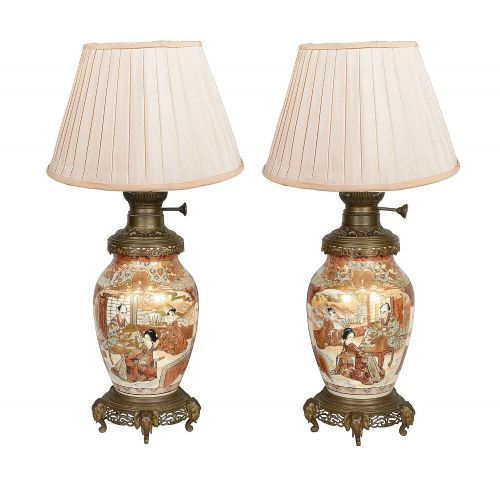
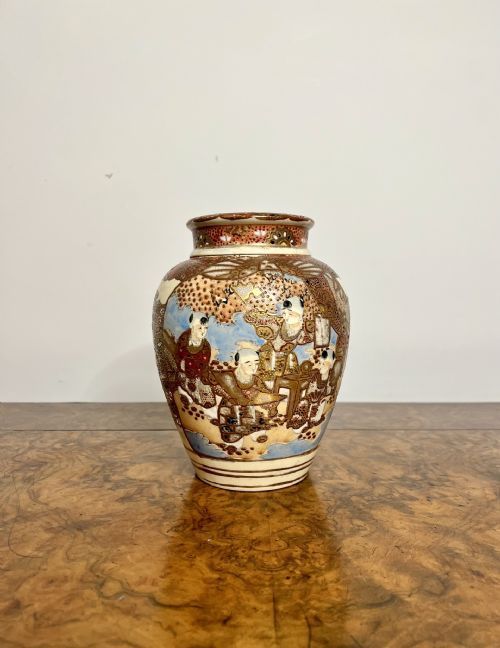
Buyers will encounter various forms ranging from miniature vessels and ginger jars to large baluster vases, hexagonal shapes, and occasional table lamp conversions. Pairs and garniture sets appear alongside single decorative pieces.
The aesthetic bridges traditional Japanese motifs, such as figures, flora, and dragons, with Western decorative tastes popular during the late nineteenth and early twentieth centuries.
Materials and construction
Makers utilised a characteristic earthenware body covered with a finely crackled glaze that provides the distinct canvas for subsequent decoration. Artists then applied rich enamel pigments alongside extensive gold leaf and gilt detailing.
Techniques often include moriage, where slip is built up in raised dots or lines to create texture, framing panels of court figures, arhats, or natural subjects like wisteria.
Several pieces feature lively depictions of the Seven Gods of Good Fortune alongside fierce dragons.
Evaluating the pieces
Quality rests upon the precision of the hand-painted brushwork and the clarity of the underlying crackle glaze. Fine examples display delicate figural expressions and controlled use of gilt rather than heavy or crowded designs.
The reputation of specific workshops and signed pieces elevates a work, distinguishing standard decorative items from master-produced objects intended for international exhibition.
Maruni Kobe·Shozan·Manpei·Kinkōzan·Hotoda·Chosei·Nanzan·Yamashu
The Satsuma Ceramic Vase Glossary
- Moriage
- A decorative technique using raised slip decoration to create a textured, three-dimensional effect on ceramics. This method highlights specific borders and details in the overall design.
- Earthenware
- A porous pottery body fired at lower temperatures, which serves as the traditional base for satsuma wares. It requires a glaze to achieve water resistance.
- Gilt
- Application of gold or gold-coloured material to highlight decorative motifs and borders. It contrasts sharply with the colourful enamel pigments.
- Garniture
- A set of matching ceramic vessels, usually three or more pieces designed to be displayed together on a mantelpiece or sideboard.
- Baluster
- A vase shape characterised by a rounded body that tapers toward the base and swells near the lower middle.
Satsuma Ceramic Vase: Frequently Asked Questions
What is a satsuma ceramic vase?
A satsuma ceramic vase is a type of Japanese pottery featuring an ivory-coloured, crackle-glazed earthenware body painted with detailed enamels and gold leaf.
These vessels traditionally display traditional motifs including court figures, deities, landscapes, and butterflies reflecting both Japanese heritage and Meiji-era export styles.
How do I date a satsuma vase?
Dating relies on stylistic clues, workshop signatures, and the characteristics of the glaze and paste.
Pieces from the nineteenth century often feature denser hand-painted detail and specific studio marks from Kyoto or Kobe, whereas later twentieth-century items show different decorative borders and forms.
How were these vases used?
These pieces served primarily as decorative display items within homes, often showcased on tables, mantels, or as part of matched garniture sets.
Some examples have been converted into table lamps over time while retaining their original ceramic bodies and painted panels.
How should I care for a satsuma vase?
Care requires gentle dusting with a soft, dry cloth to protect the delicate enamel and gold leaf decorations from abrasion.
Avoid using water or chemical cleaners on the exterior surface, as moisture can penetrate the porous earthenware body and the characteristic crackle glaze.