


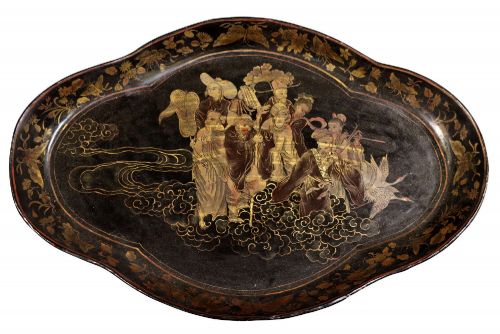
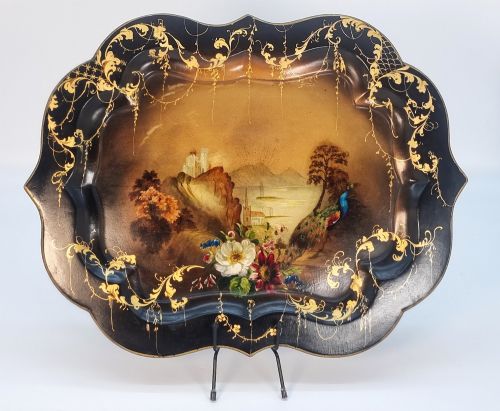

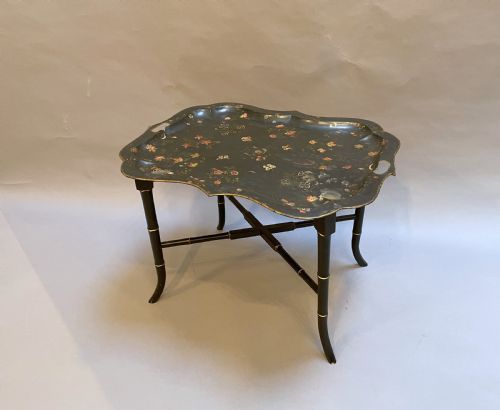


Hand Painted Lacquered Tray
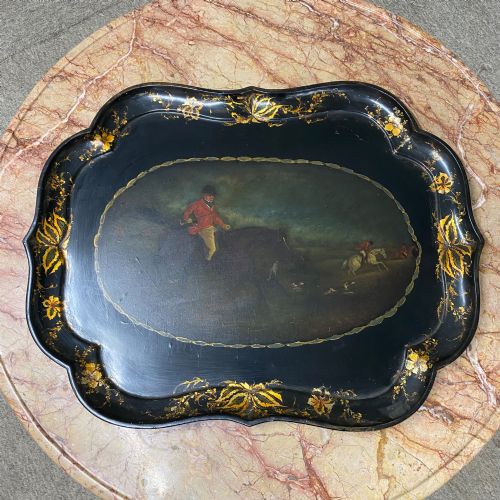
A hand painted lacquered tray brings a rich surface of gold leaf and intricate pigment to a room, serving both display and daily utility.
Hand Painted Lacquered Tray
When searching for a hand painted lacquered tray, a buyer encounters pieces originating from the Georgian, Regency, and Victorian eras, alongside Edwardian and later twentieth-century examples. The selection predominantly includes decorative serving trays and occasional pieces mounted as tray top coffee tables.
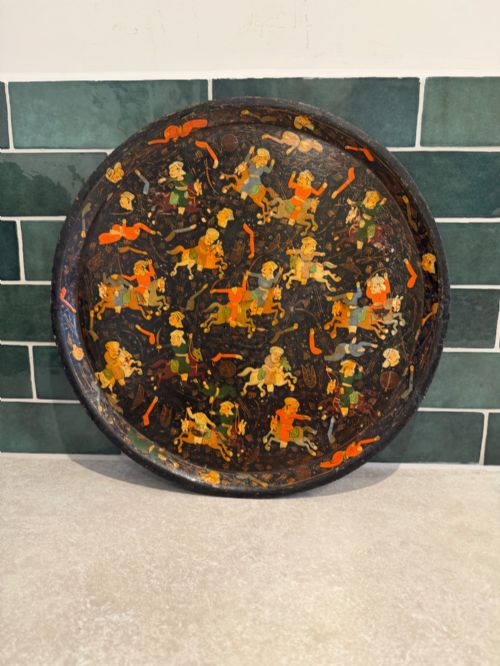
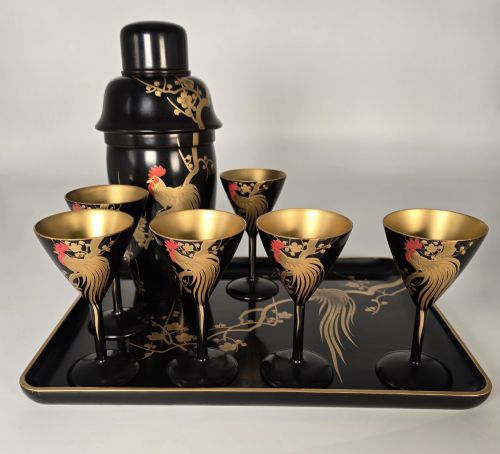
Origins span English workshops, Swedish pieces, and items from Kashmir, alongside Japanese and Anglo-Indian designs. These pieces range from large oval serving surfaces to smaller dishes and desk accessories.
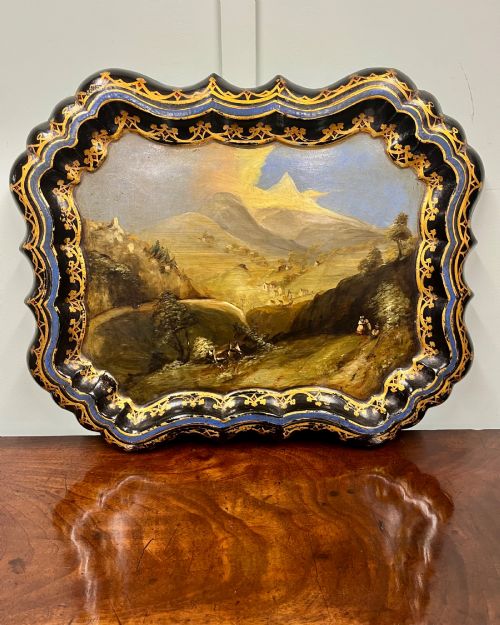
The most common finds on this page date from the nineteenth century, utilising papier-mâché or wood as a base for detailed pictorial or floral schemes. Many flat trays have also been placed on later stands to function as tables.
Construction and Materials
Makers built the foundational body using wood, toleware, or compressed layers of paper pulp known as papier-mâché, which provided a rigid yet light base. Artisans then applied multiple coats of lacquer to seal the surface and create a smooth sheen.
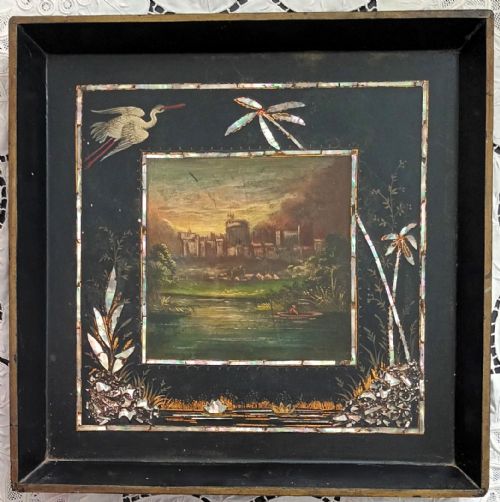
Decoration relied on hand-applied paint, often highlighted with gold leaf or gilt details. Some pieces incorporate mother-of-pearl inlay to catch the light within floral or landscape motifs.
Hand Painted Lacquered Tray Retail Price Guide 2026
Typical asking prices for hand painted lacquered tray among the pieces listed under this phrase on Sellingantiques today, from the lower quarter to the upper quarter. They describe what is for sale here now, not the wider market.
One enthusiastic maker painted an entire massive tray dedicated specifically to the contemplative art of fishing.
Assessing Quality
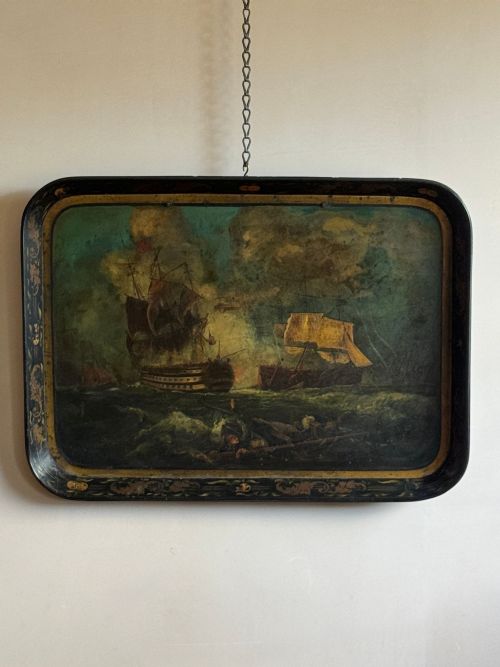
Quality rests in the depth of the lacquer surface and the execution of the hand-painted details. Finer examples display meticulous brushwork in landscapes, figures, or Chinoiserie scenes, whereas simpler items show a more naive hand.
The integrity of the underlying papier-mâché or wood structure dictates longevity, as does the retention of original gilding and surface decoration without excessive overpainting.
Jennens and Bettridge
The Hand Painted Lacquered Tray Glossary
- Papier-mâché
- A composite material made from paper pulp or layers of paper mixed with glue and resin, pressed and dried to form a sturdy base for lacquer. This technique allowed makers to mould lightweight trays with smooth, curved edges.
- Chinoiserie
- European artistic interpretations of Chinese and East Asian decorative styles, popular in painted and lacquered furnishings. This style often depicts pagodas, exotic figures, and botanical scenes in gold and colour.
- Toleware
- Painted or enamelled metalware, frequently iron or tin, used to create decorative trays and vessels. It provides a durable surface that accepts dark lacquer and gilt decoration well.
- Gilt
- A thin layer of gold leaf or gold paint applied to surface details to create highlights. It brings contrast against the dark background of the lacquer.
Hand Painted Lacquered Tray: Frequently Asked Questions
How do I use a tray table safely?
Most tray tables combine an antique tray top with a removable or fixed base. Place them away from direct heat sources to protect the historic lacquer.
Clean the surface only with a dry or barely damp soft cloth, avoiding modern chemical polishes that can soften the old finish.
Were these trays meant for serving?
Many nineteenth-century examples functioned as butlers' trays for drinks and food, while others served as desk tidies or letter racks. Their sturdy papier-mâché or wooden construction suited active daily use in period homes.
Today, many owners use them for display or as coffee tables rather than risking heavy service.
How do I distinguish Regency from Victorian pieces?
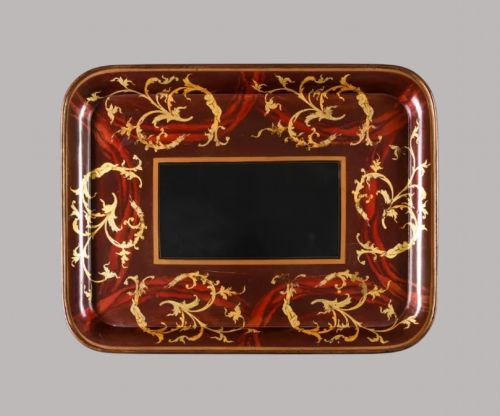
Regency trays often display classical motifs, bold Japanned finishes, and crisp geometric or Chinoiserie borders dating from the early nineteenth century. Victorian pieces frequently introduce more complex landscape paintings, mother-of-pearl inlay, and naturalistic floral arrangements.
Examining the depth of the lacquer and the style of the painted scenes helps clarify the period of manufacture.
What is Kashmiri lacquerware?
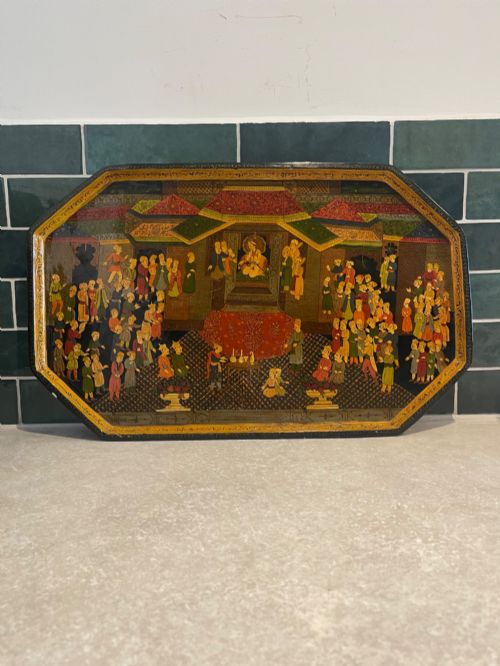
Kashmiri items in this category feature distinct regional hand-painted patterns on papier-mâché foundations, often reflecting Middle Eastern or South Asian floral traditions. British trade and colonial connections brought these distinctive pieces to the European market during the nineteenth century.
They share structural similarities with English papier-mâché but are identified by their unique palette and ornamental vocabulary.