


Asian Hand Painted Platter
An asian hand painted platter is a striking ceramic or papier-mache centrepiece that brings centuries of skilled decoration into a modern interior.
Asian Hand Painted Platter
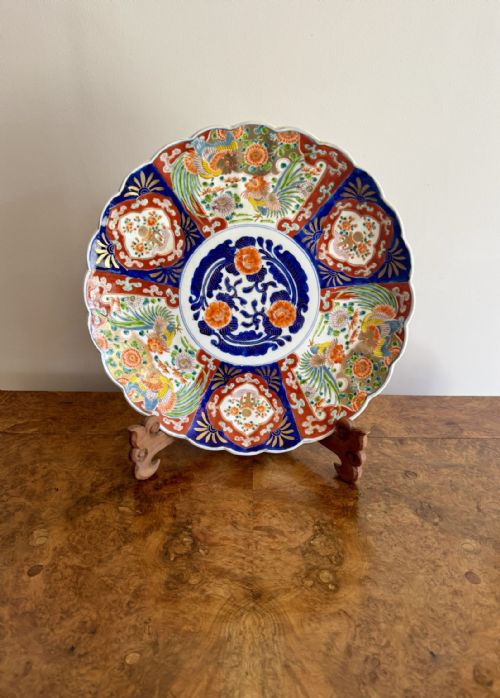
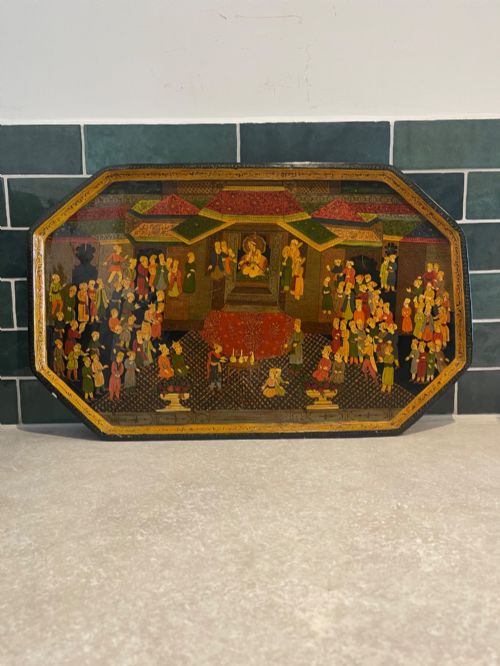
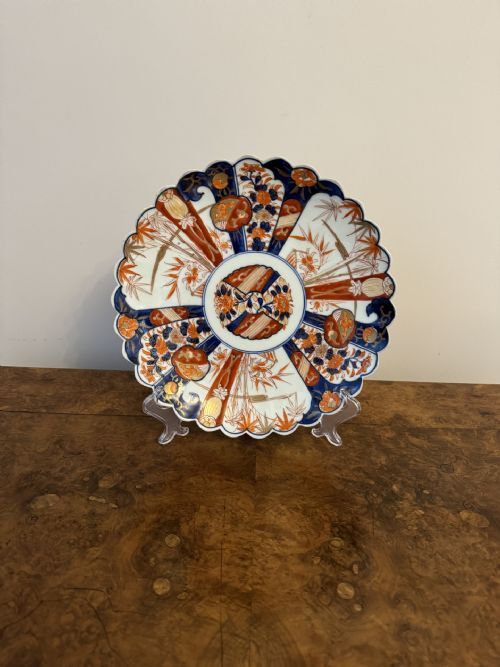
When you search for an asian hand painted platter, you encounter a selection spanning the nineteenth century, Victorian era, and early twentieth century. These pieces predominantly take the form of Japanese Imari chargers, decorative plates, and shallow bowls originating from the Meiji and Edo periods, alongside Chinese export porcelain and Kashmiri papier-mache trays.
The objects serve primarily as decorative chargers and large display plates rather than everyday tableware. Scalloped edges, square forms, and large diameters define the physical appearance of these items across the listed inventory.
Makers and origins include traditional Japanese kilns such as Kutani, Fukagawa, and Arita, alongside European interpretations like French Japonesque porcelain. Buyers regularly select these items to mount on walls or display on stands as focal points within a room.
How they were made
Potters shaped porcelain and ceramic bodies before applying cobalt underglaze, enamel, and gold leaf highlights. Artisans combined these mineral pigments with clear glaze and firing techniques to achieve deep blues, reds, and gilt accents on chargers and plates.
Kashmiri items utilised papier-mache construction painted with intricate surface designs. The physical creation relied on hand-applied pigments sealed to create durable decorative trays and dishes.
Listings feature porcelain, enamel, gold leaf, and papier-mache across nineteenth-century and early twentieth-century periods.
What varies in quality
The intricacy and precision of the hand-painted brushwork separate standard production from superior examples. Artisans who rendered complex figural scenes, such as the Seven Lucky Gods, or detailed floral motifs with precise enamel and gold leaf attained a higher grade of craftsmanship.
The depth of colour in cobalt underglaze and the richness of the gilding dictate the visual impact of each charger. Exceptional pieces maintain crisp outlines and vibrant mineral colours across the porcelain surface.
Fukagawa·Louis Pierre Malpass
The Asian Hand Painted Platter Glossary
- Charger
- A large ornamental plate utilised for display rather than for serving food at the table. These items measure significantly larger than standard dinner plates.
- Imari
- A traditional style of Japanese export porcelain characterised by a palette of cobalt blue, iron red, and gold. This ware originated in the town of Arita.
- Meiji Period
- The era of Japanese history spanning from 1868 to 1912, noted for a surge in decorative arts produced for international export. Pieces from this time often feature detailed enamel work.
- Kutani
- A style of Japanese porcelain known for bold pictorial designs and rich polychrome enamels. These items frequently display figurative and nature scenes.
- Cobalt Underglaze
- A blue pigment applied to ceramic pieces before the application of clear glaze and firing. This technique produces deep blue designs that withstand high kiln temperatures.
Asian Hand Painted Platter: Frequently Asked Questions
How were asian hand painted platters used?
These large plates and chargers functioned primarily as decorative display items in formal rooms rather than for daily dining.
Households placed them on sideboards, mounted them on walls, or rested them on stands to showcase the painted artistry.
What is the difference between Imari and Kutani?
Imari ceramics typically employ a palette of cobalt blue, iron red, and gilt highlights featuring geometric and floral patterns.
Kutani pieces often display more pictorial, colourful enamel scenes depicting figures, birds, and landscapes.
How do I care for a papier-mache tray?
Papier-mache items require dry dusting with a soft cloth and protection from moisture and direct sunlight.
Displaying them away from damp environments preserves the painted surface and structural integrity.
Can I hang a heavy charger on the wall?
Hanging requires a secure, properly fitted spring hanger designed to distribute the weight of porcelain safely.
Ensuring the wall fixing matches the load prevents accidental slips or damage to the ceramic body.