




Hand Painted Blue Plate
When you handle a hand painted blue plate, you hold centuries of ceramic tradition and pigment chemistry in your hands.
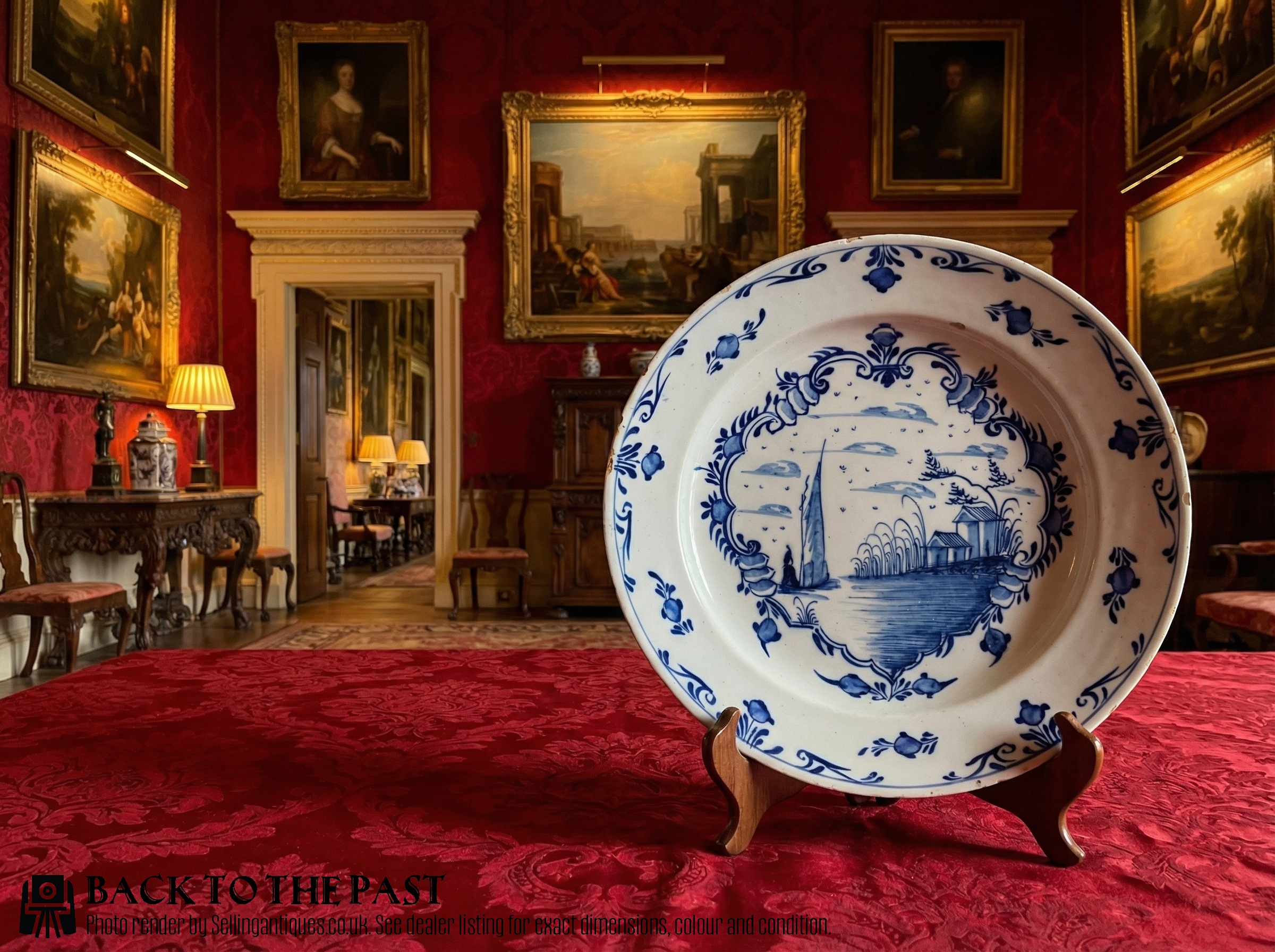
Hand Painted Blue Plate
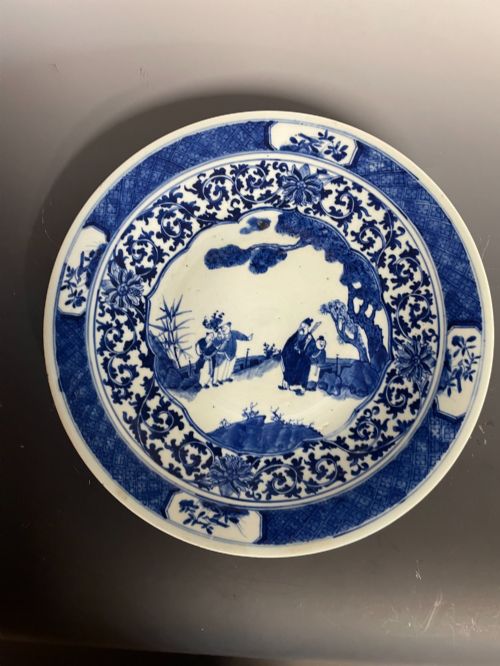
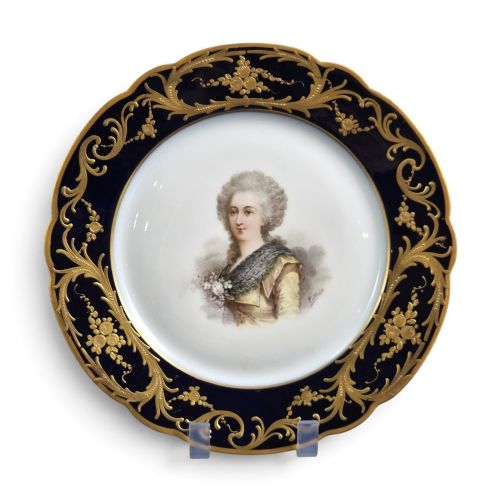
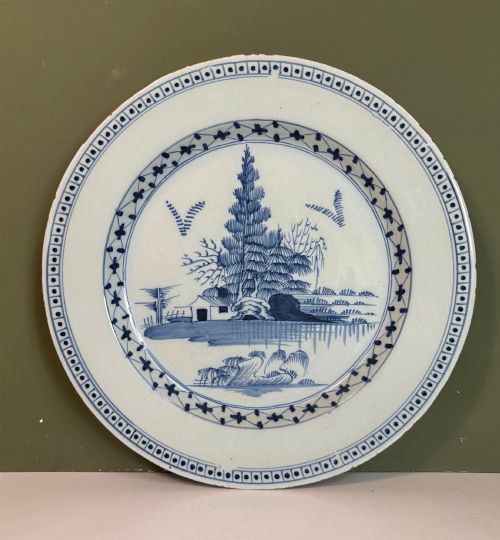
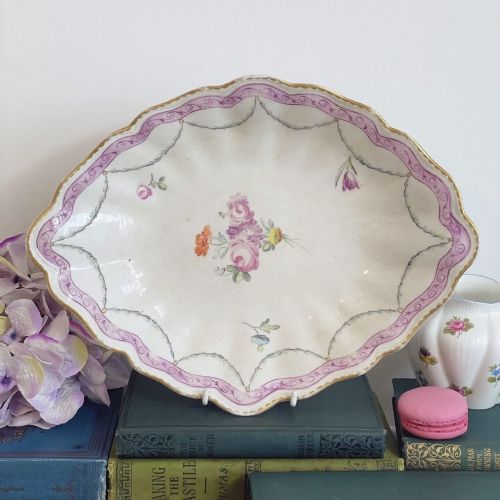
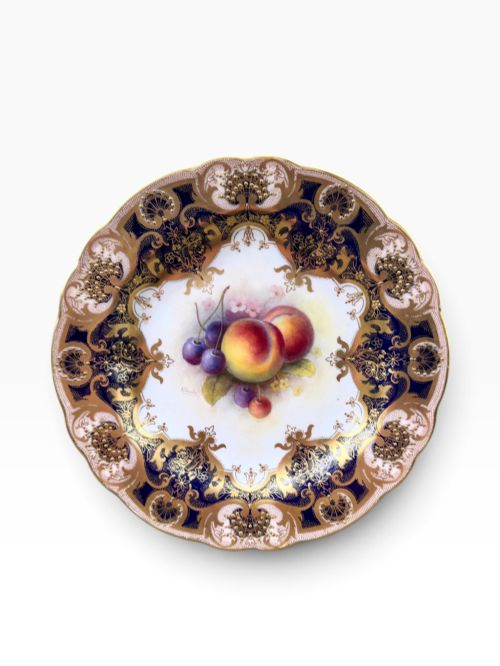
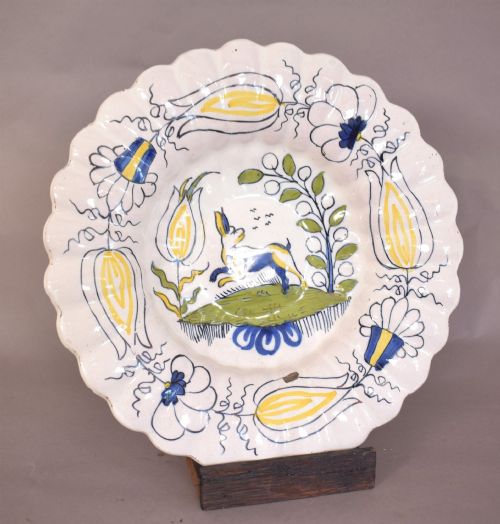
A hand painted blue plate encompasses decorative chargers, cabinet plates, and serving dishes produced across multiple centuries and regions. Buyers encounter diverse forms ranging from eighteenth-century tin-glazed earthenware to late nineteenth-century porcelain.
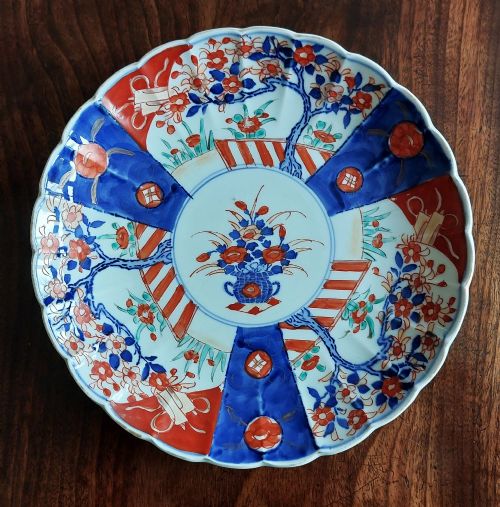
The pieces on this page span the seventeenth century through to the mid-twentieth century, capturing shifts in domestic display and dining habits. English creamware, Dutch delft, and Japanese imari wares dominate the selection.
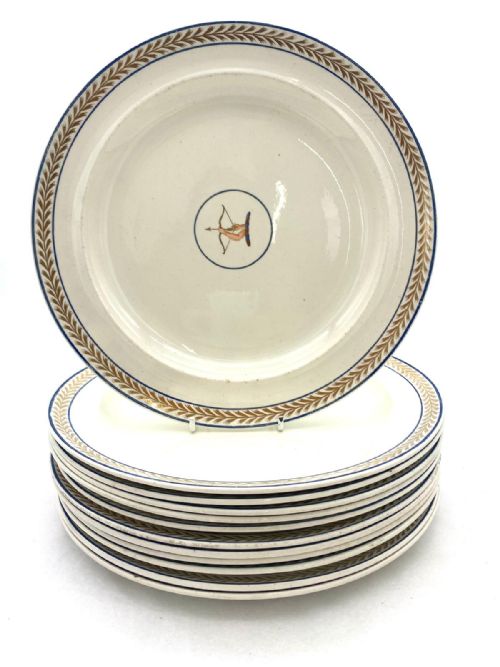
Makers utilised cobalt and various blue pigments to create botanical scenes, armorial bearings, and intricate geometric borders. The physical forms vary from standard circular dinner plates to scalloped dishes and large wall chargers.
Materials and Construction
Makers relied primarily on porcelain, earthenware, and tin-glazed earthenware as the base body for these painted items. Potters shaped the clay before applying mineral glazes and firing the pieces in kilns at high temperatures.
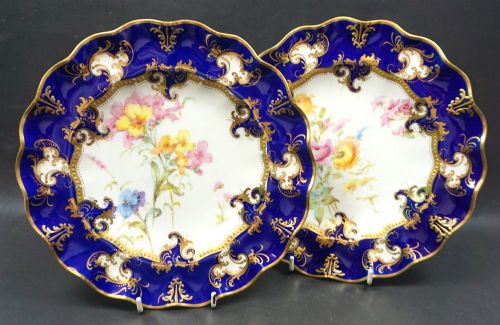
Artisans applied cobalt blue pigments by hand, sometimes combining underglaze painting with overglaze gilding and gold leaf accents. Tin-glazing provided an opaque white surface that absorbed the blue oxides, producing distinctive soft edges to the brushwork.
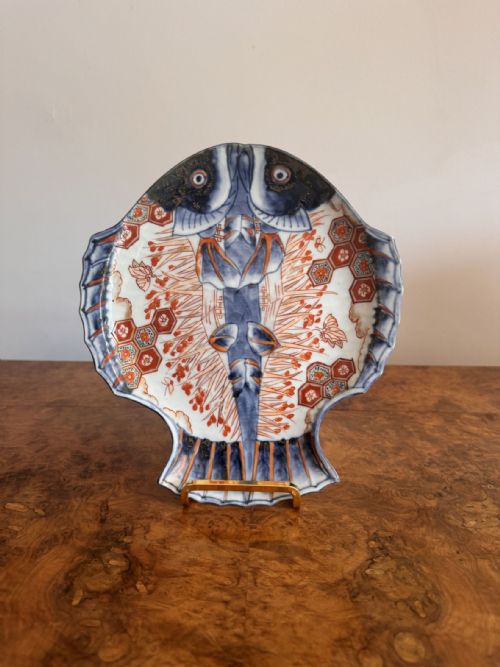
One remarkably persistent nineteenth-century artisan even painted a plate shaped like a swimming fish.
Assessing Quality and Execution
The precision and fluidity of the brushwork separate standard production from exceptional studio output. Master painters achieved tonal depth through controlled pigment dilution, whereas lesser pieces show rushed or uniform strokes.
The purity of the ceramic paste and the stability of the glaze during firing dictate the baseline quality of the plate. Finer pieces maintain crisp details and even glaze coverage without excessive warping or kiln blemishes.
Royal Worcester·Wedgwood·Royal Crown Derby·Meissen·Hicks and Meigh
The Hand Painted Blue Plate Glossary
- Imari
- A style of Japanese export porcelain featuring deep cobalt blue, iron red, and gold, originating in the Edo period. These wares heavily influenced European ceramic design throughout the eighteenth and nineteenth centuries.
- Tin-Glazed Earthenware
- Pottery coated with a lead glaze made opaque by the addition of tin oxide. This technique created a smooth white canvas suitable for direct painting.
- Charger
- A large decorative plate intended for display on a sideboard or wall rather than for active dining. Eighteenth-century examples often measure over thirty centimetres in diameter.
- Creamware
- A refined fine earthenware developed in England during the eighteenth century, characterised by a pale yellowish-cream glaze. Josiah Wedgwood perfected this body for armorial dinner services.
- Armorial
- Ceramic decoration featuring a family crest, coat of arms, or heraldic device commissioned by elite patrons. These custom services identify the original owners of the tableware.
Hand Painted Blue Plate: Frequently Asked Questions
How were these large blue plates used?
Large chargers and decorative plates served primarily as display pieces on sideboards or walls during formal meals. Smaller cabinet plates functioned as dessert courses or prestige items in wealthy households.
Over time, many of these items transitioned from functional dining ware into purely decorative objects collected for their artistic merit.
How do I date a blue and white ceramic plate?
Dating relies on examining the physical characteristics of the ceramic body, glaze consistency, and factory marks on the reverse. Early pieces show thicker potting and tin glazes, while later porcelain displays refined translucency.
Comparing the painting style and motifs against documented periods helps narrow the production decade.
Are these plates suitable for daily use?
Most antique plates featuring delicate overglaze painting, gold leaf, or soft earthenware bodies are unsuited for modern dishwashers and rigorous daily dining. They require careful handling and gentle hand washing to preserve the painted surface.
Displaying them on plate stands or wall mounts protects the historic glaze from accidental chips.
What is the difference between delft and imari?
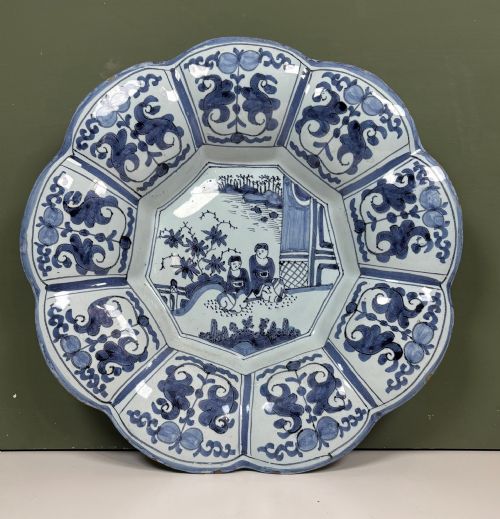
Delft refers to European tin-glazed earthenware, predominantly produced in blue and white imitating Chinese porcelain, featuring opaque white surfaces and fluid brushstrokes. Imari denotes Japanese export wares characterised by cobalt blue combined with iron red and gold.
Both styles appear frequently among antique blue plates but utilise entirely different clay bodies and pigment palettes.