



Dutch Delft Plate
When you search for a dutch delft plate, you enter a world of tin-glazed earthenware shaped by centuries of Dutch pottery traditions.
Dutch Delft Plate
A dutch delft plate encompasses a range of ceramic forms, from shallow bowls and standard plates to large chargers designed for display. These objects date primarily across the seventeenth, eighteenth, and nineteenth centuries, reflecting long-standing European pottery traditions.
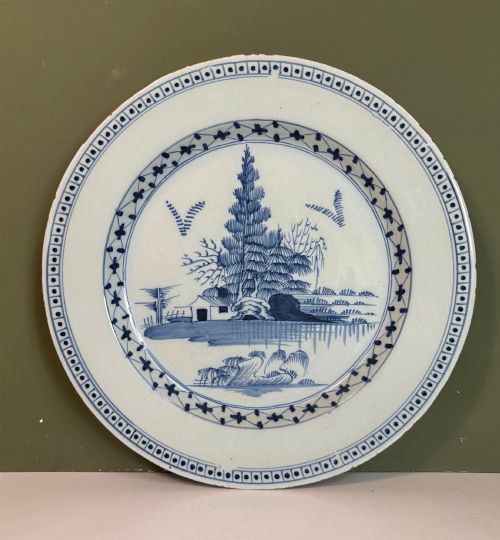
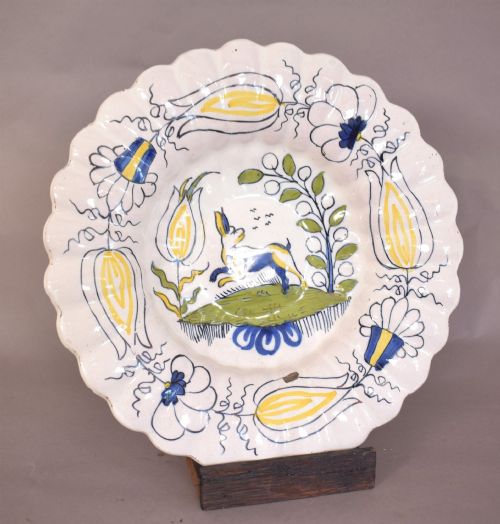
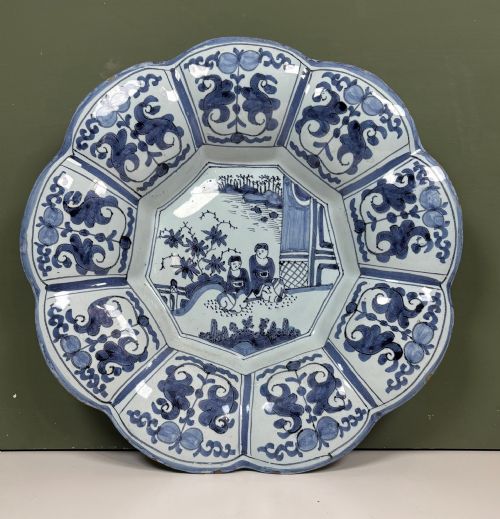
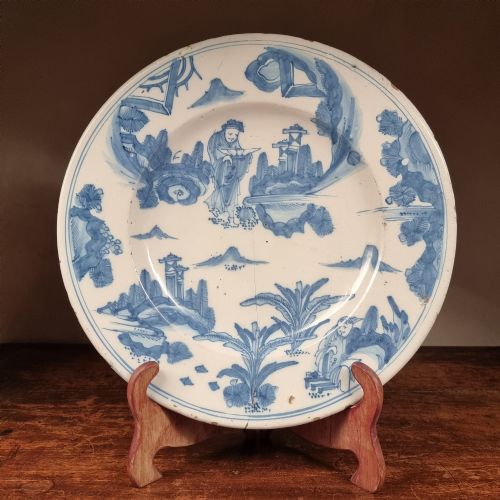
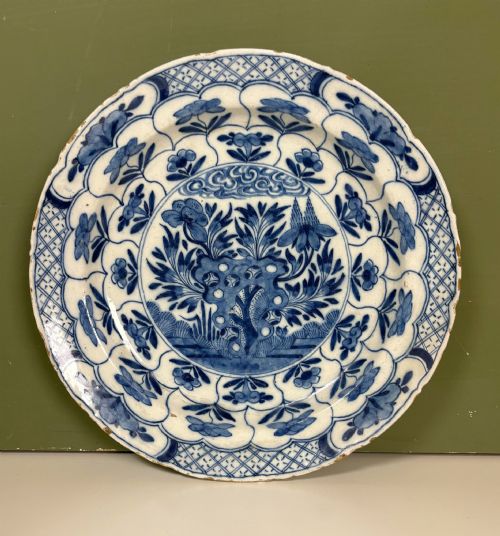
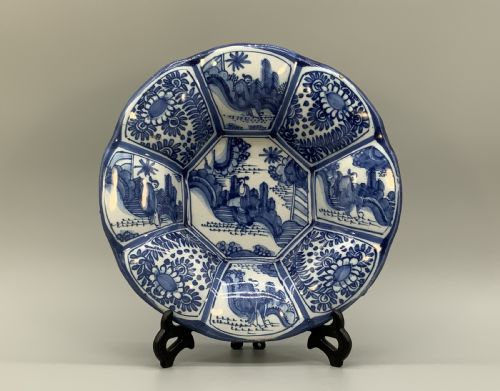
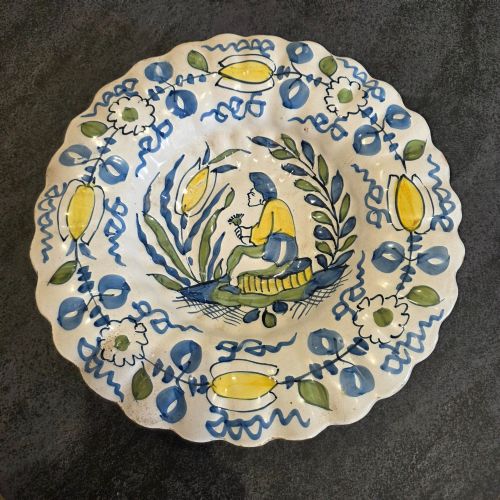
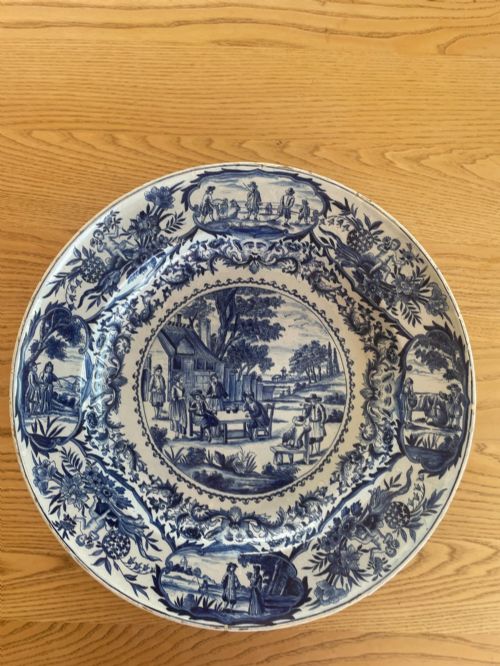
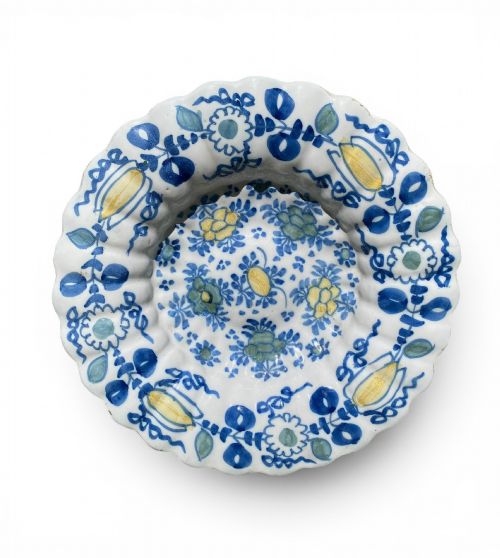
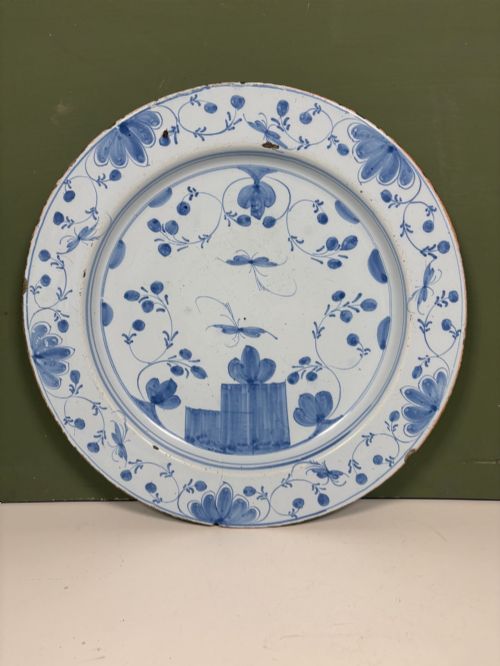
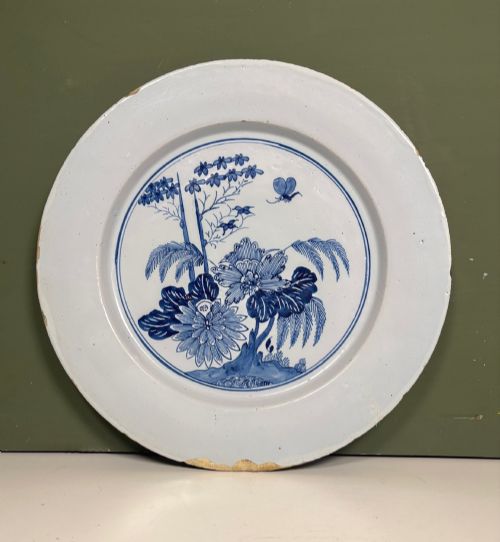
The pieces available on this page lean heavily towards eighteenth-century production, alongside seventeenth-century examples featuring Kraak-style influences or lobed rims. Common motifs include geometric florals, Chinese-inspired scenes, and polychrome palettes depicting figures or birds.
Buyers will encounter single plates, matching pairs, and larger sets alongside decorative dishes and chargers. Formats vary from standard dining sizes to expansive wall chargers intended to command attention in a room.
How they were made
Potters formed these items using earthenware clay, coating the fired body in a tin glaze that provided an opaque white surface for painting. Cobalt pigment and manganese created the distinct blue and multi-coloured designs applied directly onto the absorbent glaze.
Grand feu techniques allowed specific pigments to fuse permanently with the glaze during high-temperature firings, yielding durable surfaces with deep colour saturation. Artisans executed hand-painted compositions ranging from simple floral borders to intricate Chinoiserie landscapes.
Listings feature tin-glazed earthenware objects spanning the seventeenth to the nineteenth centuries, with eighteenth-century examples dominating the selection.
What varies in quality
The distinction between ordinary and exceptional examples rests upon the precision and fluidity of the hand-painted brushwork. Superior items display confident, detailed brush strokes in cobalt or polychrome pigments that bring floral and figurative motifs to life.
Glaze consistency and firing success heavily influence the visual appeal of each charger or dish. Smooth, evenly distributed tin glaze without heavy pooling or excessive dry patches elevates the overall presentation of the ceramic surface.
The Dutch Delft Plate Glossary
- Tin-glazed earthenware
- Earthenware pottery covered with a white tin oxide glaze that provides an opaque background for painted decoration. This technique forms the fundamental basis of all traditional Dutch delftware.
- Charger
- A large decorative plate traditionally used for ceremonial display on tables or walls rather than daily dining. These oversized vessels often showcase the most ambitious painted scenes.
- Chinoiserie
- European artistic styles reflecting Chinese motifs and aesthetic traditions, popular in seventeenth and eighteenth-century ceramic design. Painters rendered imaginary Eastern landscapes and figures onto Dutch plates.
- Polychrome
- Decoration employing multiple colours rather than a single pigment like blue and white. These palettes frequently incorporate greens, yellows, reds, and manganese on tin glaze.
- Kraak style
- A type of imported Chinese porcelain design imitated by Dutch potters, characterised by panelled borders and central aquatic or floral motifs. Seventeenth-century examples often adopt this distinctive layout.
Dutch Delft Plate: Frequently Asked Questions
What is a dutch delft plate?
A dutch delft plate is a tin-glazed earthenware ceramic made in the Netherlands, decorated with hand-painted blue and white or polychrome designs. These pieces range from functional tableware to large decorative chargers intended for display.
Potters produced them across several centuries, with particular emphasis on seventeenth and eighteenth-century styles influenced by European tastes and Asian imports.
Were these plates used for dining?
While standard plates saw service at the table, larger chargers served primarily as decorative items for display on sideboards and walls. Their tin-glazed surfaces were somewhat soft and prone to chipping during heavy daily use.
Marriage plates and commemorative pieces were often created to mark special family occasions rather than for routine household dining.
How do I identify seventeenth-century pieces?
Seventeenth-century examples often exhibit Kraak-style panel borders, heavy earthenware bodies, and deep cobalt blue painting. Lobed rims and maritime or Chinese-inspired scenes are also typical of this earlier period of production.
Examining the glaze composition and potting characteristics helps distinguish these robust early items from lighter eighteenth-century manufacturing.
How should I display my charger?
Large chargers and decorative dishes work well mounted securely on walls using specialist plate hangers designed to distribute weight evenly. Alternatively, sturdy plate stands allow them to sit safely on sideboards or mantelpieces.
Keep these ceramics away from direct, strong sunlight and areas with fluctuating humidity to protect the integrity of the earthenware and glaze.