

Delftware Ceramic Plate
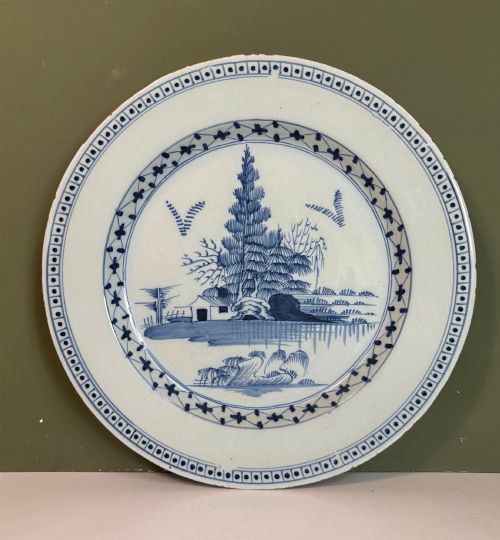
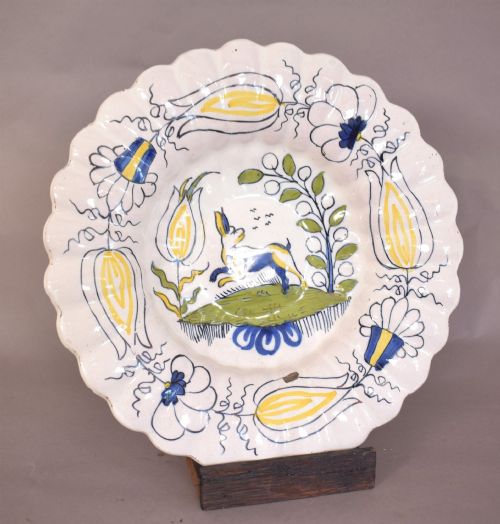
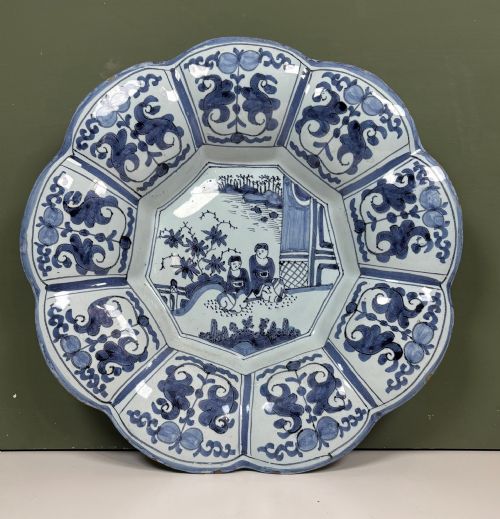
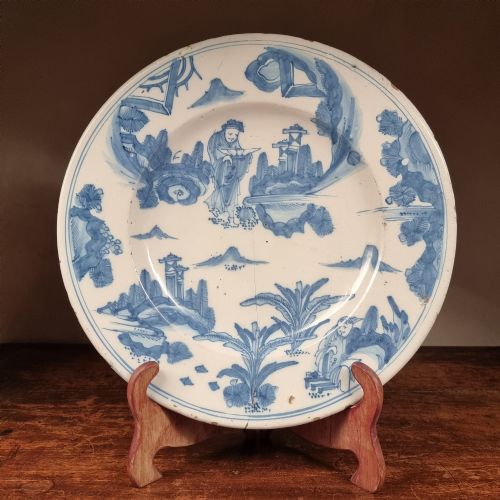
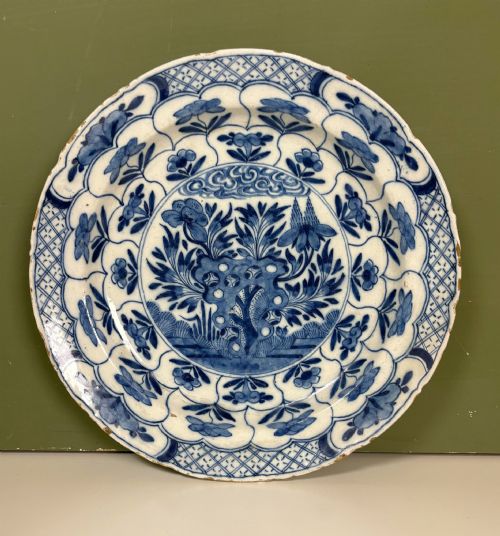
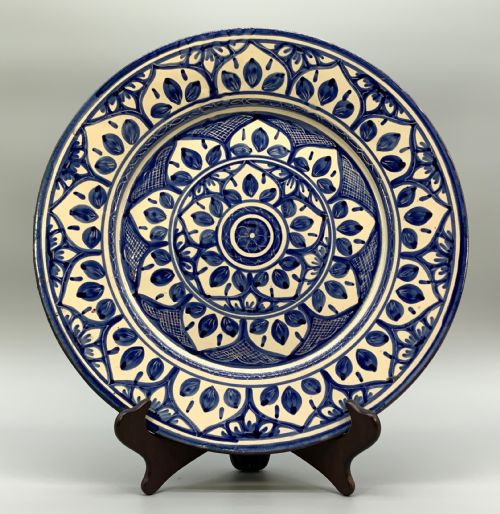
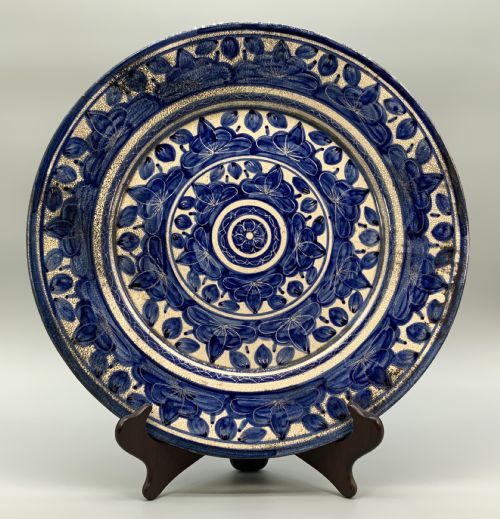
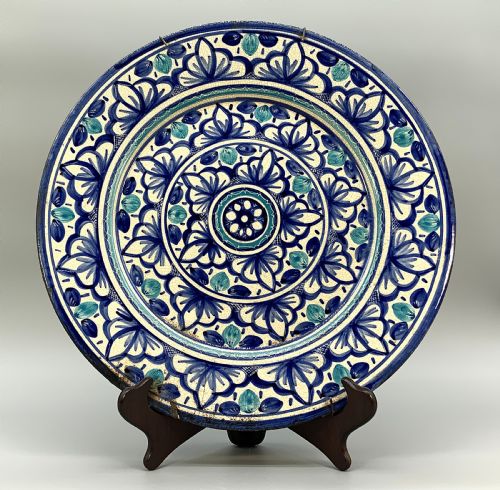
A delftware ceramic plate brings tin-glazed earthenware into a room, offering hand-painted blue and white or polychrome decoration from earlier centuries.
Delftware Ceramic Plate
When you search for a delftware ceramic plate, you encounter chargers, dishes and shallow bowls produced across Europe. The selection spans the seventeenth and eighteenth centuries, alongside continental interpretations from later periods.
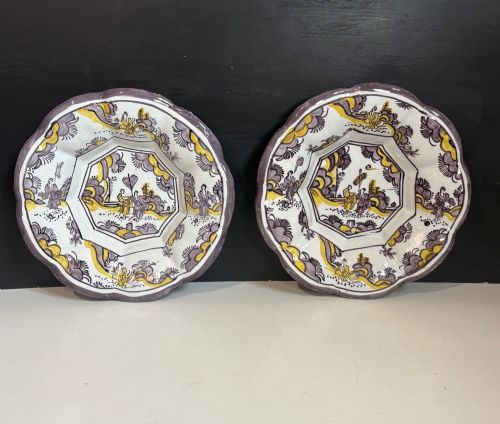
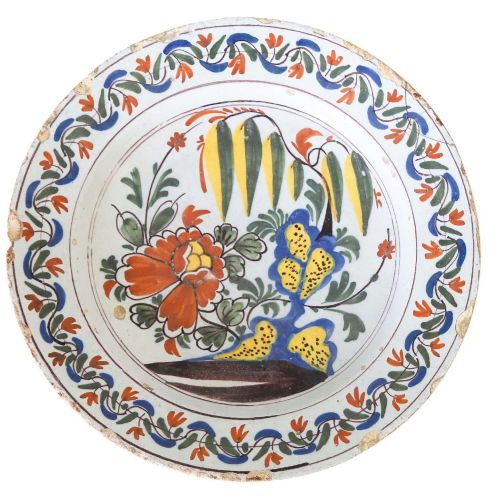
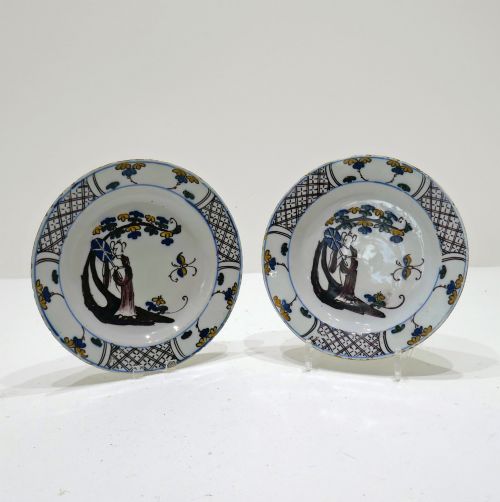
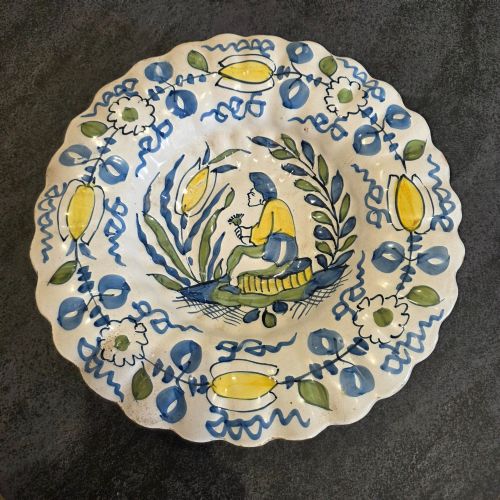
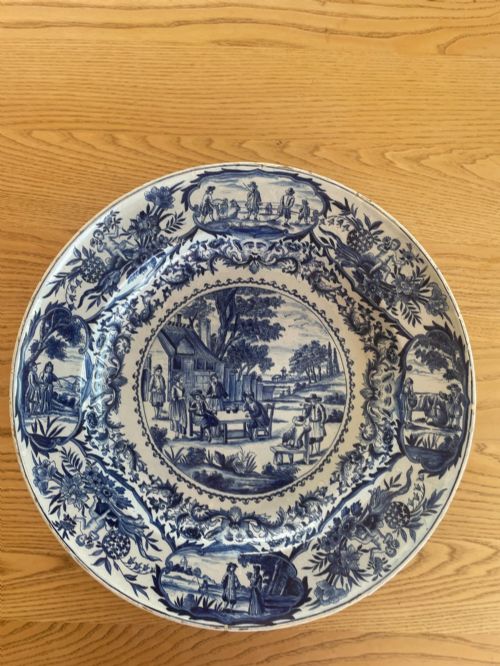
English and Dutch workshops dominate the items on this page, often taking the form of large chargers intended for display. Makers across these regions produced blue and white wares, alongside polychrome examples decorated with manganese, yellow and other pigments.
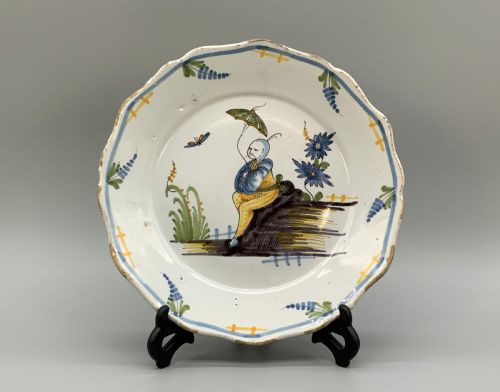
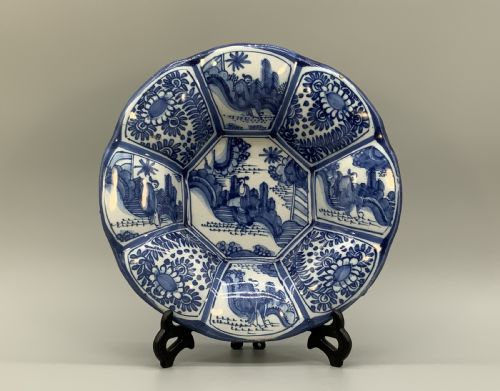
The forms range from lobed dishes to flat plates and large platters. Many incorporate chinoiserie motifs, floral arrangements or geometric patterns painted directly onto the porous body.
How they were made
Potters shaped earthenware bodies and coated them in a liquid tin glaze that dried to a white, opaque surface. Pigments containing cobalt oxide or manganese were applied directly to this unfired glaze, absorbing into the surface before a final firing.
Grand feu techniques allowed artists to paint directly onto the raw glaze, fusing the colours during the main kiln run. Polychrome decoration often required additional firings to fix secondary pigments like yellow or red onto the hardened glaze.
Several plates commemorate unions with dedicated marriage designs, proving that seventeenth-century couples also appreciated custom kitchenware.
What varies in quality
The clarity and precision of the hand-painted brushwork set individual pieces apart. Rapid, confident strokes in blue and white or manganese indicate skilled painters working in established potteries.
The stability of the glaze and the complexity of the palette influence the character of each charger. Rich polychrome schemes and well-preserved tin surfaces distinguish the finer survivals from simpler domestic items.
The Delftware Ceramic Plate Glossary
- Charger
- A large decorative plate intended for display on walls or sideboards rather than everyday dining. These items often measure over thirty centimetres across.
- Tin-Glazed Earthenware
- Pottery covered with a lead glaze made opaque by the addition of tin oxide. This surface provided a white ground that imitated Chinese porcelain.
- Polychrome
- Decoration employing multiple colours rather than a single pigment. Tin-glazed pieces commonly utilised cobalt blue, manganese purple, yellow and green.
- Chinoiserie
- European interpretations of Chinese artistic motifs and landscapes. Painters adapted these scenes onto plates and dishes during the seventeenth and eighteenth centuries.
- Kraak Style
- A Dutch and English adaptation of late Ming dynasty Chinese porcelain designs. These plates typically feature panelled borders surrounding a central landscape or floral motif.
- Grand Feu
- A ceramic firing technique where cobalt and other metal oxides are applied to the raw tin glaze and fired at high temperatures. This method binds the pigment permanently into the glaze layer.
Delftware Ceramic Plate: Frequently Asked Questions
How were delftware plates used?
Large chargers and dishes were primarily used for display on sideboards or hung on walls during the seventeenth and eighteenth centuries. Smaller plates served food at table, though many surviving examples were preserved specifically for their decorative qualities.
Porter and decorative plates reflected the status and tastes of households across England, the Netherlands and continental Europe. Their tin-glazed surfaces provided colourful accents in panelled rooms and parlours.
How do I care for a delftware plate?
These earthenware objects require gentle handling because the tin glaze can chip or craze over centuries. Dust them lightly with a dry cloth and keep them away from moisture and direct sunlight.
Display them securely using padded wall hangers or stable plate stands designed for antique ceramics. Avoid washing them in water, as the porous earthenware body beneath the glaze can absorb moisture.
How do I tell English and Dutch delft apart?
English potteries, such as those in Bristol or Lambeth, often produced plates with slightly warmer earthenware bodies and distinct glaze textures. Dutch pieces from centres like Delft frequently show refined cobalt painting and specific border patterns.
Comparing the rim profiles and pigment tones helps distinguish between regional workshops. Many items share overlapping chinoiserie and floral influences, making maker attribution a study in subtle material differences.
What is the difference between blue and white and polychrome?
Blue and white delftware relies exclusively on cobalt oxide pigment painted onto the white tin glaze. This style emulates imported Chinese porcelain popular in seventeenth-century Europe.
Polychrome delftware incorporates additional pigments such as manganese purple, yellow and green. These multi-coloured palettes often date to the mid-eighteenth century and require more complex firing processes.