





Gustavian Upholstered Bench
These gustavian upholstered bench pieces combine Swedish neoclassical restraint with comfortable seating, offering timeless elegance for any interior.
Gustavian Upholstered Bench
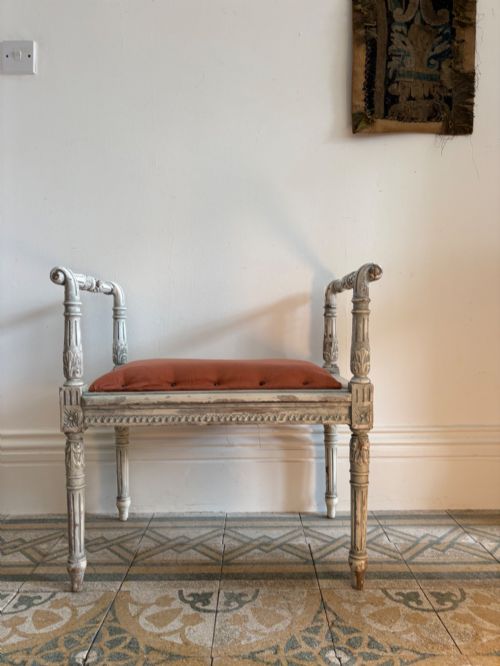
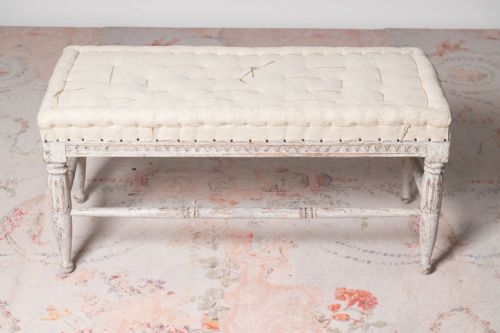
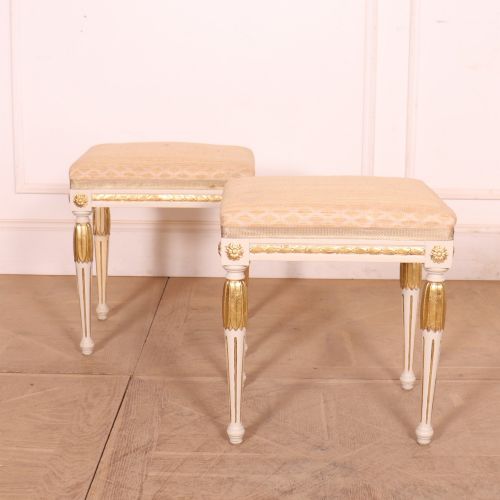
A gustavian upholstered bench represents classic Scandinavian seating design, typically featuring clean lines and pale painted finishes. When searching for a gustavian upholstered bench, buyers encounter pieces ranging from simple stools to substantial settees.
The selection on this page centres on items from the eighteenth and nineteenth centuries. Swedish origin dominates the listings, alongside related neoclassical pieces.
How they were made
Carpenters utilised pine and other native timbers to construct the frames, applying layered paint to achieve the signature surface finish. Upholstery techniques involved traditional stuffing materials secured with hessian and linen.
Carved wooden details reflect neoclassical motifs, while giltwood accents appear on select grander pieces from the later nineteenth century.
Listings span from the eighteenth century through to nineteen hundred, encompassing painted wood, linen, and hessian materials.
What varies in quality
The distinction between ordinary and exceptional pieces lies in the crispness of the carved wooden details and the integrity of the painted surface. Early eighteenth-century examples display hand-carved elements that differ noticeably from later nineteenth-century interpretations.
Original painted finishes hold greater appeal than later re-paintings, preserving the authentic character of the timber beneath.
The Gustavian Upholstered Bench Glossary
- Gustavian
- The Swedish neoclassical style spanning the late eighteenth and early nineteenth centuries, known for pale paint and restrained classical ornamentation.
- Giltwood
- Timber decorated with a thin layer of gold leaf, used to highlight carved details on formal seating.
- Settle
- A wooden bench with high back and solid arms, designed to keep out draughts in traditional interiors.
- Hessian
- A coarse woven fabric traditionally used as a foundation layer in traditional upholstery work.
Gustavian Upholstered Bench: Frequently Asked Questions
How do I care for a painted wooden bench?
Dust the painted surfaces regularly with a soft, dry cloth to prevent dirt accumulation. Avoid harsh chemical cleaners that can damage the historical paint layers.
Keep the piece away from direct sunlight and sudden temperature changes to protect the underlying timber and fabric.
Where should I place a settee in my home?
These pieces work well in hallway settings, at the foot of a bed, or as supplementary seating in a living room. Their slender proportions make them adaptable for narrow spaces.
Ensure the placement allows the painted frame and upholstery details to remain visible as focal points.
Are these benches comfortable for daily use?
Traditional upholstery provides firm support rather than deep cushioning. They suit shorter periods of sitting, such as putting on shoes or conversational gathering.
Consider the seat height and depth relative to your intended use when selecting a stool or settee.
How do I distinguish eighteenth-century pieces from nineteenth-century ones?
Eighteenth-century examples often display deeper hand-carving and distinct tool marks on the timber frames. Later nineteenth-century pieces tend to feature more uniform machine assistance and distinct revival styling.
Examining the construction joints and paint layers helps clarify the age of the woodwork.