


Neoclassical Upholstered Bench
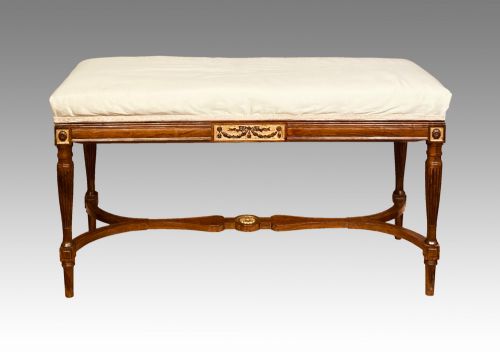
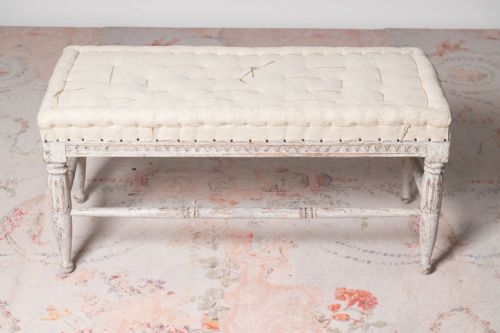
When you look for a neoclassical upholstered bench, you find seating that balances restrained geometry with classicism, appearing across French, Swedish, and English variants.
Neoclassical Upholstered Bench
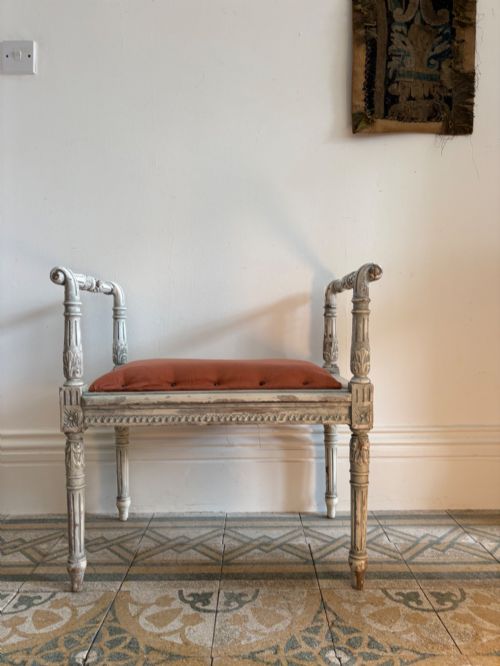
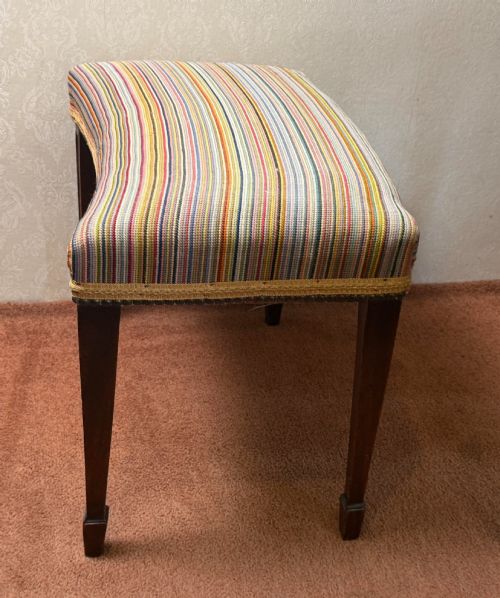
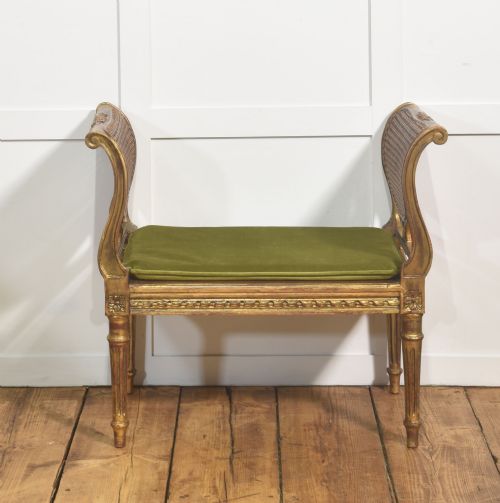
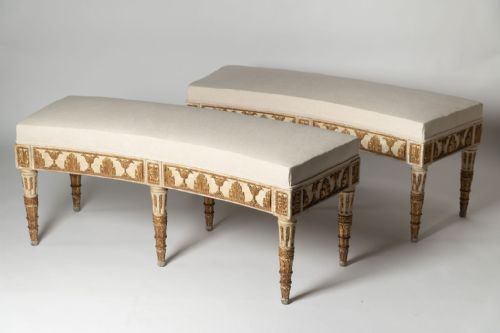
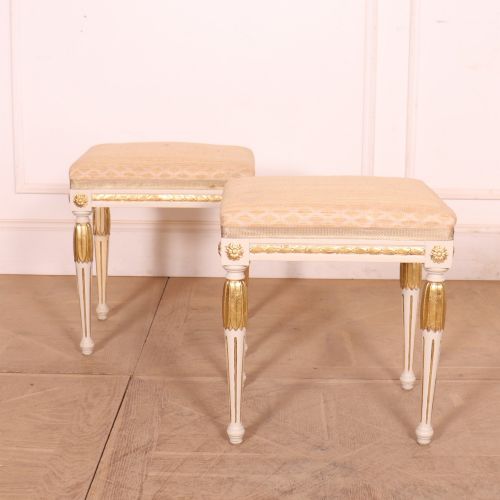
A neoclassical upholstered bench takes several forms on this page, stretching from long settees and window seats down to compact stools and duet benches. Buyers encounter Swedish Gustavian pieces, French giltwood window seats, and solid mahogany George III designs most frequently.
Makers shaped these seats for specific domestic spaces, placing window seats in bays, duet stools beside instruments, and larger settees in reception rooms. The forms lean heavily on architectural precedents translated into domestic scale during the eighteenth and nineteenth centuries.
Materials and Construction
Workshops built these frames from hardwoods like mahogany, walnut, satinwood, and birch, alongside softwoods designated for white or cream paint. Gilding, ormolu mounts, and hand-carving frequently enriched the primary wood structures of French and Italian pieces.
Upholstery relied on traditional stuffing techniques enclosed in silk, velvet, linen, damask, or needlework fabrics. Frames often utilised square tapering legs, turned supports, or X-frame structures to distribute weight while maintaining slender proportions.
Neoclassical Upholstered Bench Retail Price Guide 2026
Typical asking prices for neoclassical upholstered bench among the pieces listed under this phrase on Sellingantiques today, from the lower quarter to the upper quarter. They describe what is for sale here now, not the wider market.
Listings feature eighteenth-century, nineteenth-century, and early twentieth-century pieces spanning French, Swedish, and Italian origins.
Assessing Craftsmanship
Quality reveals itself in the precision of the carved ornament and the drawing of the frame proportions. Better examples display crisp detailing in the giltwood or wood carving without losing structural integrity.
The integration of the upholstery to the frame dictates the overall success of the piece. Superior items maintain taut lines and harmonious textile choices that complement the specific period style of the woodwork.
Charles Nosotti
The Neoclassical Upholstered Bench Glossary
- Gustavian
- The Swedish interpretation of neoclassical design, characterised by pale painted finishes and restrained classical motifs. It emerged during the late eighteenth century under Gustav III.
- Giltwood
- Timber coated with a thin layer of gold leaf. This finish appears frequently on French and Italian neoclassical seating frames.
- Window Seat
- An upholstered bench designed specifically to fit the recess of a window. These pieces often feature scrolling ends or low backs.
- Curule Stool
- A ancient Roman magistrate chair design adapted into nineteenth-century X-frame seating. The intersecting legs create a distinct cross shape.
- Satinwood
- A durable exotic timber with a lustrous yellowish grain used for fine furniture inlay and cabinetwork. It provides a smooth, pale surface for decorative painted details.
Neoclassical Upholstered Bench: Frequently Asked Questions
How do I distinguish Swedish Gustavian benches from French styles?
Swedish Gustavian benches typically display simpler, paler painted surfaces with restrained carving rooted in Nordic interpretations of classical antiquity. French equivalents from the Louis XVI or Empire periods lean towards heavier gilding, ornate ormolu mounts, and more elaborate structural silhouettes.
Examining the underlying timber and secondary woods often confirms the regional origin of the piece. Swedish makers favoured local birch and pine alongside soft grey or white paint finishes.
Where were window seats placed historically?
Historically, window seats occupied the deep masonry recesses of grand drawing rooms and bedrooms to catch natural light. They provided convenient spots for reading or needlework without obstructing the room's central circulation.
Today, buyers continue to place them beneath windows, at the foot of a bed, or along narrow hallway walls where deep sofas would not fit.
How do I care for antique painted wood?
Antique painted surfaces require gentle dusting with a dry, soft cloth to prevent abrasion of the historic finish. Avoid modern chemical sprays and excessive moisture, which can lift old paint layers from the wood substrate.
Keep these pieces out of direct sunlight to prevent the underlying paint and gilt layers from fading or drying out over time.