




Cream Painted Settee
A cream painted settee offers elegant seating with a light, decorative finish that brings historic French and Italian style into a room.

What these settees are
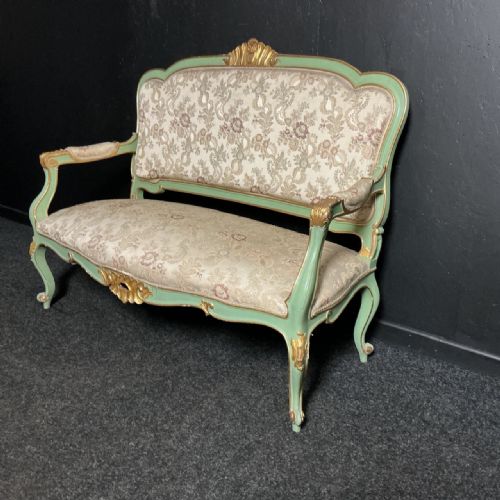
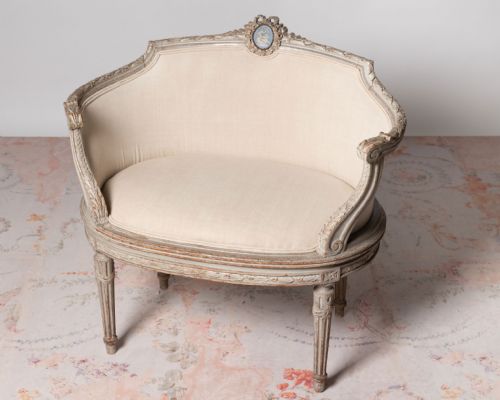
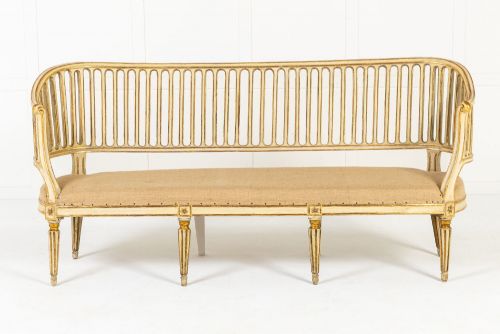
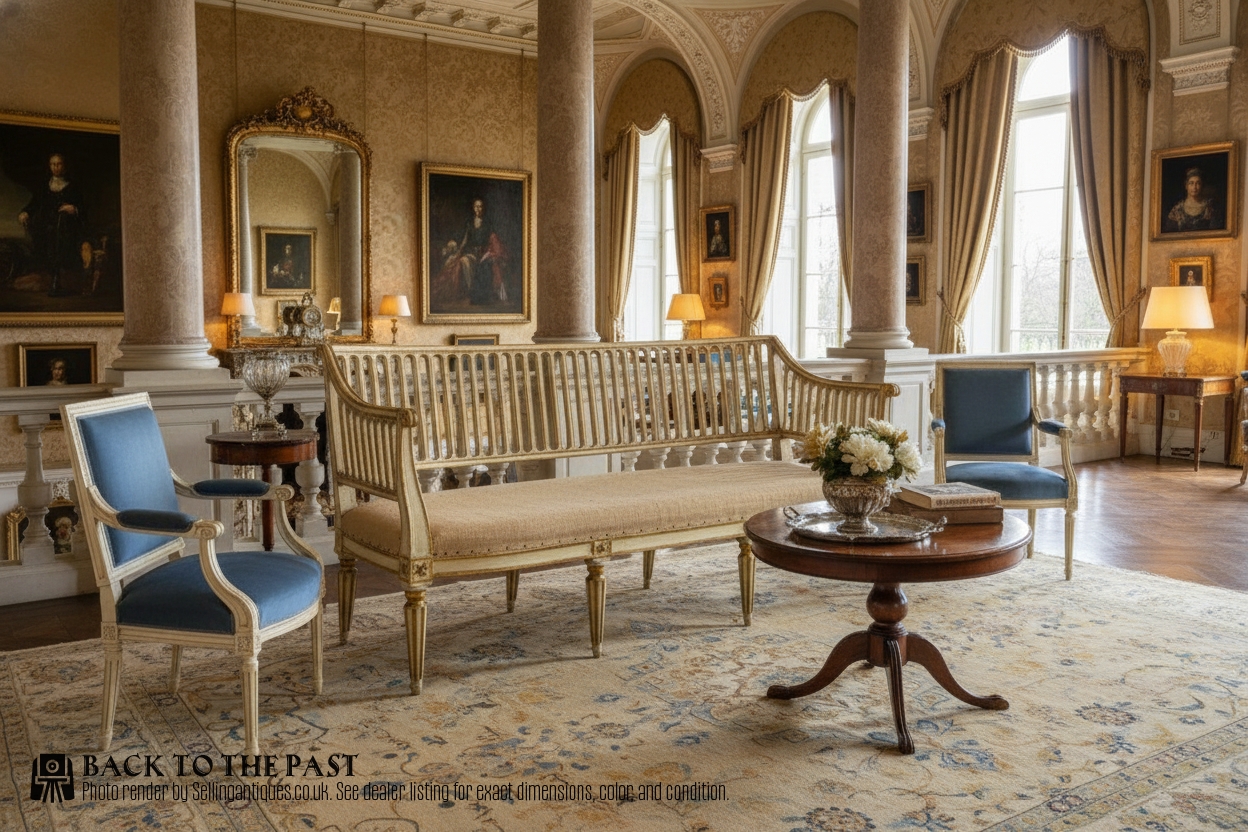
A cream painted settee is a seating piece designed for multiple occupants, featuring a painted wooden frame in light or cream tones. These items appear across several periods, including the eighteenth, nineteenth, and early twentieth centuries.
The styles range from Louis XV Revival and French Chateau to Neoclassical. Formats vary from triple back designs to two-seat settees and canapes.
Italian and French origins dominate the available pieces, connecting the form directly to continental European cabinet-making traditions. Buyers encounter everything from grand neoclassical frames to later revival pieces.
How they were made
Makers constructed these frames from wood before applying paint finishes. The surface treatments typically involve layers of paint over wood, sometimes complemented by gilt details.
Upholstery forms an integral part of the construction, utilising fabrics such as linen, velvet, and tapestry fabric. These materials are fitted to the wooden frames to provide structured support and seating comfort.
Retail Price Guide 2026
Typical UK retail prices for cream painted settee, calculated from the Sellingantiques database of over a million retail prices indexed since 2003. This retail price guide relies exclusively on Sellingantiques data; no external sources or auction records are used, so the figures do not describe the wider market.
Some nineteenth-century makers clearly had strong opinions on personal space, dividing a single settee into three distinct backrest compartments.
What varies in quality
Quality reveals itself in the finesse of the wooden carving and the crispness of the neoclassical or Louis XV style details. Finer frames show greater articulation in their structural lines and decorative motifs.
The application and preservation of the painted surface dictate visual success. Original or sympathetic paint layers maintain the historic character of the piece more effectively than heavy modern interventions.
The Cream Painted Settee Glossary
- Canape
- An upholstered sofa or settee, typically with a decorative wooden frame originating in France. This term frequently applies to pieces reflecting eighteenth-century French design.
- Neoclassical
- A style drawing inspiration from classical antiquity, characterised by symmetry, straight lines, and restrained ornamentation. It appears frequently in nineteenth-century furniture design.
- Louis XV Revival
- A nineteenth-century design movement mimicking the asymmetrical curves, naturalistic motifs, and flowing lines of the mid-eighteenth-century French court style. This aesthetic defines several settees in the current selection.
- Triple back
- A settee configuration featuring three distinct backrest sections joined in a single frame. This form accommodates multiple sitters while maintaining individual structural compartments.
- Gilt
- A thin layer of gold leaf applied to the wooden surface of a piece. It often accents the cream painted frames to highlight carved details.
Frequently Asked Questions
What is a cream painted settee?
A cream painted settee is an upholstered wooden seat designed for two or more people, featuring a light painted finish. The style draws on historical French and Italian furniture traditions.
Peculiar to continental design, these pieces range from neoclassical frameworks to Louis XV revival models dating across the eighteenth, nineteenth, and early twentieth centuries.
Where were these settees made?
The available pieces originate primarily from France and Italy, reflecting the domestic seating traditions of those regions. Makers in these countries produced decorative frames for elite interiors.
Craftsmen utilised local woods and traditional upholstery textiles like linen, velvet, and tapestry fabric to complete the furniture.
How do I style a painted settee?
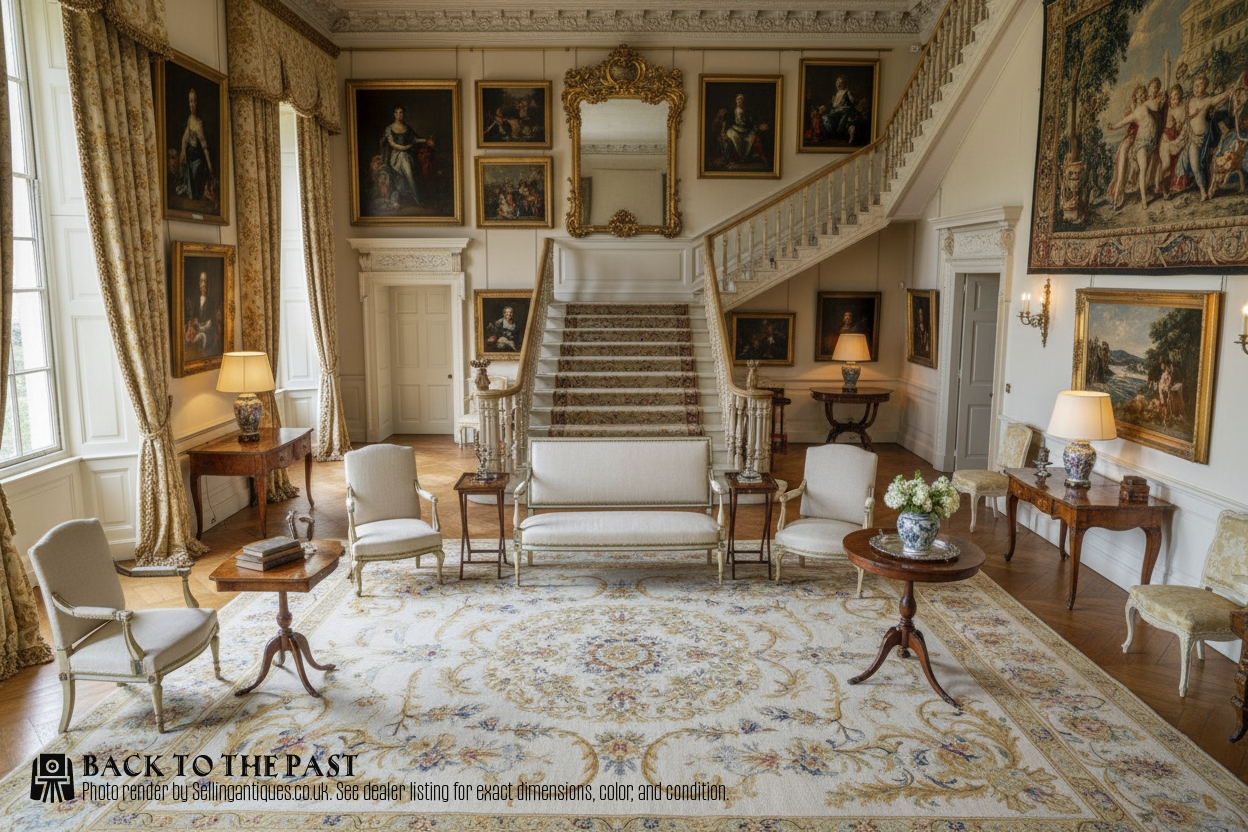
A cream painted settee works well as a focal point in a drawing room, bedroom, or hallway. Its light finish complements neutral walls and traditional architectural details.
Pairing the settee with complementary antique seating enhances a classic interior scheme without overwhelming the room's proportions.