



Antique Carved Canape
An antique carved canapé brings French salon elegance to a room, offering generous cushioned seating shaped by historic craft.
Antique Carved Canape
An antique carved canapé is an upholstered double or multi-seat settee designed for formal reception rooms, sharing its lineage with French seating forms. Buyers searching this phrase meet nineteenth-century examples most often, alongside occasional eighteenth-century and early twentieth-century pieces.
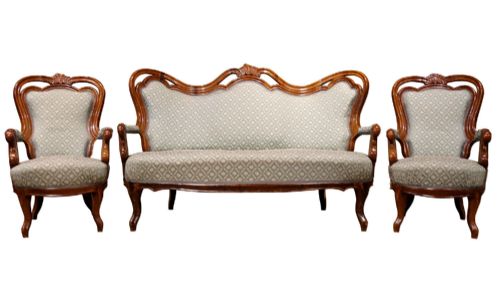
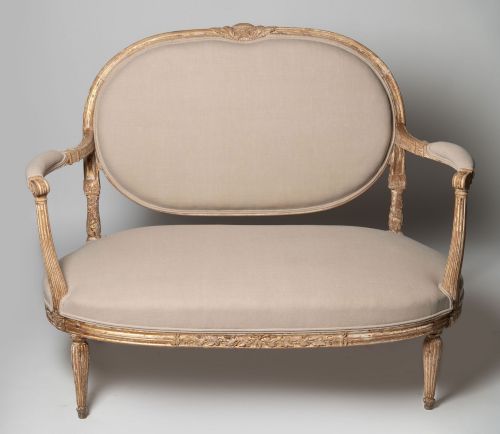
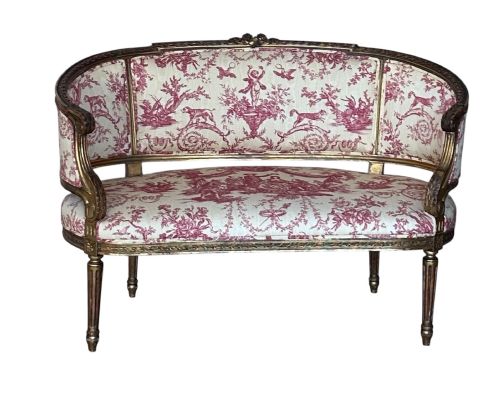
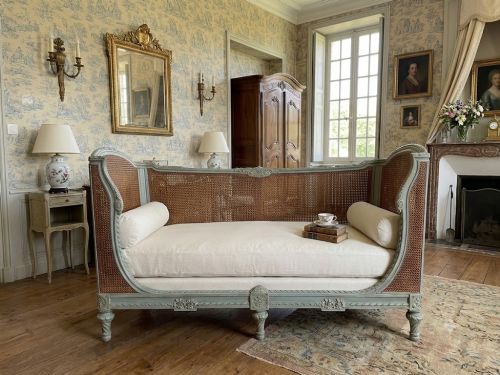
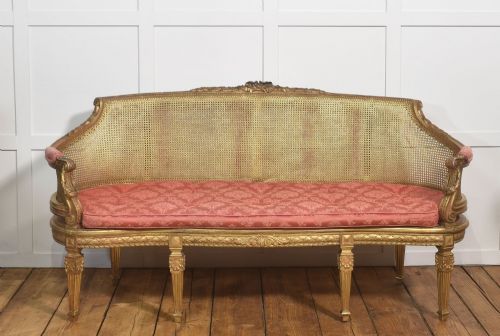
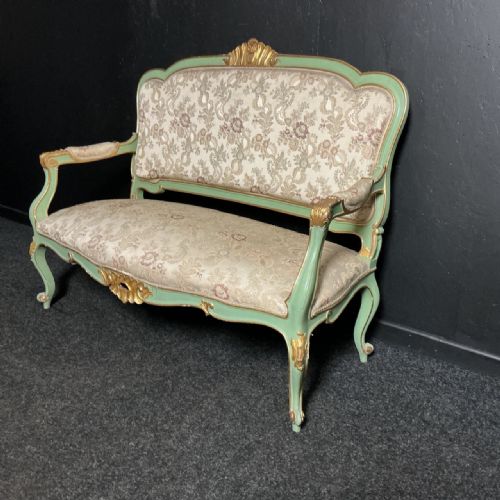
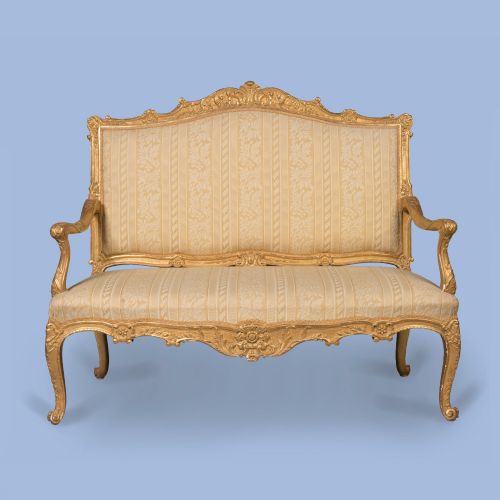
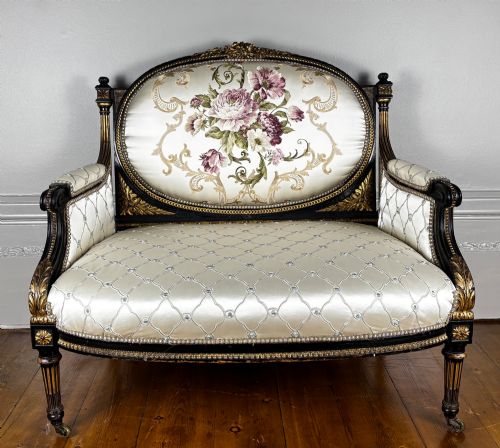
The dominant variants appearing in these records display Louis XV and Louis XVI styling, often formed in giltwood or walnut with exposed carved wooden frames. Pieces range from compact two-seat corbeille sofas to larger salon suites and daybeds upholstered in velvet, silk, linen, or cane.
Origins stretch across France, Italy, Sweden, Germany, and England, reflecting continental preferences for curved cabriole legs, scroll ends, and intricate floral crestings. These settee forms served as social seating in drawing rooms and boudoirs, combining decorative presence with functional utility.
Materials and construction
Frames are built primarily from dense hardwoods such as walnut, mahogany, and beech, which tolerate deep relief carving along the crest rails and aprons. Giltwood surfaces feature a layer of gold leaf applied over gesso and bole, whilst painted and ebonised variants utilise layered pigments for a finished decorative skin.
Upholstery relies on traditional stuffing techniques secured to webbing, supporting coverings of velvet, silk, linen, and printed textile, or woven cane panels fitted into the backrests. Joinery combines mortise and tenon joints with hand-carved decorative elements pinned directly to the main structural rails.
Several small daybeds and boudoir settees are specifically designated for the end of the bed, proving that afternoon resting spaces have long required proper style.
Assessing quality and execution
The standard of carving distinguishes superior pieces, where foliage, shells, and scrollwork show crisp undercut depth rather than shallow machine-milled definition. Frame timbers selected for finer examples exhibit tight grain and solid structural integrity without excessive supplemental bracing.
Proportion and harmony dictate the visual success of a canapé, balancing the height of the backrest against the sweep of the armrests and the stance of the legs. Original gilding or period paint finishes carry higher merit than later surface interventions, preserving the intended aesthetic unity.
The Antique Carved Canape Glossary
- Canapé
- An upholstered settee or sofa featuring an exposed wooden frame, typically associated with French eighteenth- and nineteenth-century design. These seats accommodate multiple people whilst maintaining a decorative open framework.
- Giltwood
- Timber treated with a thin layer of gold leaf applied over a prepared gesso ground. This finish reflects candlelight and adds opulent warmth to salon furnishings.
- Corbeille
- A French term describing a basket-shaped armchair or sofa with a rounded, enclosing backrest. This design curves forward to envelop the sitter for added comfort.
- Louis XV Style
- A design period characterised by asymmetrical rococo curves, cabriole legs, and naturalistic floral carvings. Furniture from this tradition emphasises flowing lines and organic movement.
- Louis XVI Style
- A neoclassical aesthetic defined by straight tapered legs, geometric symmetry, and classical motifs such as fluting and ribbons. Pieces in this manner offer a more restrained structural discipline.
Antique Carved Canape: Frequently Asked Questions
Where did people place a canapé?
Historic owners positioned these settees in formal salons, drawing rooms, and private boudoirs where guests gathered for conversation and entertainment. They served as central statement pieces against panelled walls or within large reception suites.
Today, they function effectively in contemporary living rooms, large bedrooms, or hallways, providing comfortable seating while introducing historic character to an interior scheme.
How do I distinguish Louis XV from Louis XVI styles?
Louis XV furniture relies on asymmetrical curves, cabriole legs, and flowing floral carvings that evoke organic movement. The overall silhouette avoids straight lines in favour of graceful, undulating contours.
Louis XVI pieces introduce neoclassical restraint, featuring straight tapered fluted legs, rectangular backrests, and symmetrical classical motifs like ribbons, urns, and acanthus leaves.
Can I use a canapé for daily seating?
These antique settees accommodate regular use provided the internal webbing and upholstery support remain sound and well-maintained. Many pieces feature sturdy hardwood frames built to withstand decades of sitting.
For heavy daily lounging, ensure the seat padding has been appropriately restored using supportive traditional methods to protect the historic frame from undue stress.
What is the difference between a sofa and a canapé?
The term canapé specifically denotes a settee with an exposed, decorative carved wooden frame, closely tied to French stylistic traditions. Standard sofas often feature fully upholstered frames with minimal exposed woodwork.
While both serve the same seating function, a canapé prioritises sculptural woodcraft alongside textile upholstery as primary decorative elements.