


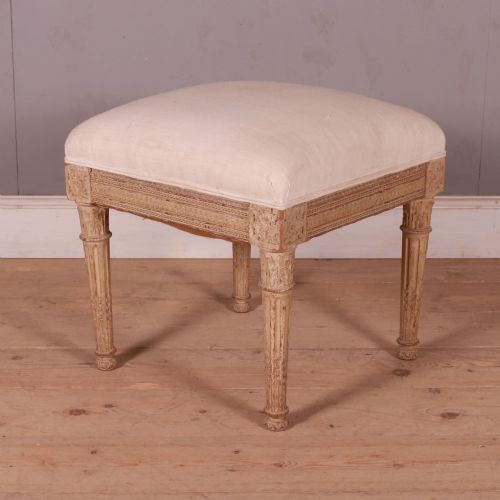


Neoclassical Painted Stool
These neoclassical painted stool examples bring understated classical form and soft painted finishes into a room.
Neoclassical Painted Stool
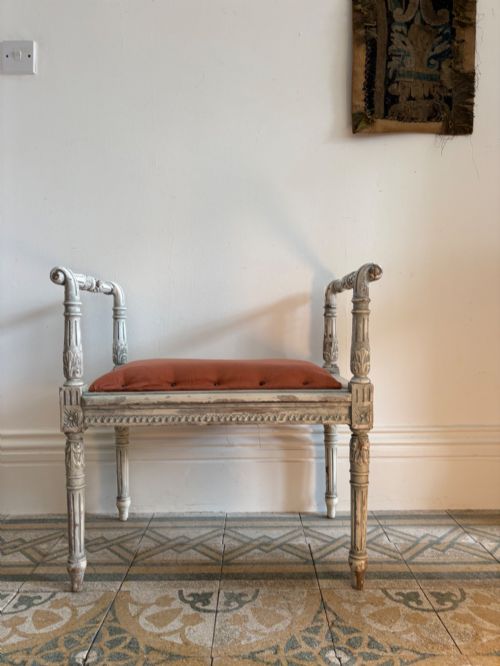
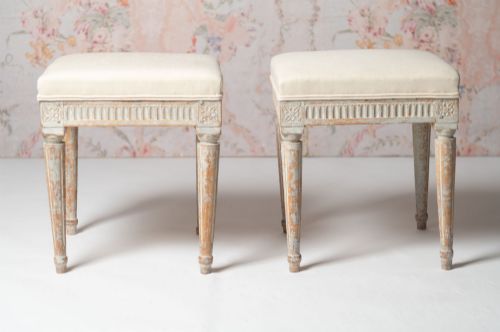
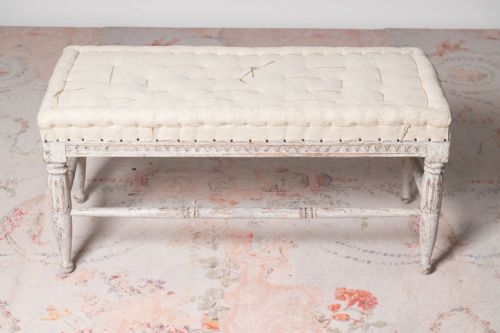
A neoclassical painted stool provides a versatile low seat with clean classical proportions drawn from eighteenth and nineteenth century design. When you search for neoclassical painted stool, you encounter forms that range from simple square footstools to longer window seats and benches.
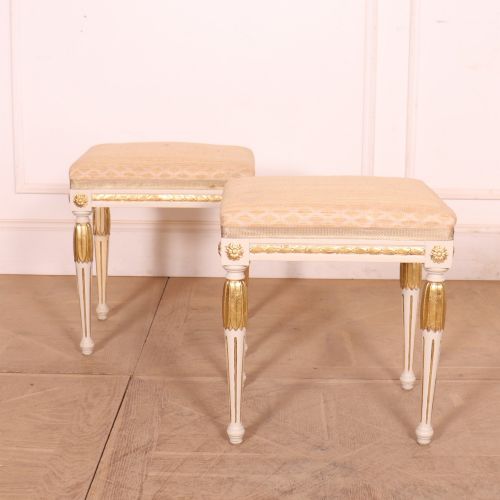
The pieces appearing here lean heavily toward Swedish Gustavian and Louis XVI styles, alongside Italian neoclassical and Regency examples. These items often feature painted wood frames finished in white or pale tones, paired with upholstered seats in silk, linen, fabric, or traditional cane.
How they were made
The construction relies upon solid wood frameworks, frequently carved and subsequently coated with layers of paint and sometimes gold leaf accents. Upholstery techniques incorporate traditional textiles such as silk, linen, and needlework fixed across the wooden seats or incorporated alongside cane panels.
Joinery and carving reflect the hand methods of nineteenth century and earlier workshops, producing sturdy frames designed to support everyday use. The painted surfaces often show subtle weathering that reveals the underlying timber grain over time.
The listings span the eighteenth to the early twentieth century, featuring painted wood, silk, linen, and cane.
What varies in quality
Quality rests upon the crispness of the wood carving and the integrity of the original painted surface rather than applied modern finishes. Pieces displaying deeply defined carved details and well-preserved early paint layers hold greater distinction.
The refinement of the proportions and the balance between the neoclassical ornamentation and the structural frame determine the standing of each piece. Finer examples maintain cohesive design harmony across the legs, rails, and seat structure.
The Neoclassical Painted Stool Glossary
- Gustavian
- The Swedish interpretation of French neoclassical design, characterised by restrained lines and pale painted finishes. It developed during the late eighteenth century and continued to influence Scandinavian furniture making well into the nineteenth century.
- Louis XVI Style
- A French aesthetic defined by straight lines, symmetry, and classical motifs such as fluting and leaf carving. This style informs many of the rectangular and oval forms found on seats and stools.
- Cane
- Woven rattan material used to create resilient, breathable seat panels. It appears frequently on the seating surfaces of light frames.
- Gold Leaf
- Thin gold hammered sheets applied to wooden carvings for decorative highlight. It adds subtle warmth against painted framing.
- Needlework
- Hand-stitched textile work utilised for decorative upholstery. It provides textured patterns across antique seat covers.
Neoclassical Painted Stool: Frequently Asked Questions
Where should I place a neoclassical painted stool?
These pieces fit naturally at the foot of a bed, beneath a window, or beside a fireside chair where an extra seat is needed without visual bulk.
Their restrained proportions allow them to integrate easily into both traditional and contemporary room schemes.
How do I care for the painted surface?
Dust the painted wood gently with a dry cloth and avoid harsh modern cleaning products that might strip the historic finish.
Keeping the piece away from direct sunlight protects both the painted timbers and the delicate silk or linen upholstery.
What is the difference between a stool and a window seat?
Stools are typically compact and square or oval in shape, designed for general seating or resting feet.
Window seats tend to be longer and bench-like, constructed specifically to sit neatly beneath window frames.
How do I identify a Gustavian piece?
Swedish Gustavian furniture is recognised by its pale, chalky paintwork and simplified neoclassical motifs inspired by French royal courts.
The carving is typically more restrained and understated than its continental counterparts.