
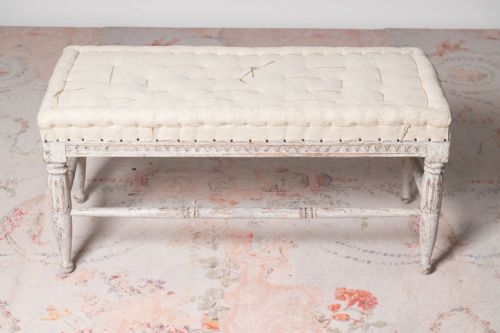


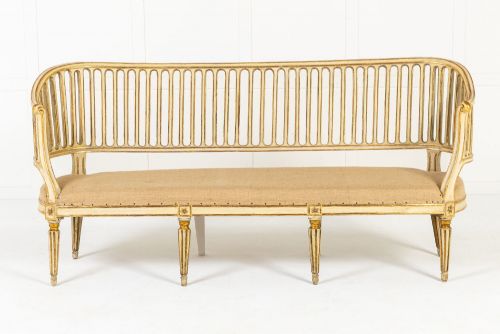


Cream Painted Window Seat
A cream painted window seat brings light elegance and a traditional resting place to a light-filled alcove.
Cream Painted Window Seat
A cream painted window seat takes many forms across the current listings, appearing as French window seats, Italian settees, and long stools from various decades. Buyers seeking a cream painted window seat will encounter pieces originating from the nineteenth century alongside items dated around nineteen hundred, nineteen twenty, and nineteen thirty.
Forms range widely from English Regency settees and French Régence style carved window seats to large French stools and Italian long stools. These seating options bridge the gap between chairs and settees, designed specifically to sit low beneath window frames without blocking natural light.
Stylistic influences span widely across continental Europe and Britain, with pieces demonstrating Gustavian, Louis XV revival, Italian Rococo, and Neoclassical characteristics. Painted wood forms the primary foundation for these items, frequently paired with textile upholstery including linen and cotton.
Materials and construction methods
Construction relies heavily on painted wood and gilded wood, forming sturdy timber frames that receive decorative painted surfaces in cream tones. Artisans shaped these frames with carved details, visible in the French Régence style pieces and Italian rococo examples.
Upholstery materials recorded in the evidence include linen, cotton, cane, and general fabric layers applied to seats and benches. Giltwood accents occasionally complement the cream painted wooden structures, adding subtle highlights to carved rails and legs.
Current selections include pieces from the eighteenth, nineteenth, and twentieth centuries, utilising painted wood, linen, cotton, and cane.
Assessing quality in painted seating
Quality reveals itself through the depth and crispness of carved wooden details upon the frame, distinguishing finely sculpted motifs from softer mouldings. The application of the cream paint layer and the integration of any gilded wood accents dictate the visual refinement of the piece.
Proportion and scale play significant roles, ranging from compact Italian long stools to very large French stools and extended settees. The choice of covering fabric, whether simple cotton, structured linen, or woven cane, contributes to the overall integrity and finish of the seat.
The Cream Painted Window Seat Glossary
- Gustavian
- A Swedish adaptation of French neoclassical style characterised by restrained carving and pale painted finishes. This aesthetic defines several Scandinavian pieces found in lighter interiors.
- Regency
- An English design period spanning the early nineteenth century known for classical revival lines and refined proportions. Pieces from this era often combine painted surfaces with gilt highlights.
- Régence
- A French transitional style preceding Louis XV, marked by early rococo asymmetry and vigorous carved ornamentation. It precedes the fully developed curves of mid-eighteenth-century French design.
- Cane
- Woven rattan material utilised for seat panels or backrests to provide lightweight resilience. This technique appears across various traditional seating forms.
- Giltwood
- Timber treated with gold leaf or metallic size to simulate solid gold enrichment. It frequently highlights specific carved elements on painted frames.
Cream Painted Window Seat: Frequently Asked Questions
Where should a window seat go?
These pieces fit naturally beneath low windows, in long hallways, or at the foot of a bed where narrow seating works best.
Their low profiles ensure they provide a functional resting place without obstructing views or natural daylight.
How do I clean cream painted wood?
Dust the painted wooden frame regularly with a soft, dry cloth to prevent the accumulation of surface dirt.
Avoid harsh chemical cleaners that might soften or strip the traditional cream painted finish over time.
Are these seats comfortable for daily use?
Most examples feature upholstered pads in linen or cotton designed to offer firm support during short periods of sitting.
Their primary purpose combines decorative elegance with functional occasional seating rather than deep lounging.
How do I identify a French piece?
French examples often display characteristic carvings associated with the Régence style or Louis XV revival aesthetics.
Their frames frequently exhibit curved rails and sophisticated proportions typical of continental cabinetmaking traditions.