

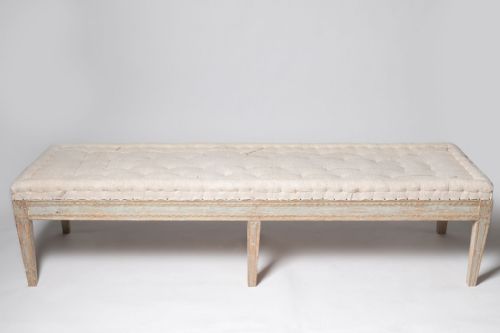
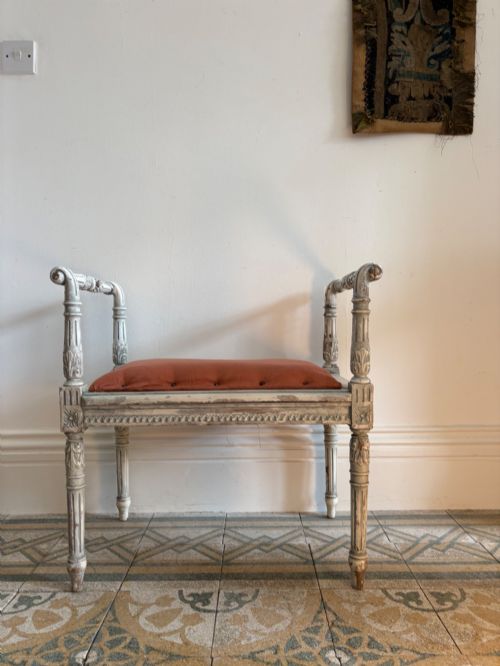
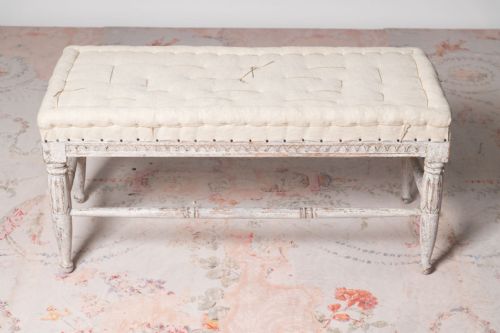
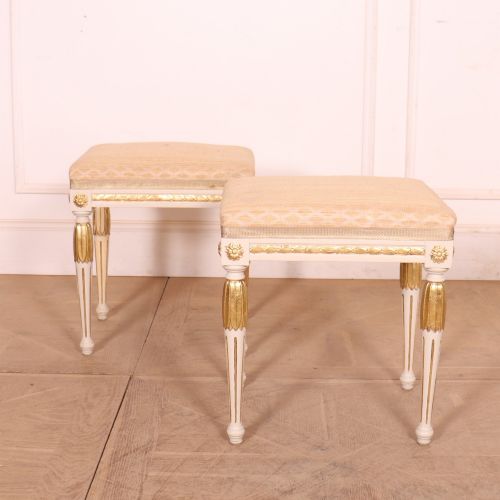


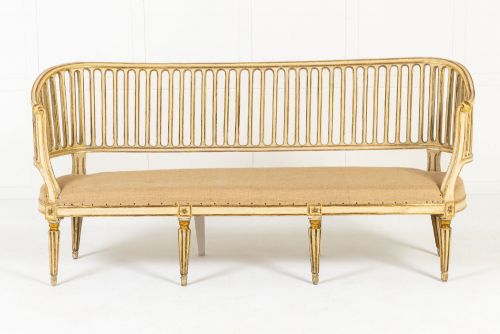


Gustavian Neoclassical Bench
A gustavian neoclassical bench brings crisp Nordic symmetry and light painted woodwork into a room.
Gustavian Neoclassical Bench
When you search for a gustavian neoclassical bench, you are looking at seating forms including settees, sofas, and stools originating from Swedish and Italian workshops. These pieces span the eighteenth, nineteenth, and early twentieth centuries, reflecting enduring classical lines.
The versions you are most likely to meet on this page are painted wooden stools and settees finished in white or giltwood. They combine restrained neoclassical proportions with understated Nordic restraint.
Makers drew on Swedish Empire and Gustavian traditions, producing seating that balances formal architectural structure with domestic utility. The forms range from simple stools to substantial multi-seat sofas.
How they were made
Wood forms the structural core of these pieces, frequently shaped by carving and finished with paint or gilt. Workshops utilised traditional joinery to construct frames that could support various seating configurations.
Surfaces were frequently painted in white or highlighted with giltwood to catch the light in northern interiors. This finish protected the timber while aligning with continental neoclassical tastes.
Upholstery completed the work, utilising materials such as linen, silk, cotton, and cane. These textiles were fitted to seats and frames to provide comfort alongside formal elegance.
Gustavian Neoclassical Bench Retail Price Guide 2026
Typical asking prices for gustavian neoclassical bench among the pieces listed under this phrase on Sellingantiques today, from the lower quarter to the upper quarter. They describe what is for sale here now, not the wider market.
Listings feature pieces spanning from the eighteenth century through to nineteen twenty, utilising painted wood, silk, linen, and cane.
What varies in quality
The refinement of the carved woodwork distinguishes the upper tier from simpler production. Crisp lines and balanced proportions show the hand of a skilled maker working within the neoclassical idiom.
The choice of surface treatment and upholstery fabric alters the character of each piece. Original painted finishes and thoughtful textile selections elevate the visual harmony of the furniture.
The Gustavian Neoclassical Bench Glossary
- Gustavian
- The Swedish neoclassical style developed during the reign of Gustav III, characterised by restrained ornamentation and bright painted surfaces. It draws heavily on French and Italian design vocabulary.
- Neoclassical
- A style rooted in the revival of classical Greek and Roman architecture and decorative arts. It emphasises symmetry, straight lines, and classical motifs.
- Giltwood
- Timber coated with a thin layer of gold leaf or metallic powder. This treatment adds reflective warmth to carved decorative elements.
- Cane
- Woven rattan or plant material used to form breathable seating panels. It provides a light, textured surface contrasting with solid wooden frames.
- Settee
- A long upholstered seat with a back and arms, designed for multiple occupants. These forms were central to period domestic reception rooms.
Gustavian Neoclassical Bench: Frequently Asked Questions
Where did these benches originate?
The pieces listed originate primarily from Swedish workshops, alongside examples from Italian makers. They reflect continental design filtered through northern aesthetic preferences.
Craftsmen adapted foreign neoclassical models to suit local materials and interiors, creating a distinct regional tradition.
What materials are used in the frames?
Frames are constructed from wood, frequently enhanced with carved details and painted finishes. Some examples feature giltwood surfaces that provide a reflective metallic sheen.
Cane is also utilised for seat panels, offering a contrasting texture to the solid wooden structures.
How do these pieces fit modern interiors?
The light painted woodwork and restrained forms allow these seats to integrate easily into contemporary rooms. They function well as accent seating or functional benches in hallways and living spaces.
Their neutral palettes and classic proportions complement both traditional and minimalist design schemes.
What upholstery materials appear on these seats?
Upholstery includes silk, linen, and cotton fabrics fitted to seats and cushions. These textiles soften the architectural rigidity of the wooden frames.
Cane seating also appears, providing a durable and decorative alternative to fabric upholstery.