


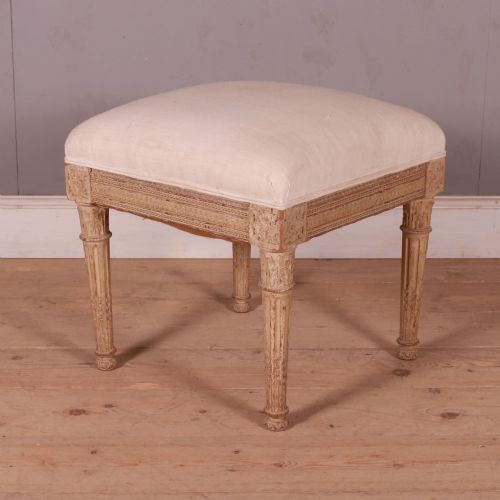


Swedish Gustavian Stools
Swedish Gustavian stools bring restrained neoclassical elegance and pale painted woodwork to a room, offering both seating and history.
Swedish Gustavian Stools
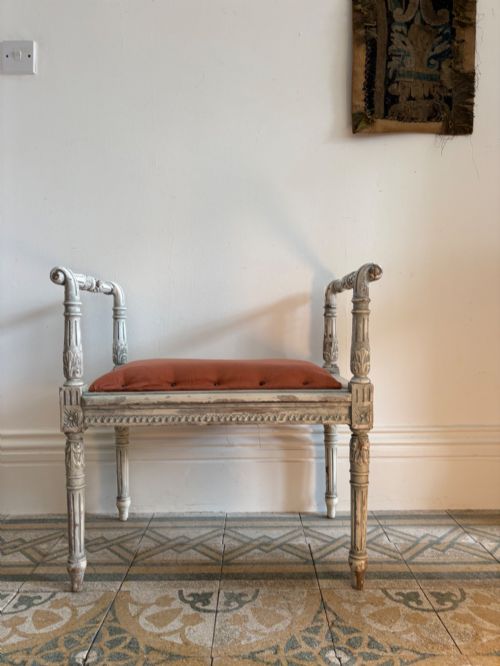
Swedish Gustavian stools embody the light, neoclassical aesthetic developed in late eighteenth-century Sweden under the influence of King Gustaf III. These pieces range from formal nineteenth-century interpretations to rustic iterations shaped by local cabinetmakers.
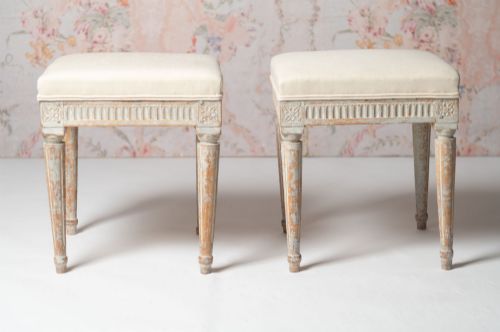
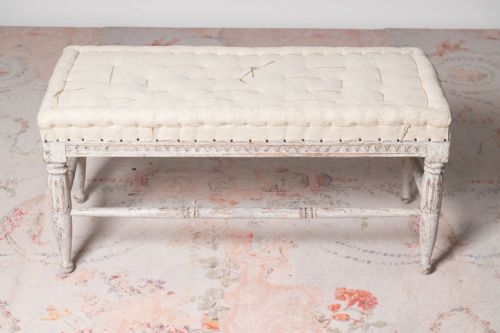
Buyers frequently encounter painted wood constructions paired with upholstered seats featuring linen, silk, cotton, or standard fabric. Forms vary from low stools and benches to pairs of carved seating designed for grand interiors.
The aesthetic prioritises symmetry and restrained ornamentation over heavy baroque carving, making these seats adaptable to both period and modern settings.
Materials and construction
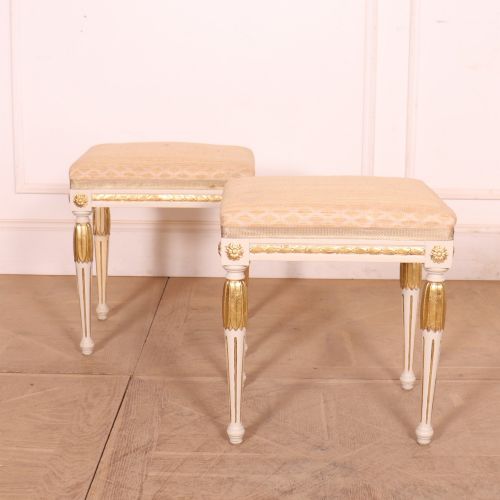
Makers shaped these pieces primarily from wood, often applying layers of paint or gold leaf to achieve the characteristic pale surface finish. The underlying timber work relies on traditional joinery techniques suited to sturdy domestic use.
Upholstery forms a crucial element of the construction, with historical examples employing textiles such as linen, silk, and cotton for the seat pads. Original painted finishes often show layers of wear that reveal the hand-applied nature of the decoration.
Listings feature items dated across the nineteenth century, including specific years such as 1880, 1890, 1900, alongside eighteenth-century examples.
Assessing quality and character
Quality in these pieces rests upon the crispness of the carved details and the integrity of the original painted surface. Finer examples display refined neoclassical proportions and careful handling of the wood.
The preservation of early or original paint layers elevates a piece above those with later, heavy-handed overpainting. Structural harmony between the wooden frame and the upholstered top determines the overall success of the design.
The Swedish Gustavian Stools Glossary
- Gustavian
- The Swedish neoclassical design movement spanning the late eighteenth century and inspiring later nineteenth-century revivals. It draws heavily on French Louis XVI styles but adopts a simpler, lighter Scandinavian sensibility.
- Neoclassical
- A style characterised by classical motifs such as fluting, rosettes, and straight tapered legs. This aesthetic defined the architecture and furniture of the period.
- Painted Wood
- Timber treated with traditional pigments, often white or soft grey, to reflect light in northern interiors. This finish is a hallmark of the regional aesthetic.
- Ottoman
- An upholstered seat without a back or arms, often used as a footstool or low bench. These pieces provide versatile seating within a room scheme.
Swedish Gustavian Stools: Frequently Asked Questions
What defines a Gustavian stool?
These seats are defined by their neoclassical lines, pale painted wood finishes, and restrained ornamentation derived from eighteenth-century royal French tastes interpreted through a Scandinavian lens.
They typically feature tapered legs and symmetrical forms that suit both formal parlours and relaxed living spaces.
How were these stools used historically?
Historically, such seating served various domestic functions, from dressing room seats and footstools to low benches positioned around larger reception rooms.
Their mobility allowed them to be easily moved to accommodate guests in neoclassical interiors.
Are painted finishes usually original?
Many surviving examples retain early or original paint layers, though some pieces received subsequent coats of paint during later nineteenth-century maintenance.
Examining the surface texture helps determine whether the finish reflects the age of the underlying woodwork.
How do I place them in a modern room?
Their neutral painted surfaces and simple silhouettes allow these stools to function effectively as accent seating or low side tables in contemporary interiors.
Pairs work particularly well placed beneath a console table or at the foot of a bed.