
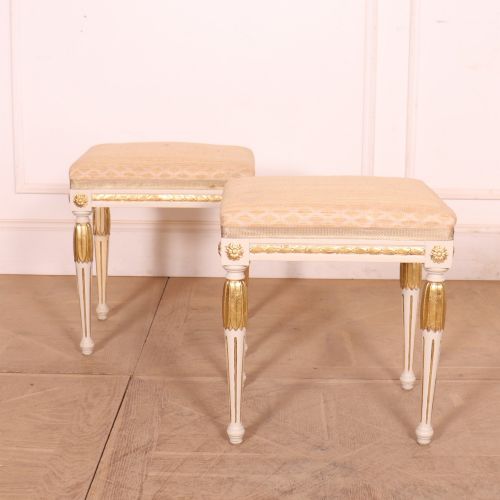


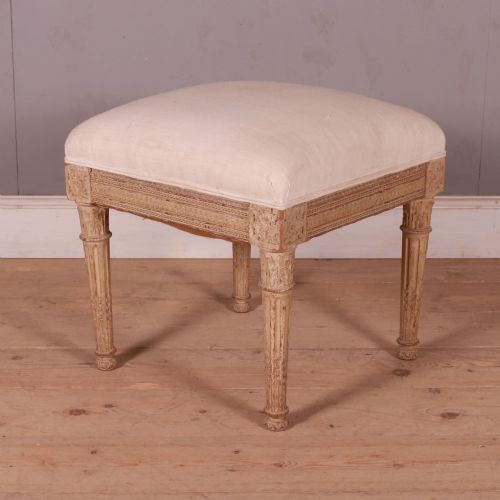


Swedish Neoclassical Stool
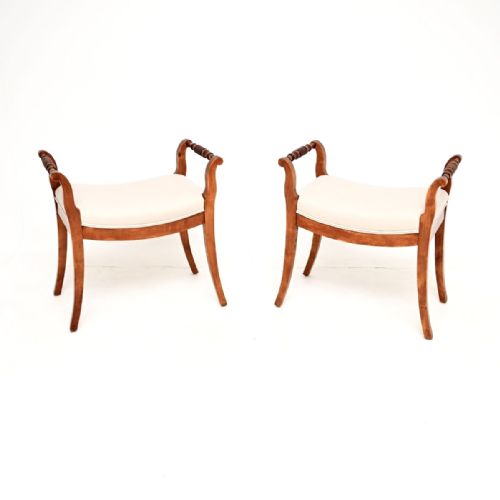
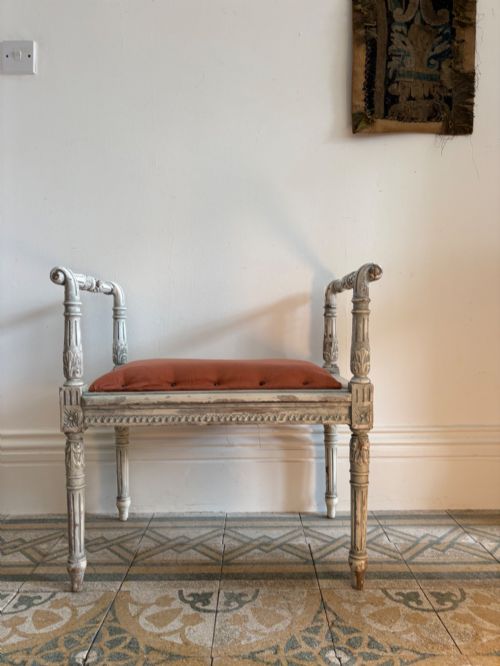
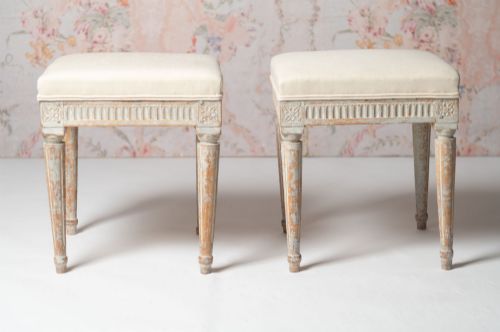
These Swedish neoclassical stool examples bring restrained elegance and clean lines to a room, offering functional seating rooted in historical design.
Swedish Neoclassical Stool
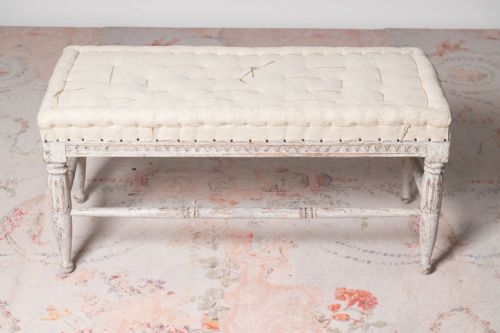
A swedish neoclassical stool encompasses wooden seating forms originating from the eighteenth and nineteenth centuries, often associated with the Gustavian style and Swedish Grace movements. These pieces range from single stools and pairs to long bedroom benches upholstered in linen, silk, or cotton.
The versions most frequently encountered on this page date from the nineteenth century, including examples from eighteen eighty up to nineteen hundred, alongside eighteenth century pieces. They typically feature painted wood finishes, carved details, and original paint surfaces that highlight their architectural proportions.
Materials and construction
Makers utilised wood as the primary structural material, frequently applying white paint or gold leaf to achieve the characteristic neoclassical aesthetic. Birch and other timber varieties were shaped into carved frames designed to support textile seating.
Upholstery involved natural fabrics such as linen, cotton, and silk for the seats, applied to both compact stools and long bedroom benches. Surface decoration relied on original paint finishes rather than heavy ornamentation, keeping the forms crisp and balanced.
Long birch bedroom benches from nineteen hundred prove that morning routines have demanded comfortable places to sit while pulling on boots for centuries.
Assessing quality
Distinctions in quality rest upon the crispness of the wood carving and the preservation of the original painted surface. Pieces that retain their early paintwork without heavy later intervention present a more authentic historical character.
The integrity of the frame construction and the proportion of the neoclassical detailing also separate standard items from finer examples. Pairs and matched sets demonstrate a higher degree of initial workshop planning compared to single items.
The Swedish Neoclassical Stool Glossary
- Gustavian
- The Swedish neoclassical style spanning the late eighteenth century, known for its bright painted finishes and simplified classical motifs derived from French designs. It remains the dominant aesthetic reference for these seating forms.
- Swedish Grace
- A twentieth-century architectural and design movement bridging neoclassical restraint with early modernism. Pieces from this era display streamlined classical proportions.
- Painted Wood
- Timber treated with a decorative surface coating, commonly white or light tones in Scandinavian furniture to reflect light within domestic interiors.
- Original Paint
- The earliest surviving surface coating applied to a piece of furniture, highly valued by collectors for authenticity.
Swedish Neoclassical Stool: Frequently Asked Questions
What defines a swedish neoclassical stool?
These pieces are historical wooden seats featuring restrained classical ornamentation, painted wooden frames, and upholstered tops in materials like silk or linen.
They reflect Scandinavian interpretations of neoclassical design, ranging from eighteenth-century origins through nineteenth-century revivals into early twentieth-century Swedish Grace forms.
How were these stools used historically?
They served as movable seating solutions in bedrooms, dressing rooms, and formal reception spaces within Scandinavian homes.
Longer bedroom benches and paired stools provided flexible seating arrangements that complemented the architectural symmetry of neoclassical interiors.
How do I style a swedish neoclassical stool today?
These versatile pieces work well as accent seating in hallways, footstools in living areas, or dressing table benches in bedrooms.
Their neutral painted finishes and clean lines allow them to integrate easily into both traditional period rooms and contemporary minimalist interiors.
How can I tell the period of a stool?
Dating relies on observing construction methods, timber types such as birch, and the characteristics of the painted surface.
Eighteenth-century examples display different joinery and carving traits compared to nineteenth-century interpretations or nineteen-hundred production.