

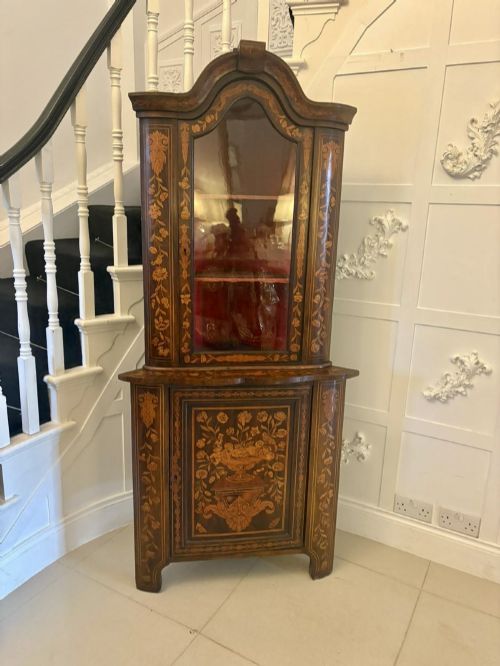
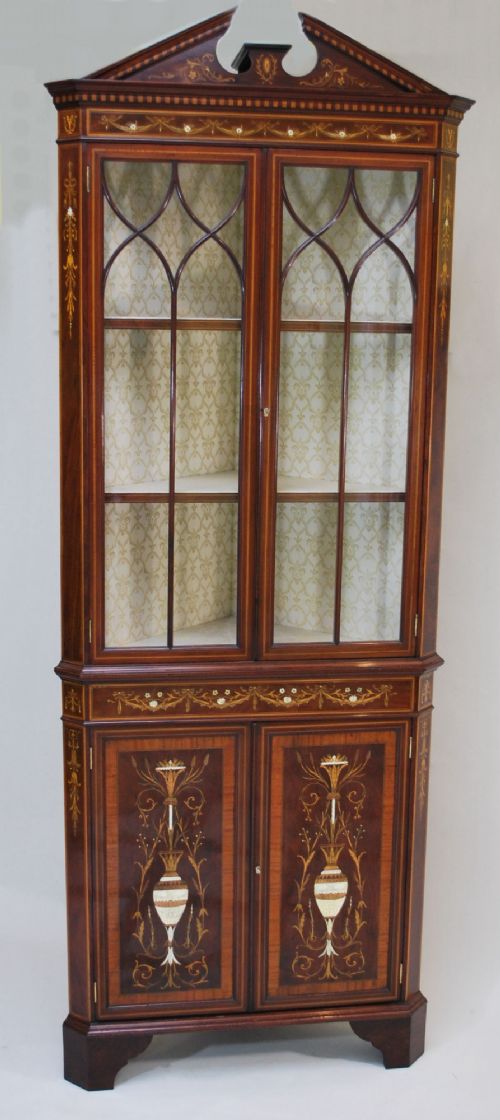
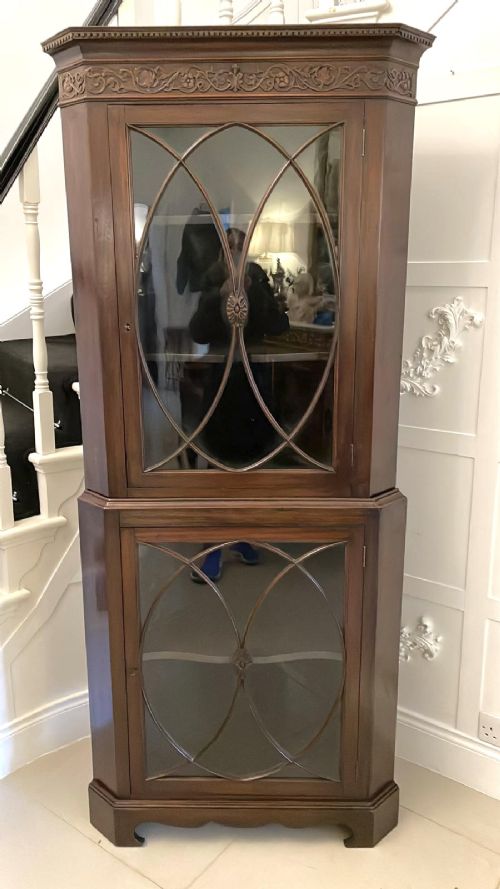
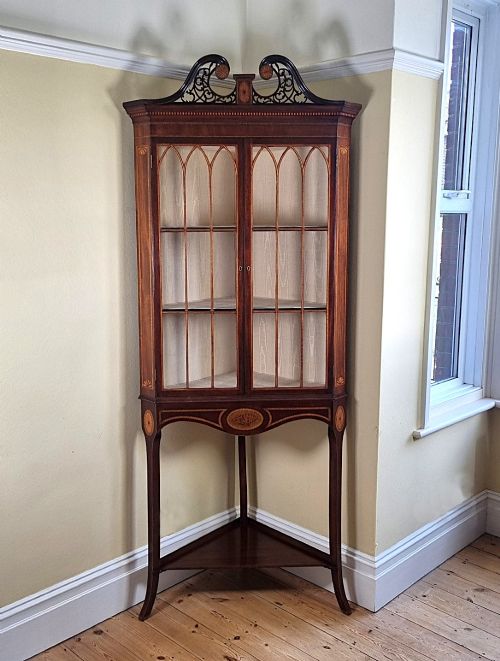
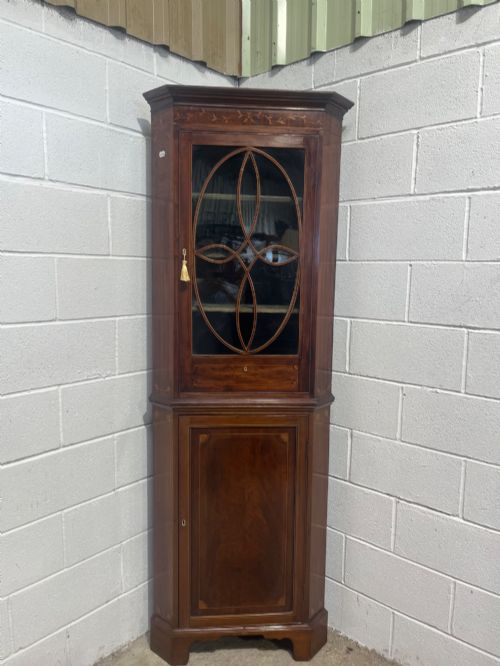
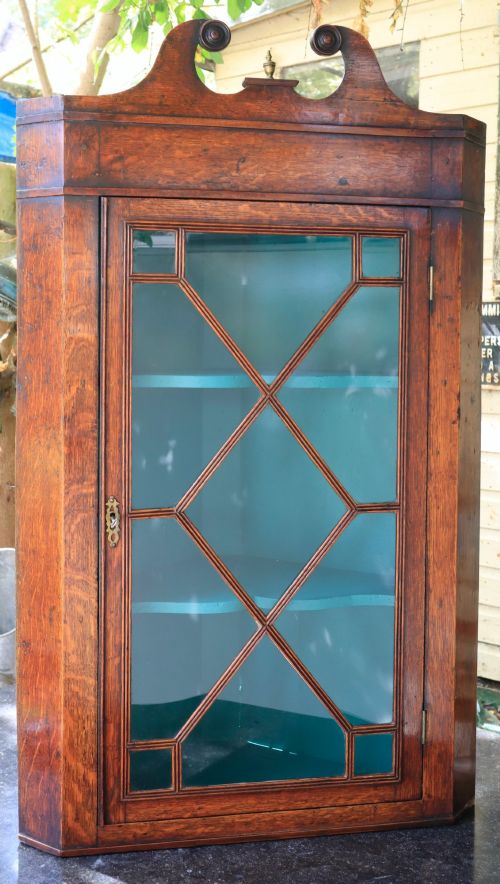
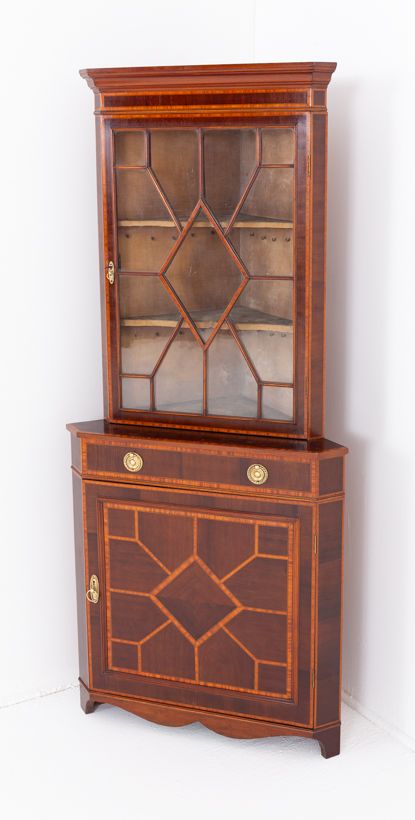
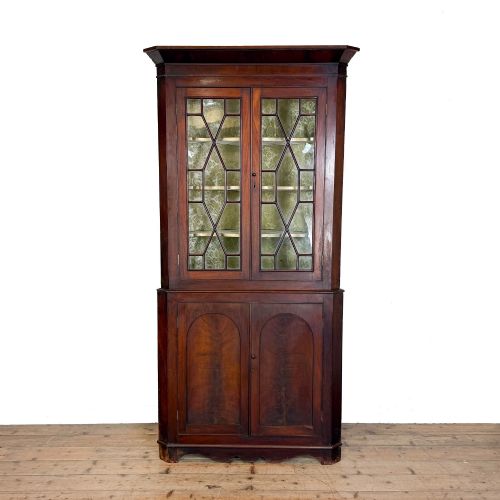


Glazed Mahogany Corner Cabinet
When you want a glazed mahogany corner cabinet, you are looking at practical period storage designed to make use of neglected room angles while displaying china or books.
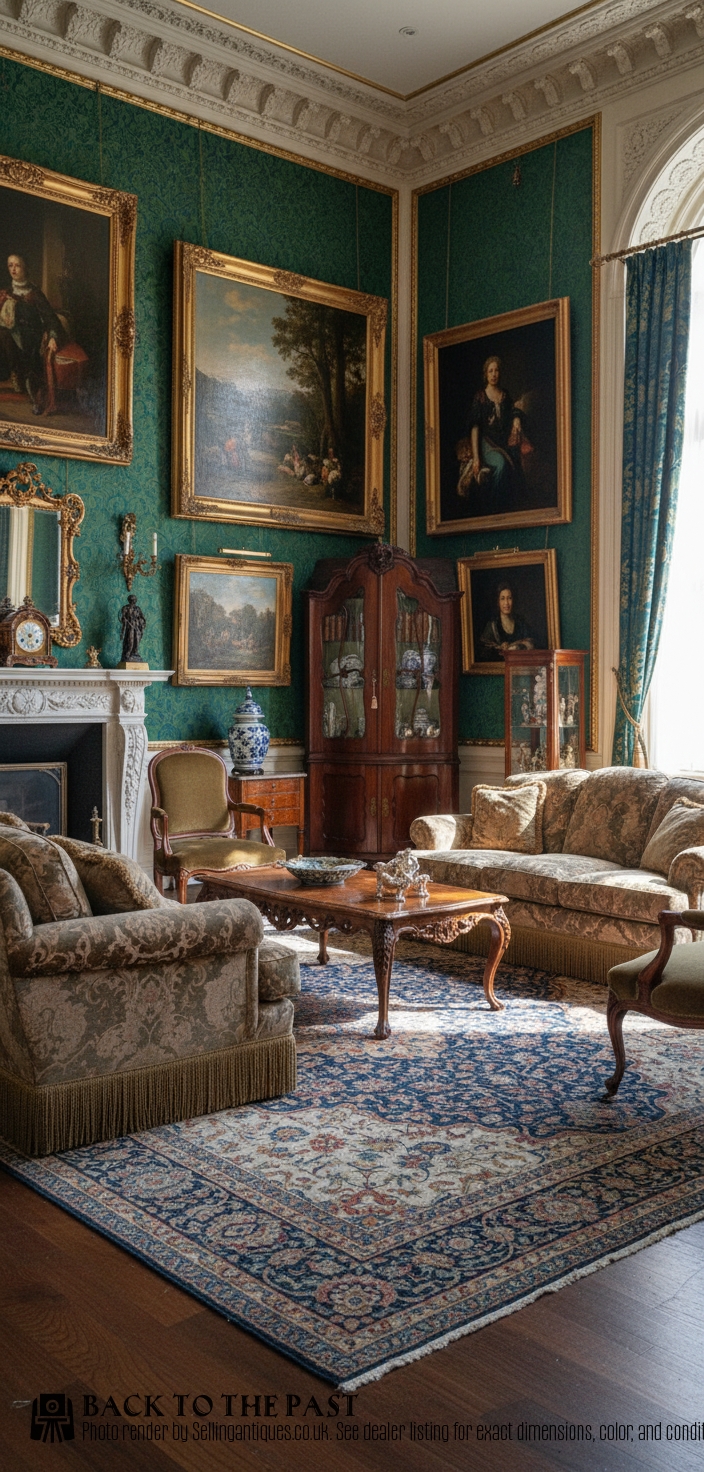
Glazed Mahogany Corner Cabinet
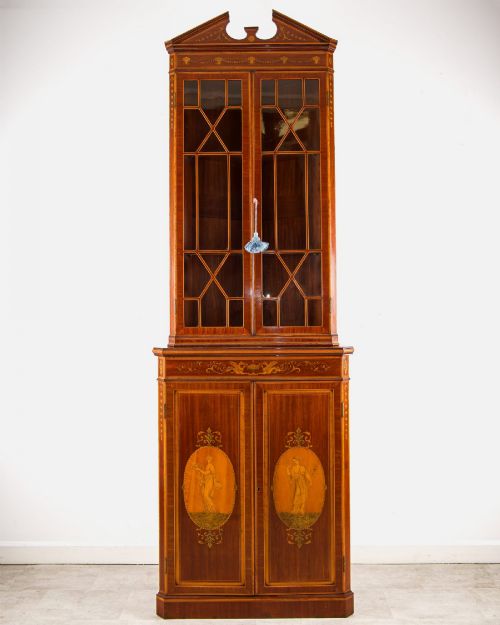
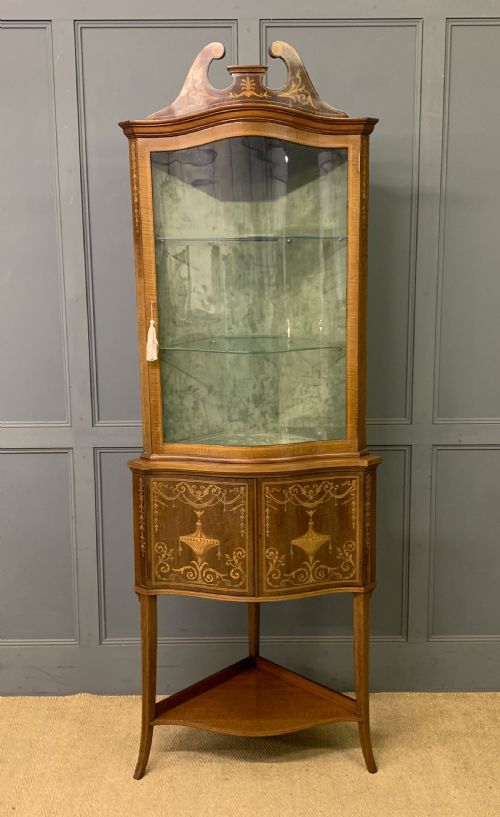
A glazed mahogany corner cabinet occupies architectural angles efficiently, transforming dead space into a focal point for displaying prized possessions. These pieces range from compact wall-hanging cupboards to imposing floor-standing and double-height furniture.
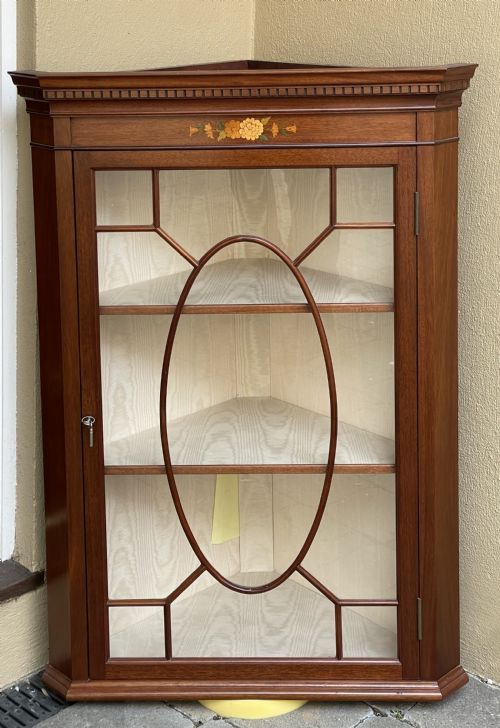
The selections seen here stretch from the eighteenth-century Georgian era through the Victorian period and into Edwardian revivals. Wall-mounted variants frequently feature single doors with fine astragal glazing bars, whilst larger examples often split into two distinct sections.
Makers and cabinetmakers built these storage items to fit snugly into room corners, utilising rich timbers paired with glass panels. Buyers will encounter simple functional cupboards alongside heavily inlaid display cases.
Materials and construction
Craftsmen relied primarily on solid mahogany and wood veneers over secondary timbers, often embellishing surfaces with satinwood inlay, marquetry, and contrasting stringing. These cabinet carcasses were constructed to withstand the structural demands of hanging or standing firmly in a right-angled space.
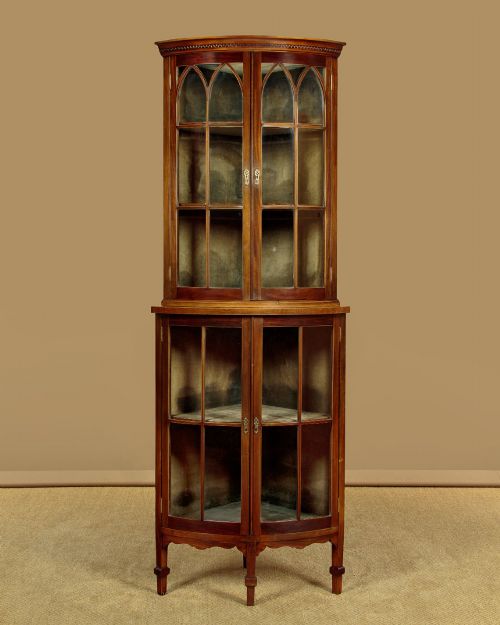
Glazing is a defining characteristic, employing individual glass panes held together by timber astragal bars in geometric or intersecting Gothic arch patterns. Brass hardware, including hinges, escutcheons, and working locks with keys, completes the functional assembly of the doors.
The surviving inventory includes wall-hanging cupboards, bow-front displays, and floor-standing bookcases.
Evaluating quality and execution
Quality reveals itself in the crispness of the cabinetmaker's joinery, the selection of figured mahogany timber, and the delicacy of the astragal glazing bars. Superior examples display balanced proportions, clean sightlines, and meticulous attention to internal shelving and backboards.
Goodhall, Lamb and Heighway of Manchester
The Glazed Mahogany Corner Cabinet Glossary
- Astragal
- Timber glazing bars that divide a glass door into smaller panes. These delicate mouldings form intersecting geometric patterns across the cabinet front.
- Marquetry
- Decorative veneer work arranged in pictorial or patterned designs. Artisans cut thin slices of contrasting woods like satinwood to create detailed motifs.
- Bow front
- A gently curved convex cabinet front that projects outward. This sweeping shape softens the rigid angles typically associated with corner furniture.
- Dentil moulding
- A architectural trim featuring a series of small, rectangular blocks spaced evenly along a cornice. It appears frequently on Georgian cornices.
- Bracket feet
- Small, stable furniture supports shaped like brackets extending outward from the base corners. They lift the cabinet slightly off the floor.
- Cross-banding
- A narrow strip of veneer laid across the grain of the primary wood border. This technique frames the top or door panels with a contrasting border.
Glazed Mahogany Corner Cabinet: Frequently Asked Questions
How do I hang a wall cabinet safely?
Hanging corner cupboards require secure fixing directly into wall studs or solid masonry using appropriate brackets suited to the weight of the timber and glass.
Because these pieces project outward from the wall, ensuring the internal hanging fixings are structurally sound prevents the cabinet from leaning under its own load.
Can these cabinets hold heavy books?
Many corner bookcases and robust cupboards feature sturdy fixed or adjustable shelving designed to support substantial volumes.
Lighter wall-hanging display cabinets with delicate glass doors are better suited for ceramics, glassware, and lighter decorative objects rather than dense libraries.
How do I tell Georgian from Edwardian versions?
Georgian cabinets generally exhibit heavier timber construction, simpler architectural cornices, and hand-cut joinery consistent with eighteenth-century workshop practices.
Edwardian revivals often feature lighter satinwood inlay, marquetry, and brighter polished mahogany surfaces influenced by Sheraton revival tastes around nineteen hundred.
What is a two-part corner cabinet?
A two-part or double-height cabinet consists of an upper glazed display section sitting atop a lower enclosed wooden cupboard base.
This stacked construction made large furniture easier to transport and manoeuvre into domestic rooms while providing dual storage functions.