
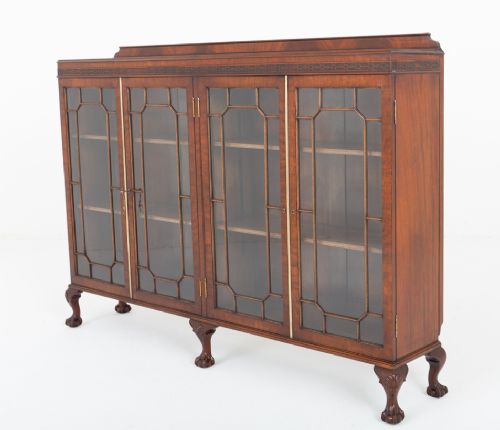
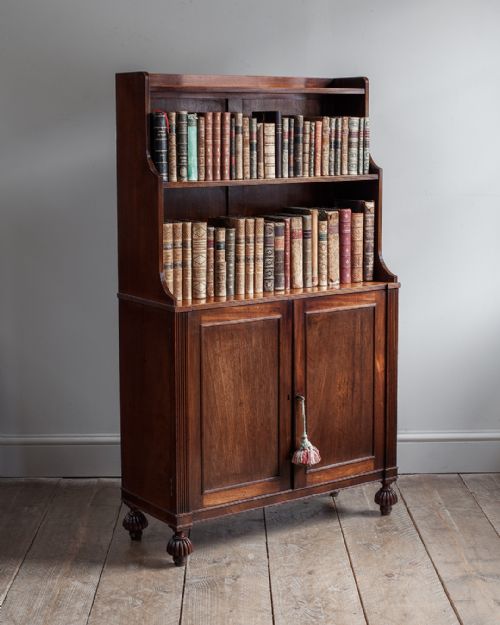
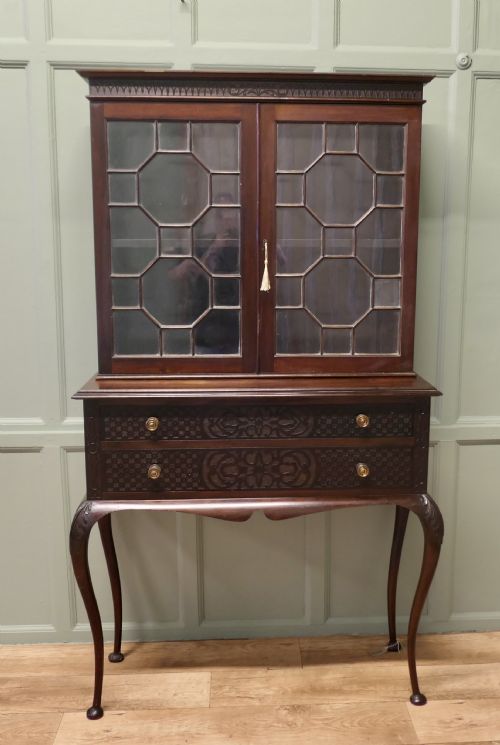
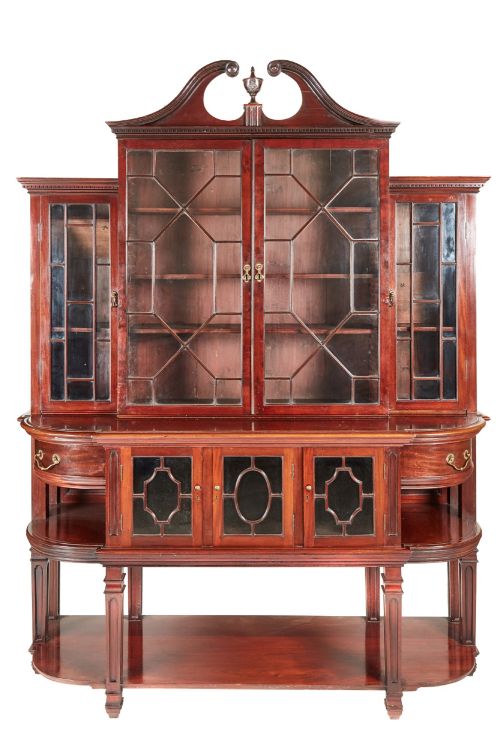
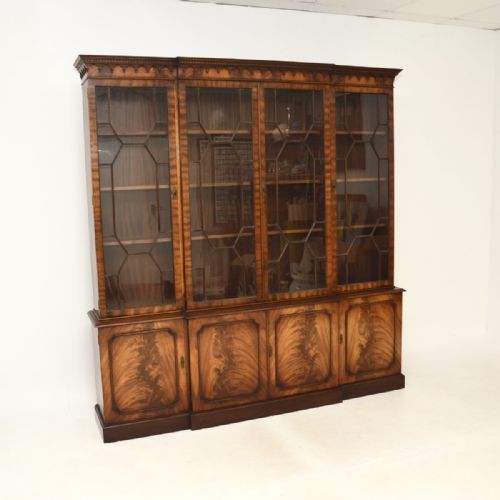
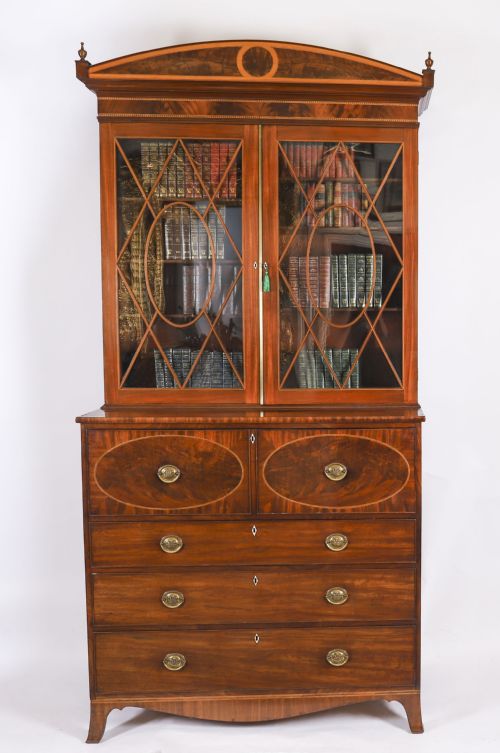

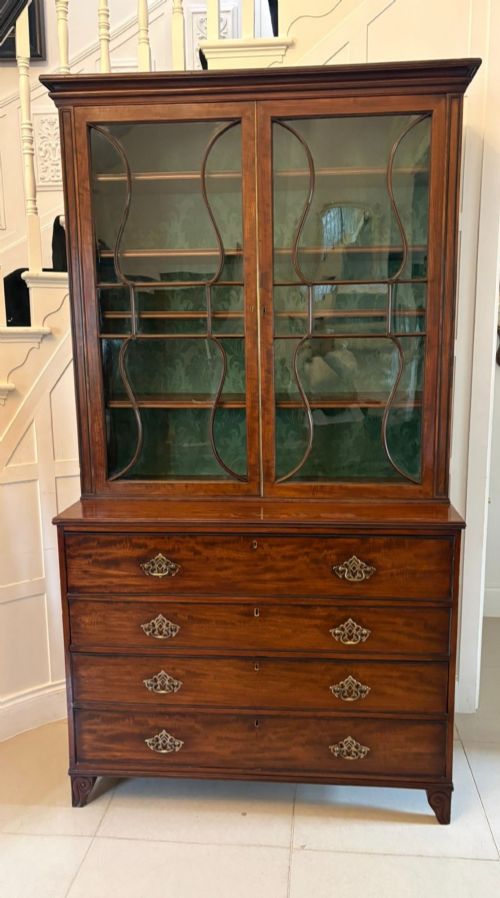
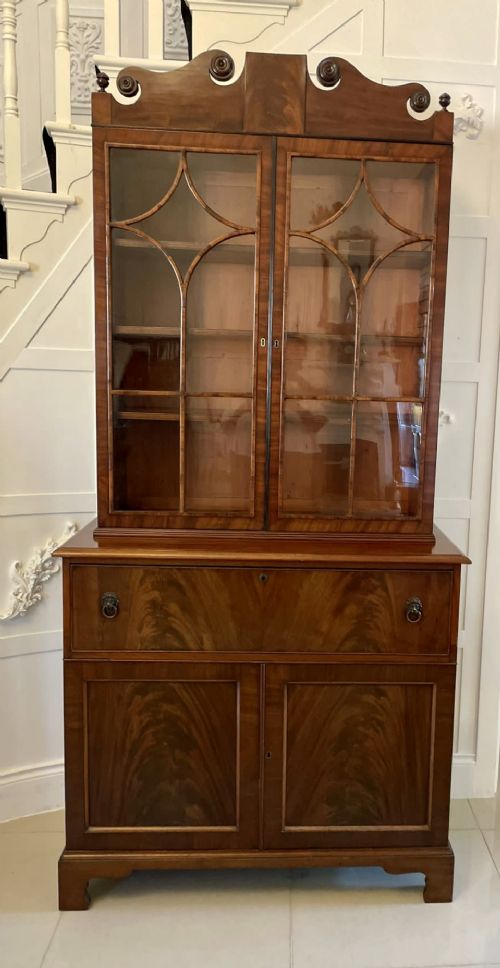
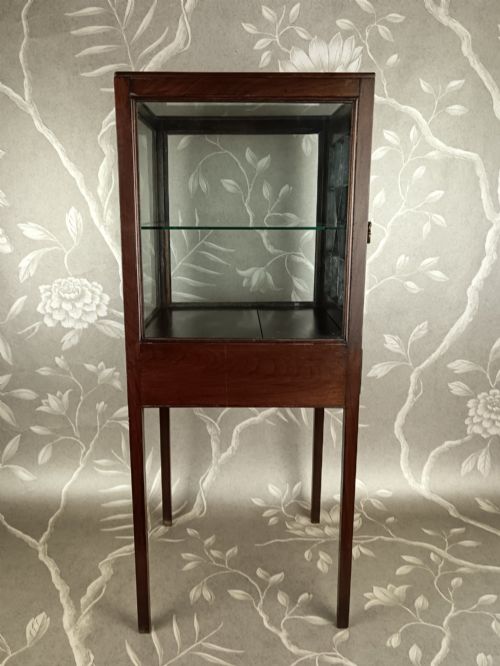
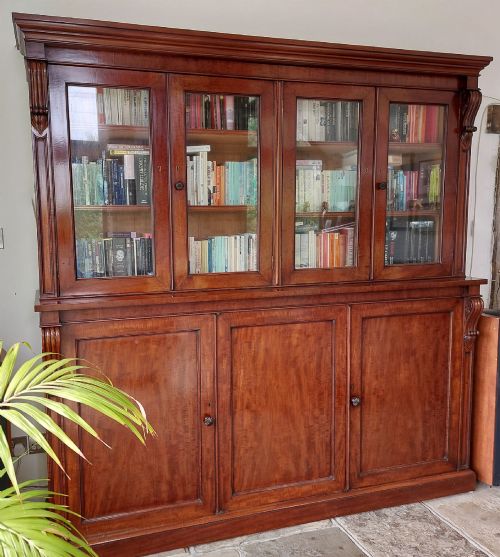
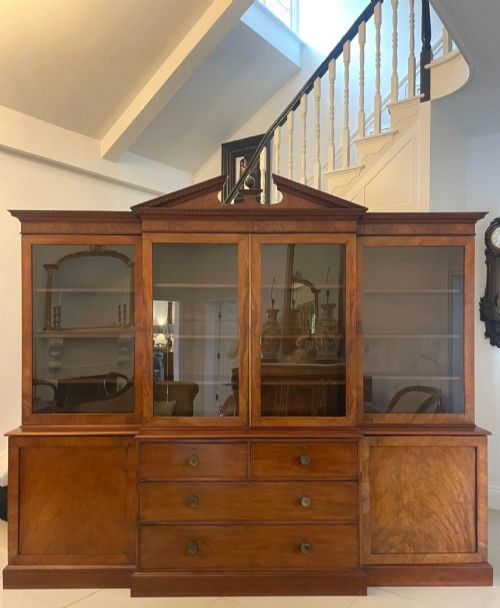
Georgian Mahogany Display Cabinet
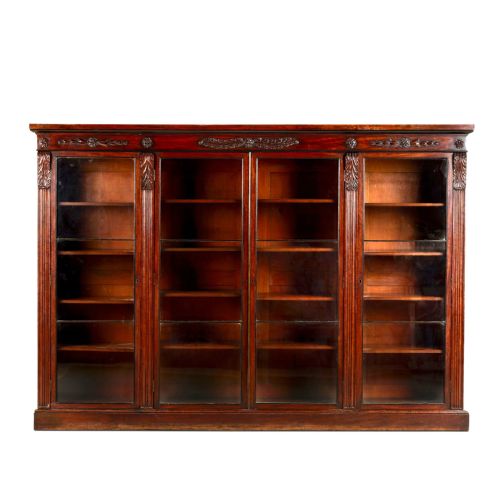
A georgian mahogany display cabinet brings architectural timber and clear glass together to hold prized possessions.
The Form
When you search for a georgian mahogany display cabinet, you encounter substantial freestanding cupboards, tall standing corner units, and hanging wall cabinets designed to showcase treasured possessions. The most common iteration met here is the corner cabinet, constructed to utilise awkward angles in rooms while presenting glazed panes to the interior.
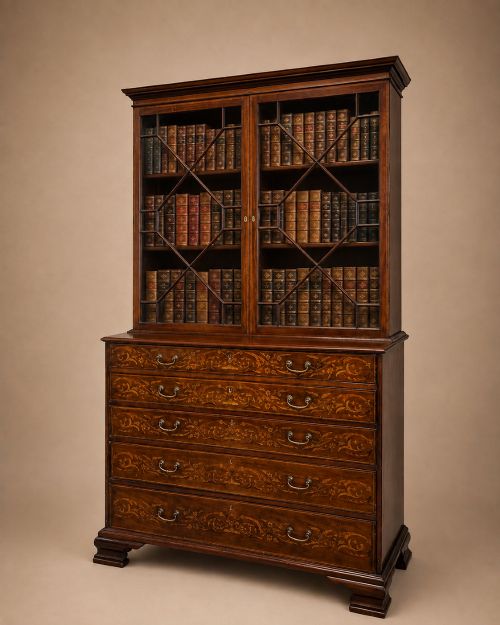
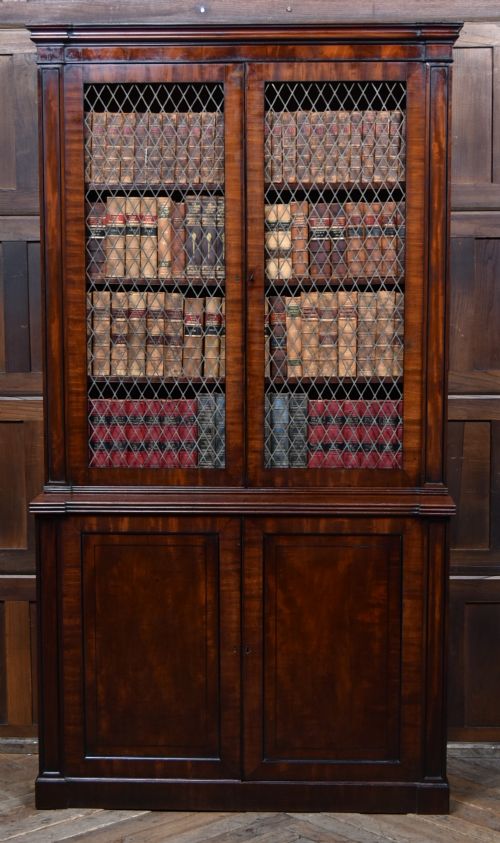
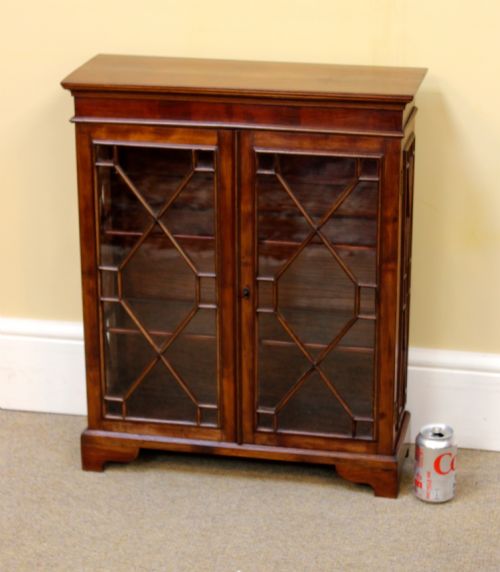
These pieces cross the eighteenth and nineteenth centuries, spanning standard georgian periods, regency adaptations, and specific chippendale or george ii influences. Makers built them as single door compartments, two door bookcases, or cabinets raised on stands, pairing display space with functional storage.
Materials and Construction
The primary timber is mahogany, occasionally accented with oak, satinwood, or inlay work to provide contrasting grain patterns and decorative borders. Glass panels are held securely within wooden framing, while brass hardware supplies structural hinges and functional key escutcheons.
Carpenters utilised traditional jointing methods to stabilize heavy timber carcasses, incorporating glazed doors with intricate wooden astragals. Interior shelving and backing boards frequently rely on secondary timbers like oak, assembled to support the weight of books and china.
Retail Price Guide 2026
Typical UK retail prices for georgian mahogany display cabinet, calculated from the Sellingantiques database of over a million retail prices indexed since 2003. This retail price guide relies exclusively on Sellingantiques data; no external sources or auction records are used, so the figures do not describe the wider market.
Listings include eighteenth and nineteenth century pieces constructed from mahogany, glass, brass, and oak in corner, bookcase, and cabinet formats.
Judging Quality
Quality rests in the selection of the timber, where figured grain, flame mahogany patterns, and careful marquetry distinguish standard storage from finer decorative work. The precision of the glazing bars, known as astragals, dictates the refinement of the upper doors.
Proportion and scale separate the ordinary from the exceptional, as seen in well-balanced cornices, elegant bracket feet, and original brass fittings that remain undisturbed through centuries of use.
Edwards and Roberts·Gillows
The Georgian Mahogany Display Cabinet Glossary
- Astragal
- The thin wooden moulding that divides panes of glass within a door. These strips create geometric patterns across the front of the cabinet.
- Corner cabinet
- A specialised storage piece built with a triangular footprint to fit snugly into a room angle. These units appear as standing cupboards or hanging wall versions.
- Flame mahogany
- A distinct wood veneer cut from the branch junction of the tree. This technique yields a fiery, rippling grain pattern highly prized by cabinet makers.
- Marquetry
- The art of applying decorative veneer pieces onto a solid timber base to form pictorial or geometric designs. It often incorporates lighter woods like satinwood against dark mahogany.
- Cabinet on stand
- An elevated storage compartment raised upon a distinct base or frame with legs. This configuration lightens the visual weight of tall timber furniture.
Frequently Asked Questions
How are corner cabinets secured?
These units generally rely on sturdy wall fixings or bracket supports when hung as wall cupboards to bear the weight of heavy timber and glass.
Standing versions distribute their load through lower plinths or bracket feet directly onto the floorboards.
What items go inside?
Historically, these pieces housed valuable books, ceramics, and personal collections behind protective glass doors.
Today, owners utilise the shelving to exhibit glassware, pottery, and decorative objects while keeping dust away.
How do I spot a true period piece?
Examine the construction methods, secondary timbers, and hand-cut joinery visible on the interior and underside of the carcass.
Original glass often shows minor bubbles and imperfections absent in modern replacement panes.
Are regency styles different?
Regency variations reflect the design shifts of the early nineteenth century, incorporating classical motifs and distinct architectural proportions.
They follow the earlier georgian tradition while introducing bolder lines and alternative brass decorative elements.