
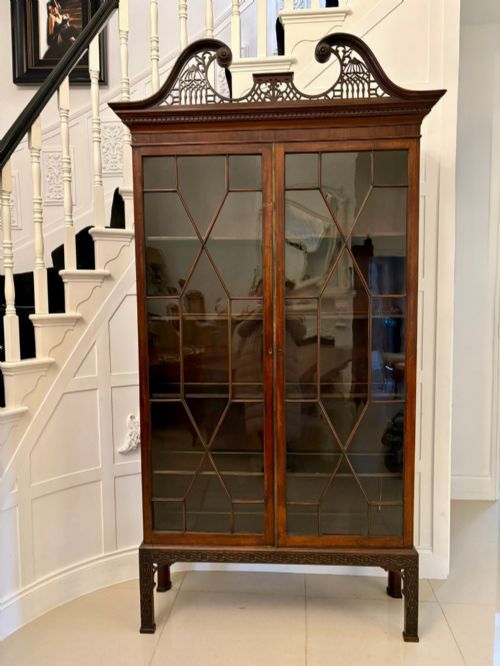
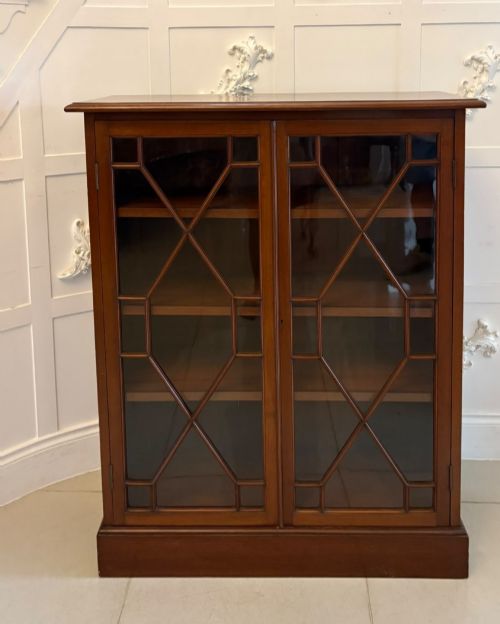
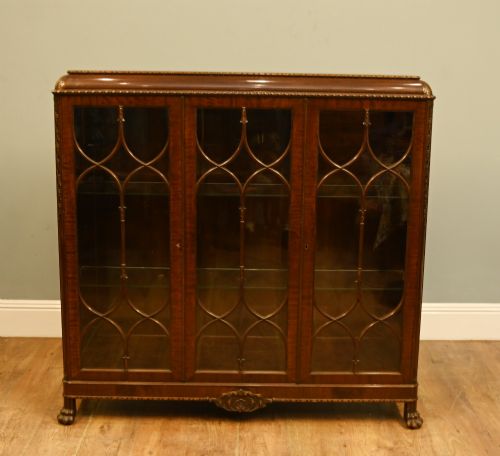
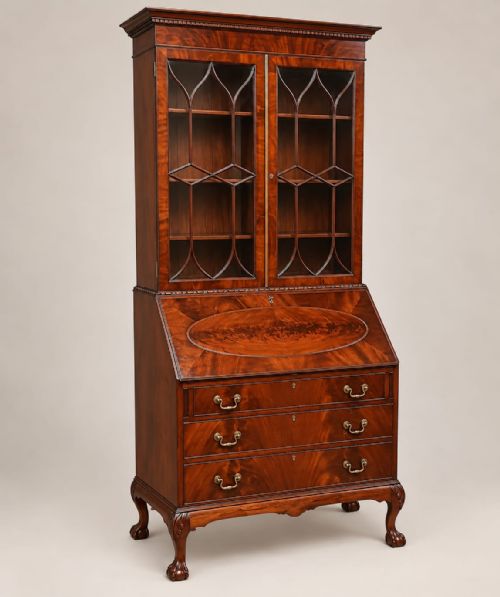
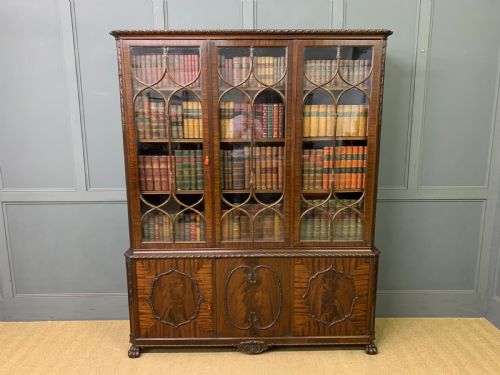
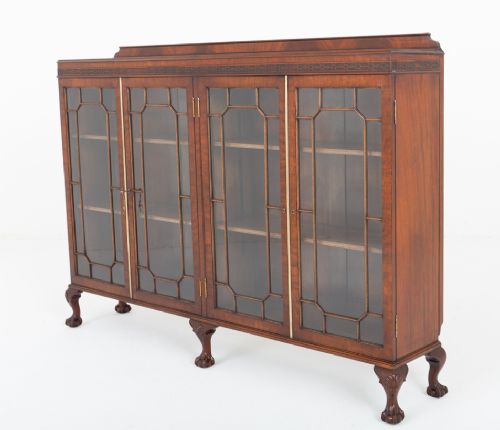
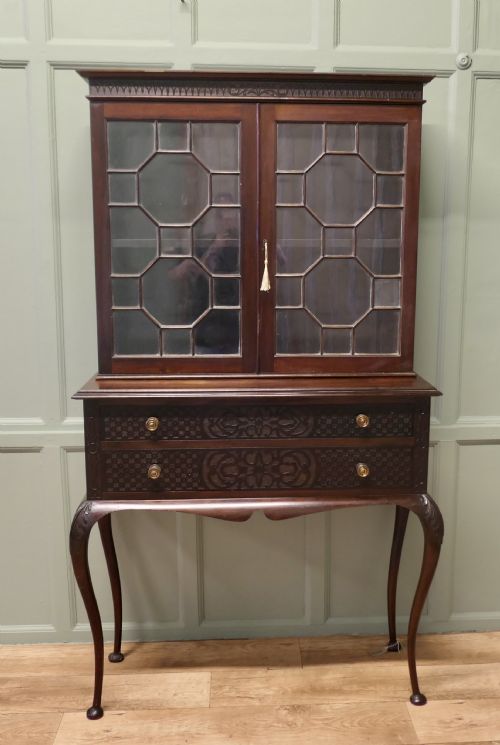
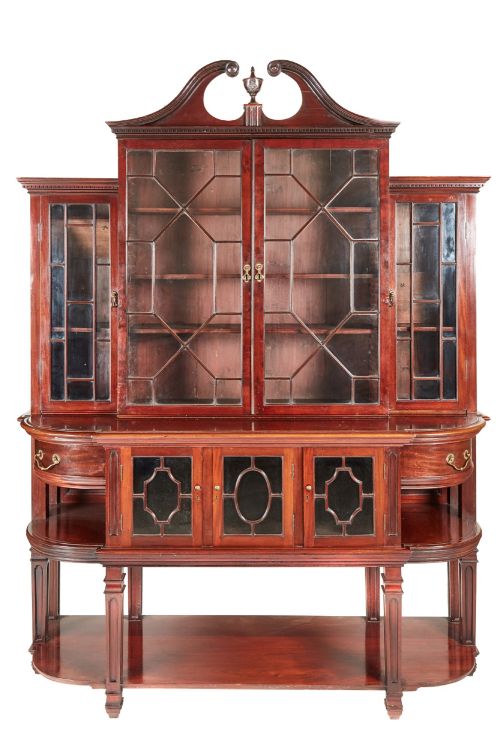
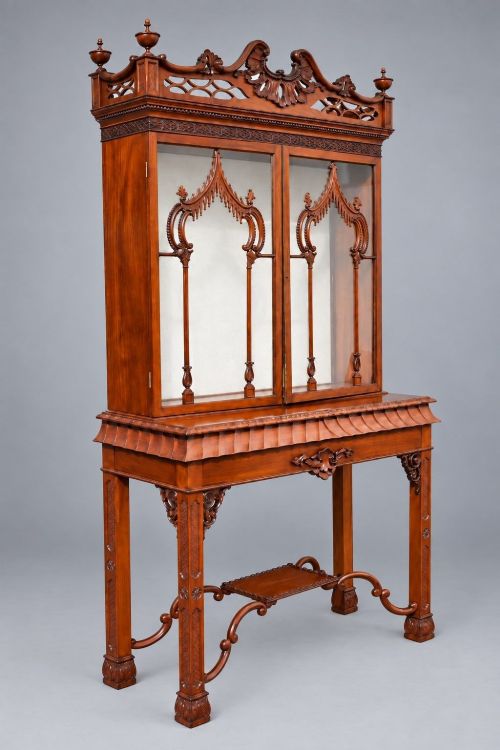

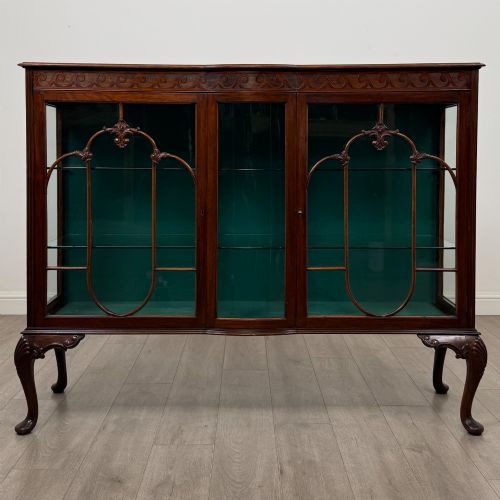
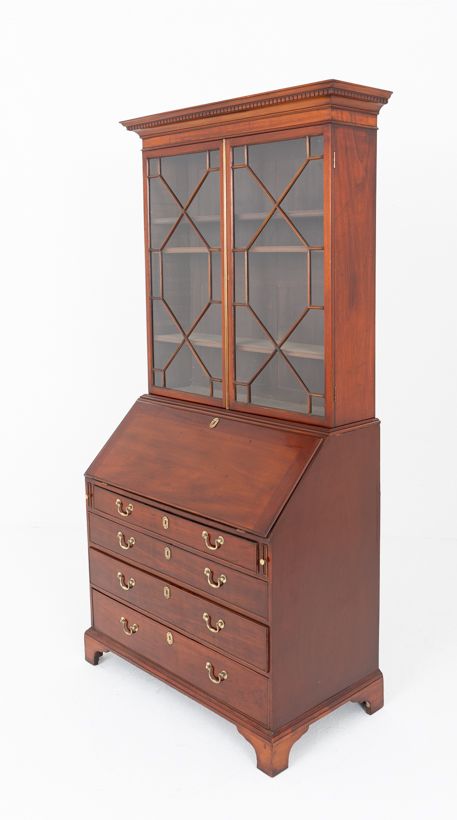
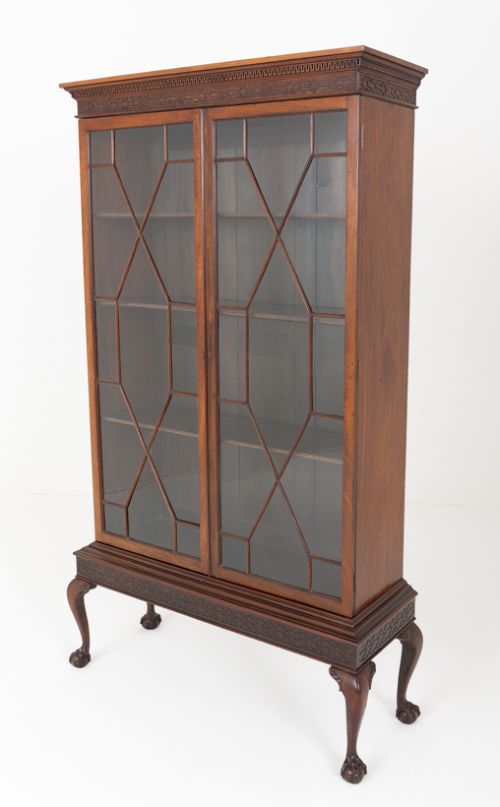
Chippendale Mahogany Bookcase
A chippendale mahogany bookcase combines architectural timber framing with glazed display, offering formal storage for books and collections.
Chippendale Mahogany Bookcase
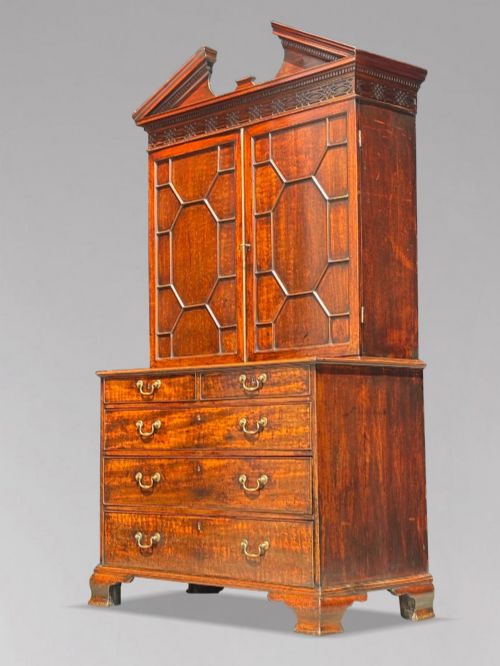
A chippendale mahogany bookcase brings together 18th-century Georgian design and later revival periods, spanning breakfront cabinets, bureau bookcases, and display pieces.
The version most frequently met on this page is the Chippendale revival piece dating from the Edwardian era or late 19th century, alongside authentic 18th-century George III examples.
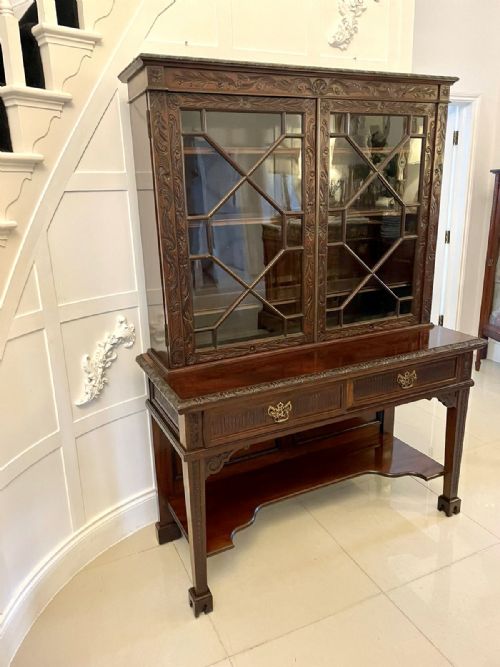
Forms range from large library bookcases to compact display cabinets, bureau bookcases with fitted writing interiors, and open shelving units.
Materials and construction
Makers utilised solid mahogany and mahogany veneers over secondary timbers, often embellishing surfaces with intricate marquetry and wood inlay.
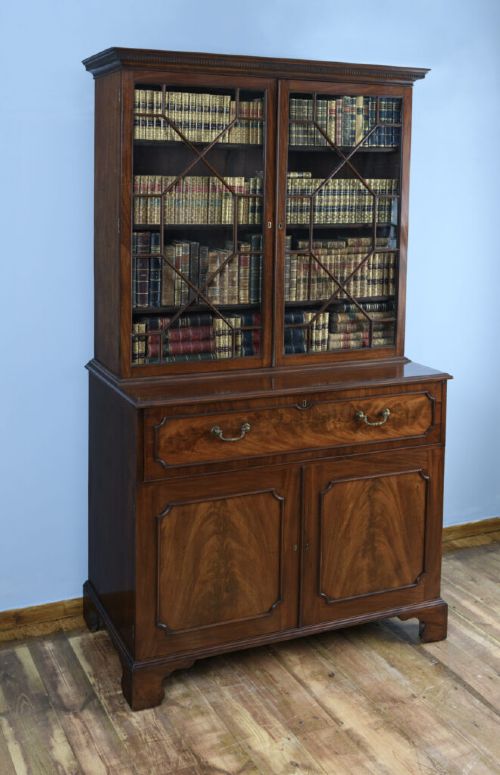
Upper sections typically employ glass panes secured by astragal glazing bars, complemented by brass hardware and interior fabric linings.
Carved details such as fretwork and Chinese Chippendale motifs define the decorative vocabulary across both Georgian originals and later revival pieces.
Listings span the 18th century through to the 1920s, featuring mahogany, glass, brass, and marquetry inlay.
Distinguishing characteristics
The distinction between ordinary and exceptional pieces rests on the crispness of the hand-carving and the depth of the timber's grain.
Proportions and architectural balance separate master cabinet work from standard production, particularly in breakfront library pieces and bureau interiors.
James Winter And Sons·Edwards And Roberts·Hille·Waring And Gillows·Maple And Co
The Chippendale Mahogany Bookcase Glossary
- Astragal glazed
- Glass doors divided into smaller panes by narrow wooden glazing bars.
- Breakfront
- A cabinet front where the central section projects forward from the flanking sides.
- Secretaire
- A bureau or cabinet containing a pull-down writing flap concealing small drawers and pigeonholes.
- Chinoiserie
- Decorative style employing Chinese motifs, prevalent in Chinese Chippendale furniture.
- Marquetry
- Decorative patterns formed by inlaying different coloured wood veneers onto a surface.
Chippendale Mahogany Bookcase: Frequently Asked Questions
How do I date a Chippendale bookcase?
Dating relies on timber characteristics, construction methods, and hardware style. Eighteenth-century pieces show period joinery and hand-cut elements.
Revival pieces from the Edwardian era or late 19th century often display machine-finished secondary woods and distinct commercial labels.
What is the difference between George III and revival pieces?
George III pieces date from the mid to late 18th century, offering original period patina and hand-carved detailing made for contemporary libraries.
Revival pieces date from the Victorian and Edwardian eras, replicating earlier aesthetic models with the manufacturing techniques of their own time.
How were bureau bookcases used historically?
The drop-front writing surface provided a concealed desk space for correspondence and record keeping, while the upper glazed doors stored valued volumes.
Lower drawers or cupboards offered secure storage for household papers and personal possessions in the drawing room or study.
What does astragal glazed mean?
Astragal glazing refers to glass cabinet doors divided into individual panes by slender wooden bars, creating geometric patterns.
This technique protects library contents while offering clear visibility of the book bindings within.