




Chippendale Chest Cabinet
These chippendale chest cabinet pieces combine storage and display in dense hardwoods, offering the serious collector refined Georgian proportions and sturdy utility.
Chippendale Chest Cabinet
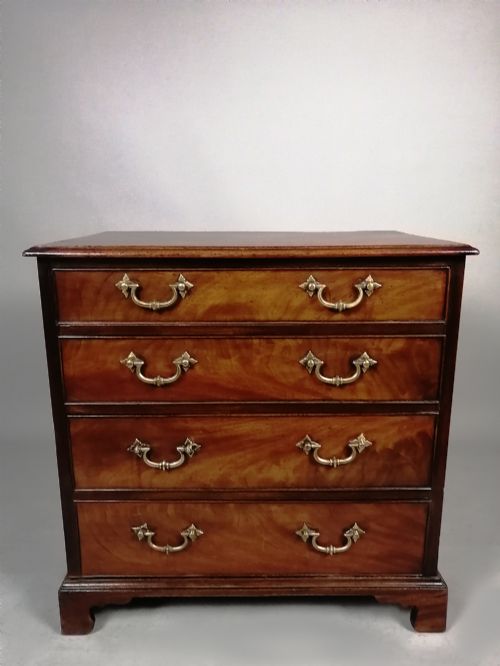
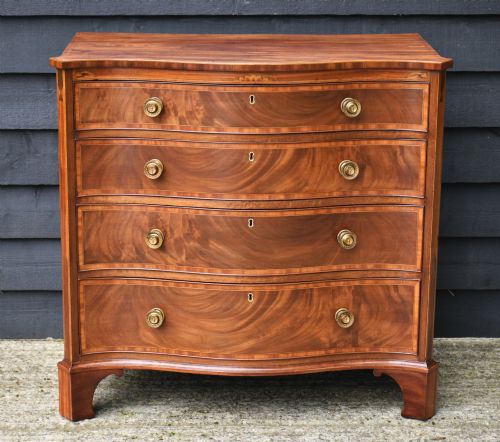
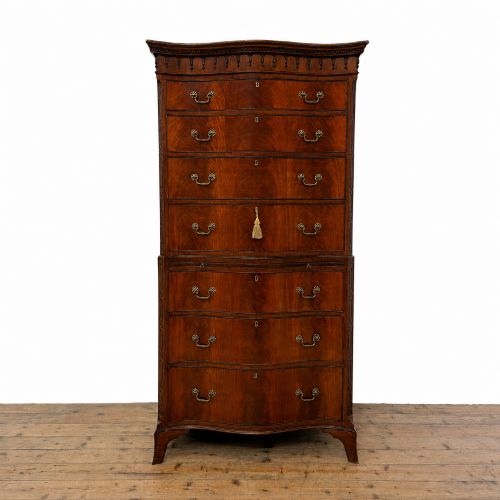
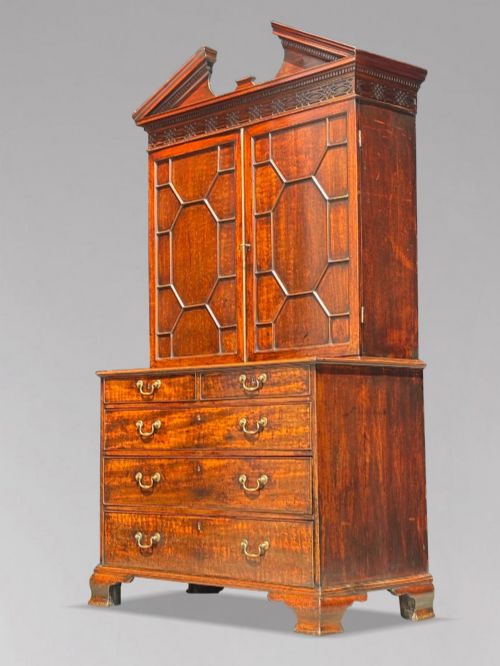
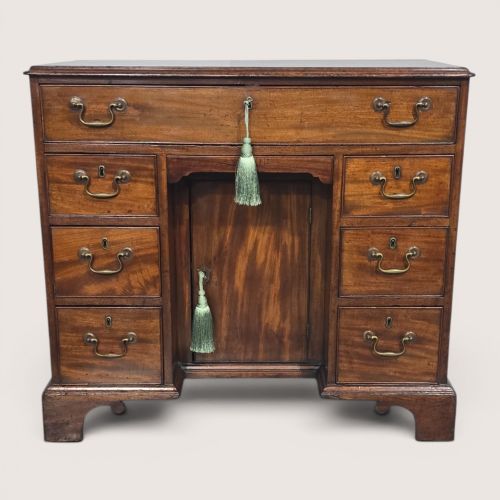
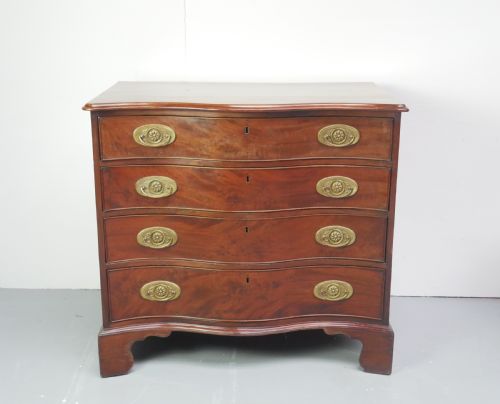
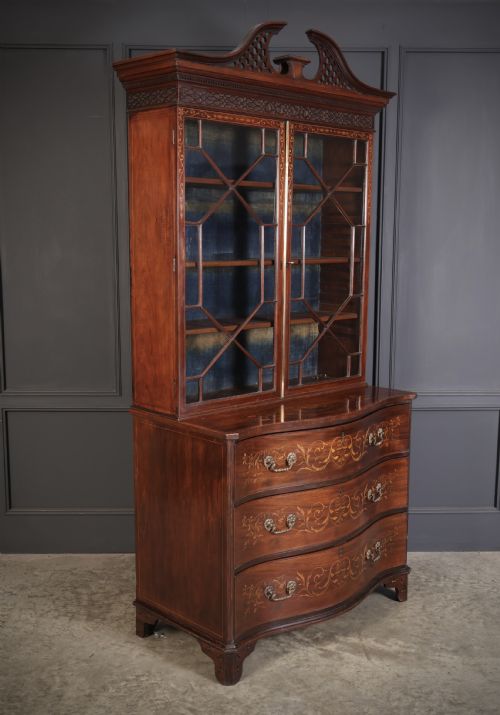
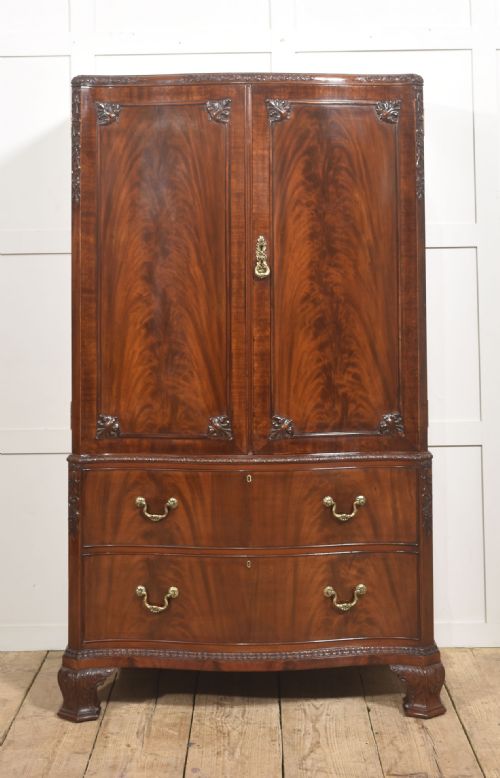
A chippendale chest cabinet encompasses tallboys, secretaire bookcases, linen presses, and drawer chests produced during the eighteenth century and later revived in Edwardian times. The most common examples on this page date from the Georgian era, combining large upper display or storage sections with solid drawer bases.
Makers designed these items for stately homes and drawing rooms to house linen, books, or collections. The surviving pieces range from mid eighteenth century originals to later revival works carrying similar carved details and cabinet forms.
Materials and Construction
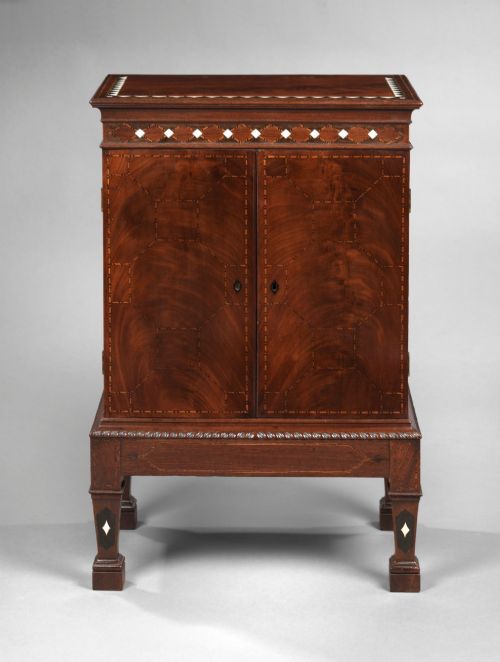
Cabinet makers relied predominantly on mahogany, flame mahogany veneer, and Cuban mahogany, occasionally incorporating satinwood, oak, and bone inlay for contrast. They mounted drawers and doors with cast brass hardware.
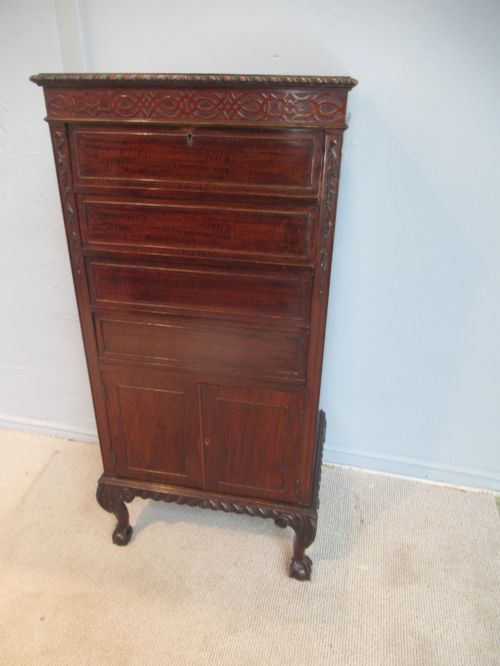
Construction techniques involve solid timber framing, dovetail joints on drawers, and hand-carved decorative motifs such as fretwork and serpentine fronts. Secondary woods like oak appear in drawer linings and internal dividers.
Some cabinets hide entire writing desks and secret compartments behind deceptively standard drawer fronts.
Craftsmanship and Proportion
Quality separates through the crispness of hand-carved details, the choice of figured mahogany veneers, and the integrity of internal fittings such as secretaire drawers. Superior examples retain original brasses and exhibit harmonious proportions without heavy restoration.
Later revival pieces show varying degrees of mechanical precision, whereas eighteenth century originals display the minor irregularities of hand tool work and timber shrinkage that indicate genuine age.
Thomas Chippendale·Waring S Gillows·Walker Hall Sheffield·William Gomm·Thomas Bradshaw
The Chippendale Chest Cabinet Glossary
- Tallboy
- A tall chest of drawers stacked in two sections, often combining a lower chest with an upper chest or linen press. These units maximise vertical storage space.
- Secretaire
- A cabinet or chest featuring a pull-out writing drawer with a drop-front lid and internal small drawers and pigeonholes. It merges a desk with a storage chest.
- Serpentine
- A furniture front shaped with a central convex curve flanked by two concave curves. This contour requires skilled carpentry to execute cleanly.
- Tray top
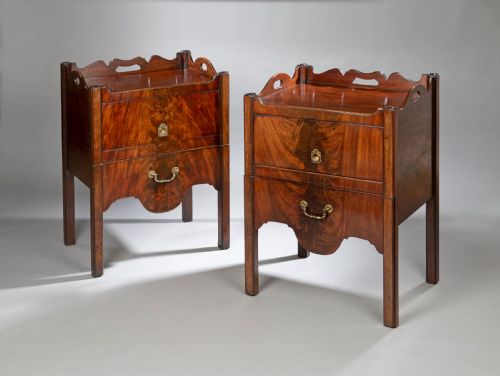
- A raised rim around the top surface of a small cabinet or commode, designed to prevent items from rolling off. It frequently appears on bedside commodes.
- Linen press
- A tall cabinet with upper doors enclosing sliding trays for textiles, positioned above a chest of lower drawers. They served domestic storage needs in Georgian bedrooms.
Chippendale Chest Cabinet: Frequently Asked Questions
How do I identify a genuine period piece?
Examine the timber shrinkage, secondary woods in drawer linings, and the hand-cut dovetails. Eighteenth-century pieces show tool marks and wear patterns consistent with age.
Compare the carving sharpness and hardware fixing methods against documented examples from the same decade.
What is a secretaire chest cabinet?
A secretaire chest incorporates a specialised drawer that folds down to reveal a writing surface, pigeonholes, and small inner compartments. It hides a writing desk inside a standard chest configuration.
Cabinet makers designed these for compact rooms where a standalone desk took up too much floor space.
Where should I place a tallboy in my home?
Tallboys suit bedrooms, hallways, or libraries where vertical storage is required without occupying a large footprint. Ensure the room has adequate ceiling clearance for taller cabinet sections.
Keep timber furniture away from direct heat sources and strong sunlight to prevent veneer cracking.
Are Edwardian revival pieces valuable?
Edwardian Chippendale revival pieces offer robust construction and traditional styling from the early twentieth century. They represent accessible alternatives to eighteenth-century originals.
Collectors value them for their quality of mahogany timber and faithful adherence to Georgian proportions.