
Georgian Mahogany Cupboard Chest
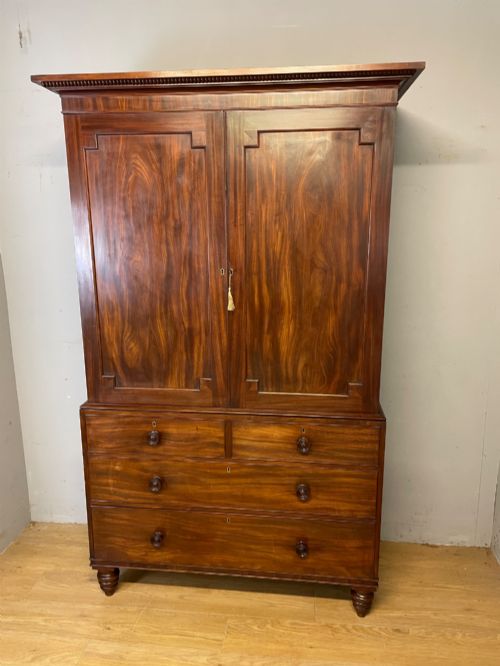
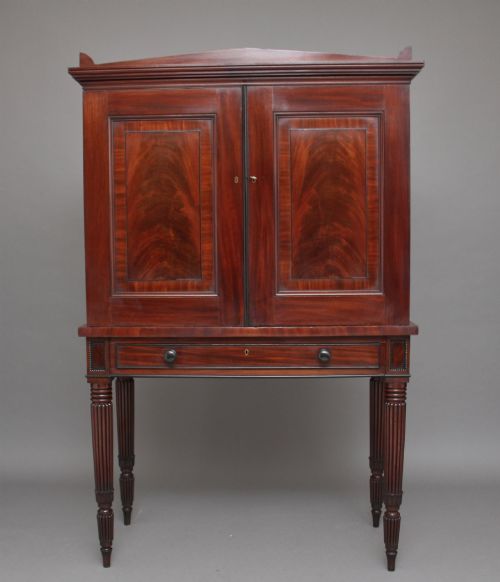
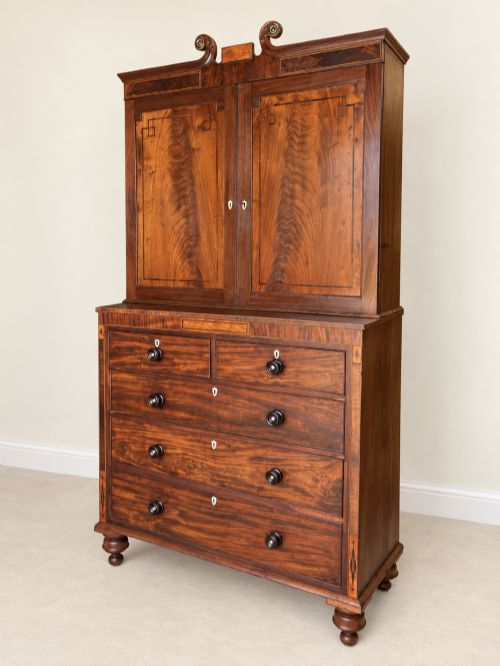
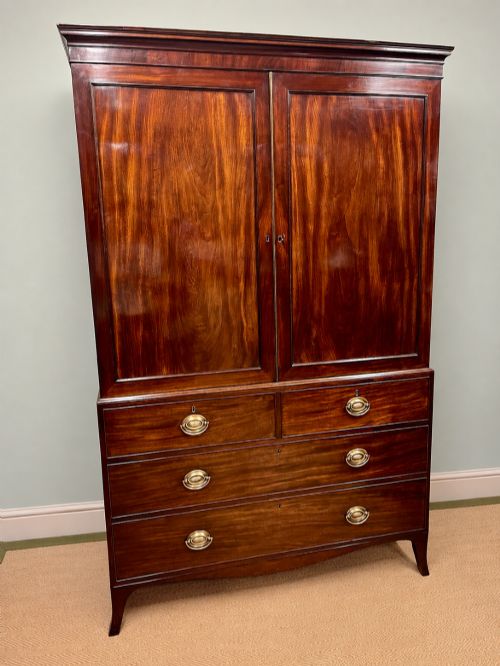
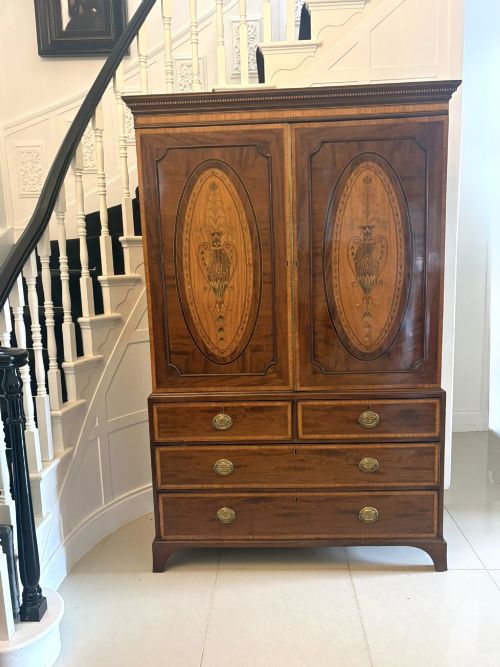
A georgian mahogany cupboard chest combines storage with domestic presence, offering panelled doors above drawers for linens or papers.
Georgian Mahogany Cupboard Chest
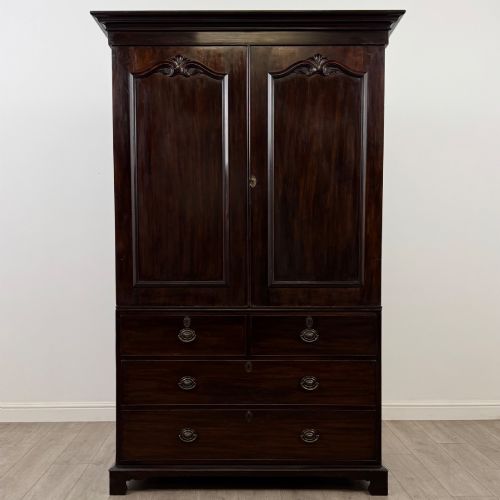
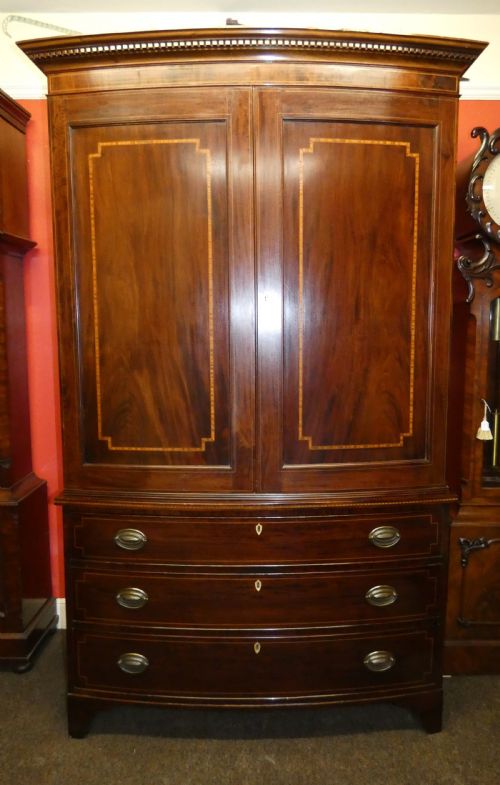
A georgian mahogany cupboard chest appears most frequently as a substantial linen press or wardrobe, enclosing sliding shelves or hanging space behind upper doors above a lower bank of drawers. These versatile forms bridge the gap between tall storage and a conventional chest of drawers.
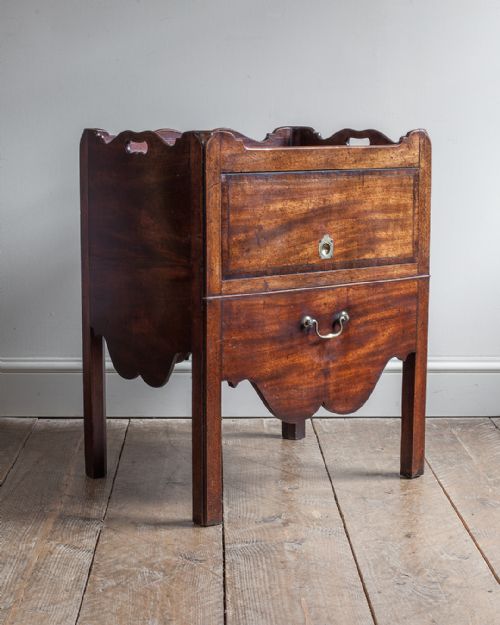
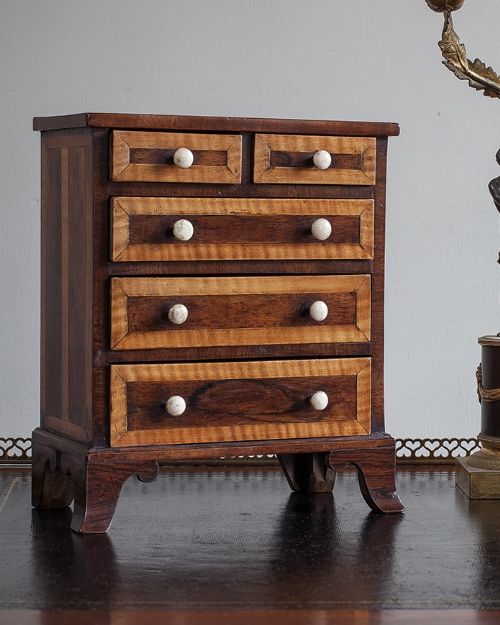
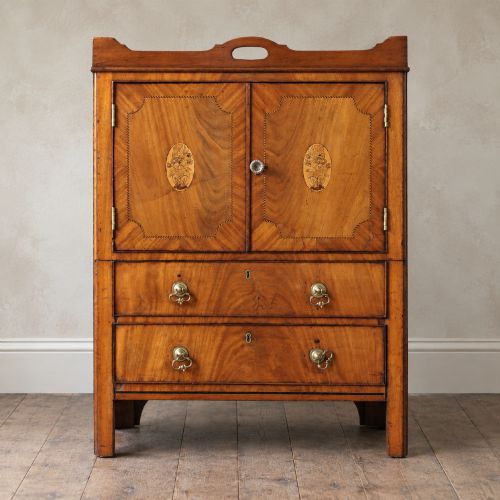
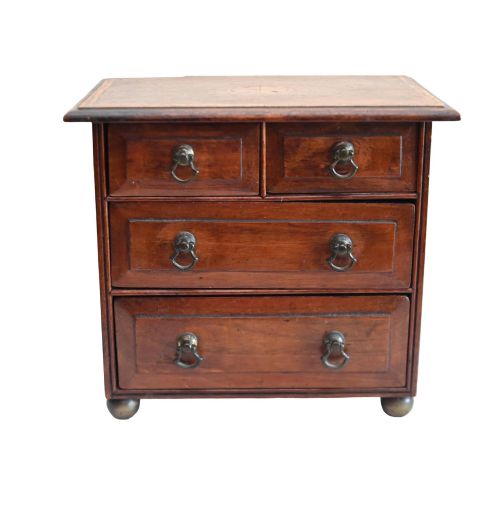
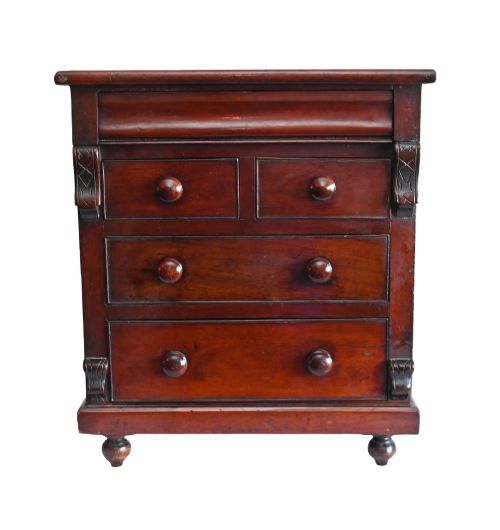
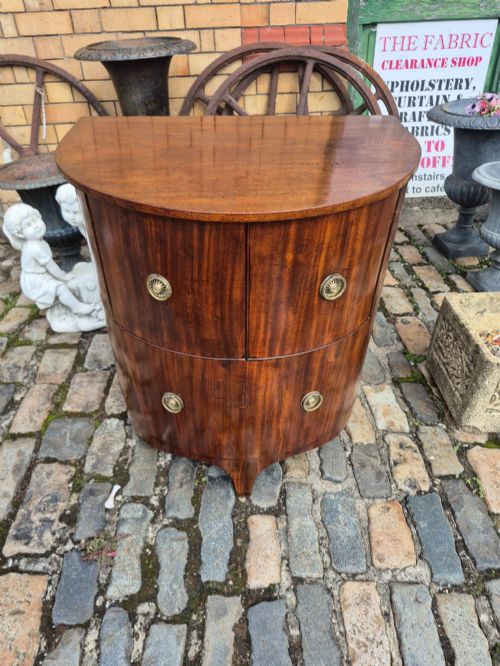
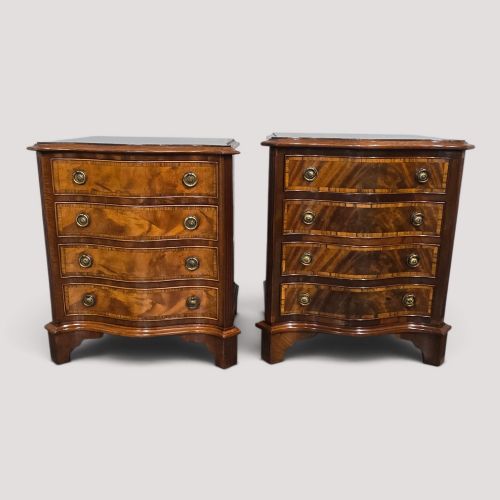
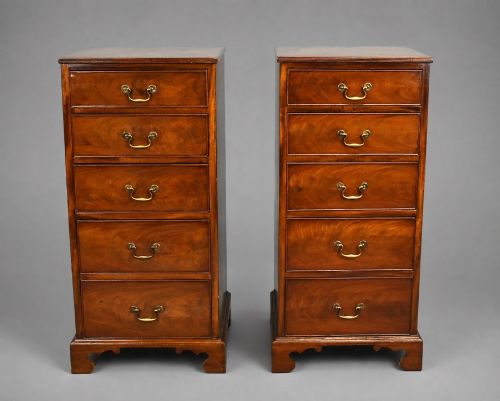
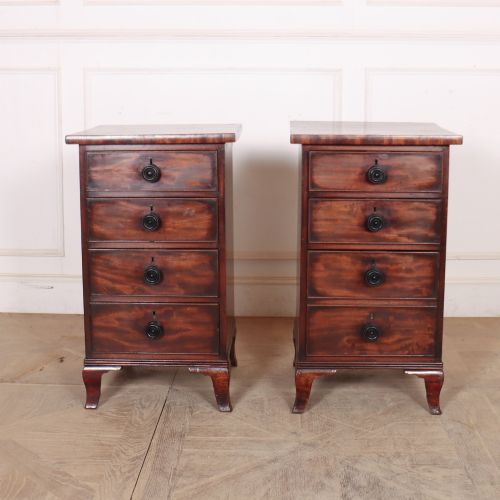
The selection also encompasses smaller bedside tables, side cabinets, and collector pieces originating from the eighteenth and nineteenth centuries, alongside later twentieth-century revivals. Each iteration retains a solid timber carcass designed for functional domestic utility.
Makers and cabinet-makers working within the Georgian, George III, and Regency periods utilised dense tropical hardwoods to construct these case furniture pieces, ensuring structural longevity that endures through subsequent centuries.
Materials and construction
Makers constructed the primary carcass from solid mahogany, frequently selecting figured flame veneer or plum pudding variations for prominent drawer fronts and cupboard doors to create visual depth. Secondary timbers such as oak lined the internal drawer boxes for added strength and durability.
Detailed surface ornamentation relied on contrasting satinwood inlay, ebony stringing, and rosewood crossbanding applied to borders and pediments. Brass hardware, including drop handles and escutcheons, completed the functional assembly of doors and drawers.
Joinery techniques involved hand-cut dovetails on drawer construction and pegged tenons within the main framework, reflecting period workshop practices without modern mechanical fastening.
Materials recorded across these cabinet items include solid mahogany, flame mahogany veneer, oak, satinwood inlay, and brass.
Distinctions in standard
The degree of refinement in timber selection separates standard utilitarian storage from exceptional pieces, where highly figured flame mahogany veneer covers entire facades rather than simple flat grain boards. Superior examples exhibit continuous grain pattern matching across successive drawer fronts.
Intricacy and precision in decorative stringing, marquetry inlay, and crossbanding indicate the level of craftsmanship invested in the piece during its construction. Crisp hand-carved mouldings and original brass hardware further elevate the status of individual items.
Structural integrity, retention of internal sliding linen trays, and undisturbed surface patination determine the overall archaeological completeness and visual harmony of the furniture.
Gillows
The Georgian Mahogany Cupboard Chest Glossary
- Linen Press
- A tall double-door cupboard enclosing sliding trays or shelves above a chest of drawers. Originally built to store household textiles flat before modern hanging wardrobes became standard.
- Crossbanding
- A narrow strip of veneer laid perpendicularly to the surrounding grain along the border of a drawer or top. This technique frames the primary wood and adds a neat linear edge.
- Secretaire
- A desk disguised as a chest of drawers or cupboard, featuring a drop-front writing flap concealing small drawers and pigeonholes. It provides dual utility without sacrificing formal cabinetry lines.
- Flame Mahogany
- A veneer cut from the branch junction of the mahogany tree, displaying a distinctive tongue-of-flame pattern. Cabinet-makers reserved this decorative wood for principal visual surfaces.
- Stringing
- Thin inlaid lines of contrasting light or dark timber set flush into the surface of furniture. It creates geometric borders and outlines panels on cabinet doors.
Georgian Mahogany Cupboard Chest: Frequently Asked Questions
What is a georgian mahogany cupboard chest used for?
These pieces served historical households as primary storage for folded garments, household linens, and personal papers within bedrooms and dressing rooms.
Today, they function as versatile wardrobes, linen cupboards, or statement storage units in modern domestic interiors.
How do I tell a georgian piece from a revival piece?
Examination of internal secondary timbers, hand-cut joinery marks, and the natural ageing of the timber finish help distinguish period construction from twentieth-century reproductions.
Revival pieces often utilise standardised internal dimensions and machine-produced components alongside later hardware fixings.
What maintenance do these wooden chests need?
Regular dusting with a dry lint-free cloth and occasional application of traditional beeswax help preserve the natural lustre of the mahogany surface.
Placement away from direct heat sources and dramatic humidity fluctuations prevents timber movement and veneer lifting.
Are the internal sliding trays removable?
Most linen presses contain original internal sliding shelves or trays that can often be removed to accommodate modern clothes rails if desired.
Retaining the original trays preserves the structural authenticity and historical function of the interior.