



Antique Corner Display Case
An antique corner display case turns dead room space into a showcase for your prized possessions with period character.
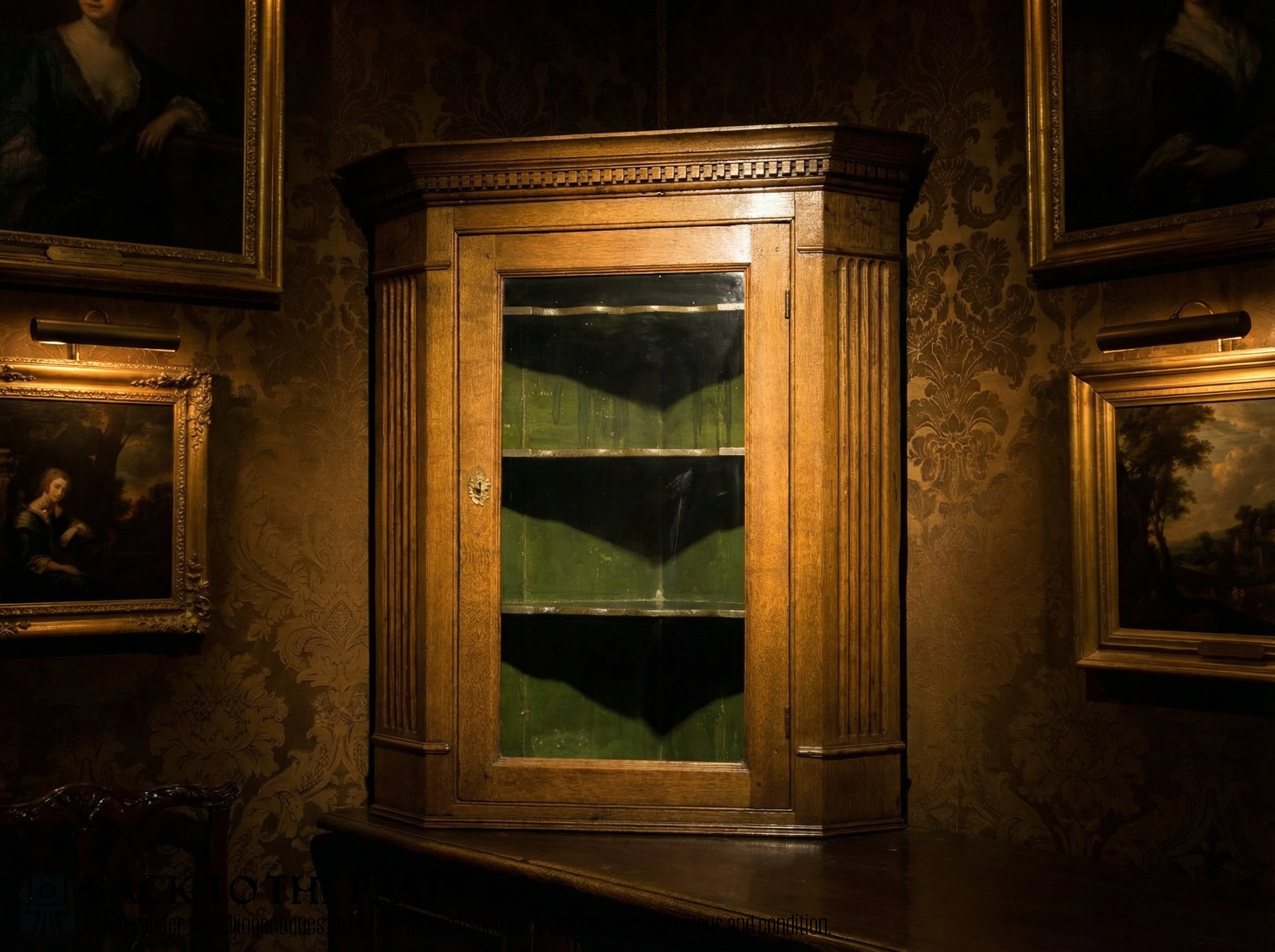
Antique Corner Display Case
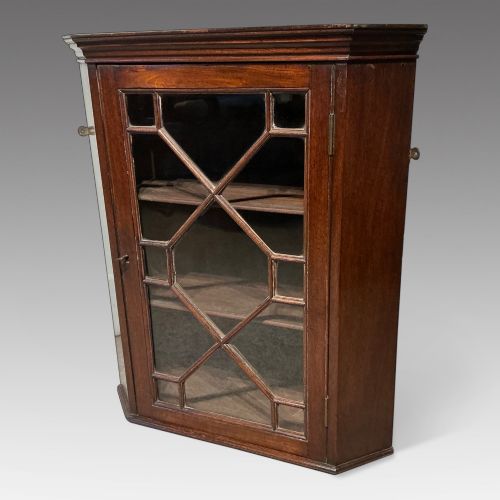
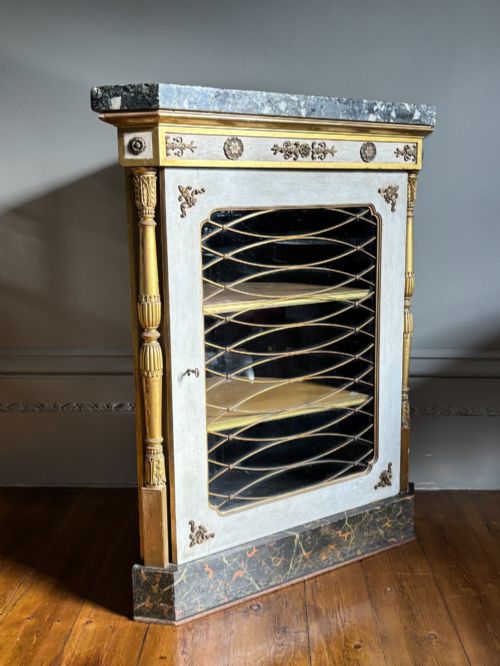
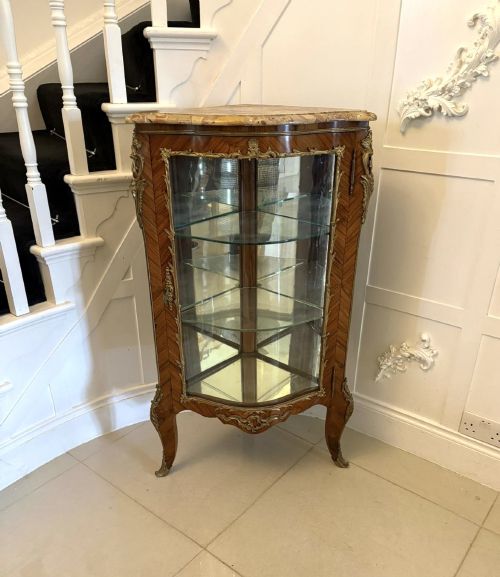
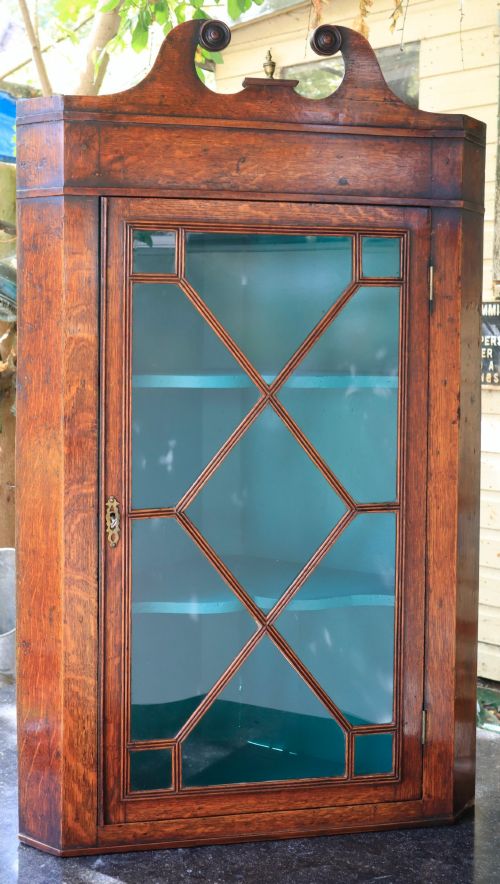
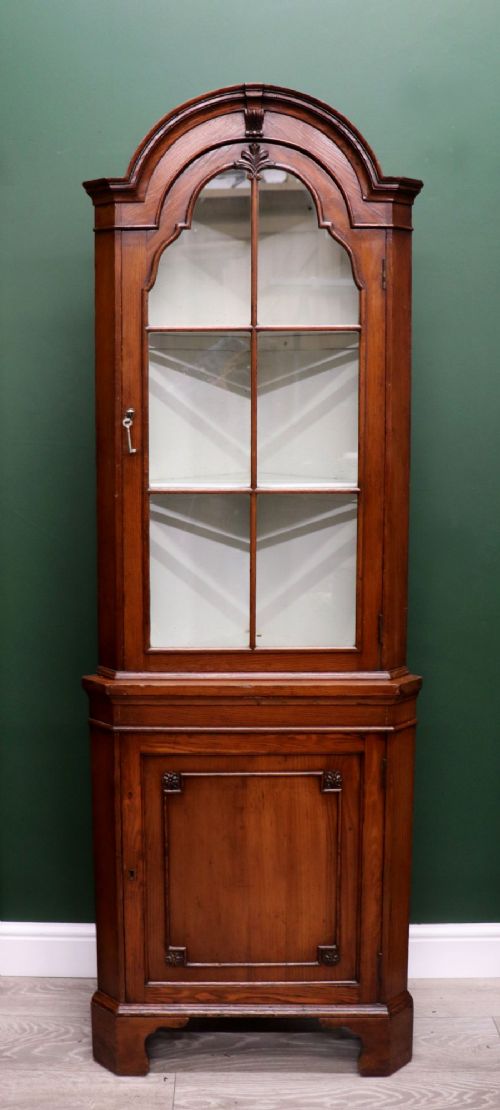
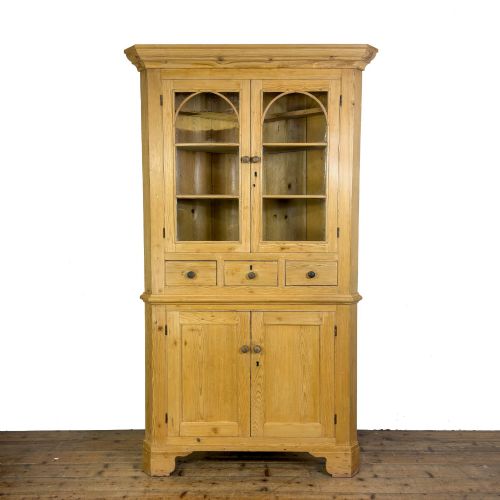
When you search for an antique corner display case, you are looking at fitted timber furniture designed to sit neatly into room angles while exhibiting ceramics, books or curiosities behind glass. The examples you encounter on this page span the Georgian, 18th Century, Edwardian and 19th Century periods, taking the form of corner cabinets and cupboards.
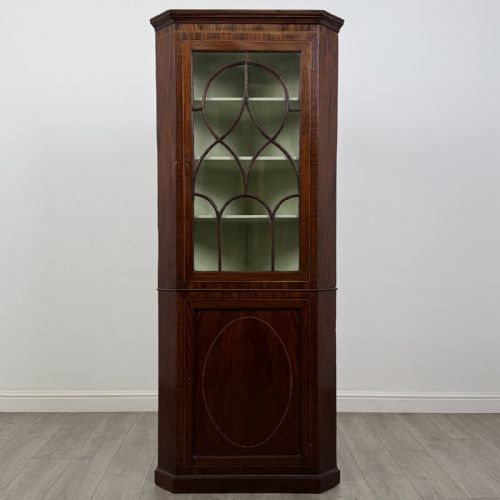
The most common versions met here are tall standing pieces and wall-hanging cupboards built in mahogany and oak. Many incorporate glazed doors, sometimes with multiple panes or bow fronts, allowing light to circulate around the interior shelves.
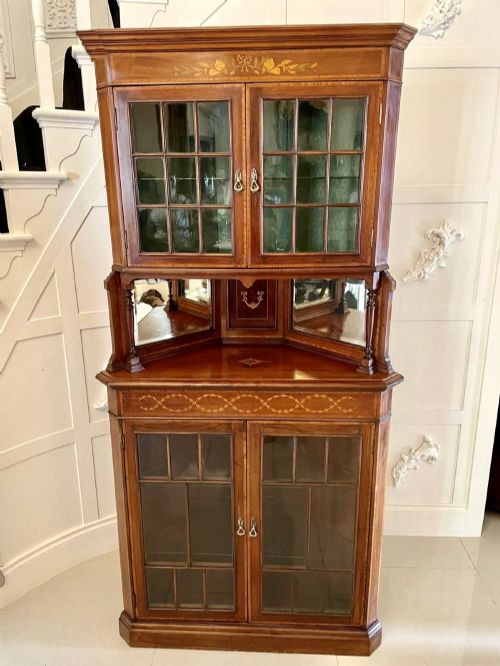
Origins vary from English workshops to Scottish and Welsh regional makers, showcasing local timber preferences such as sturdy oak or rich mahogany. Some later Edwardian iterations introduce delicate satinwood inlay and serpentine fronts to soften the strict geometry of the corner placement.
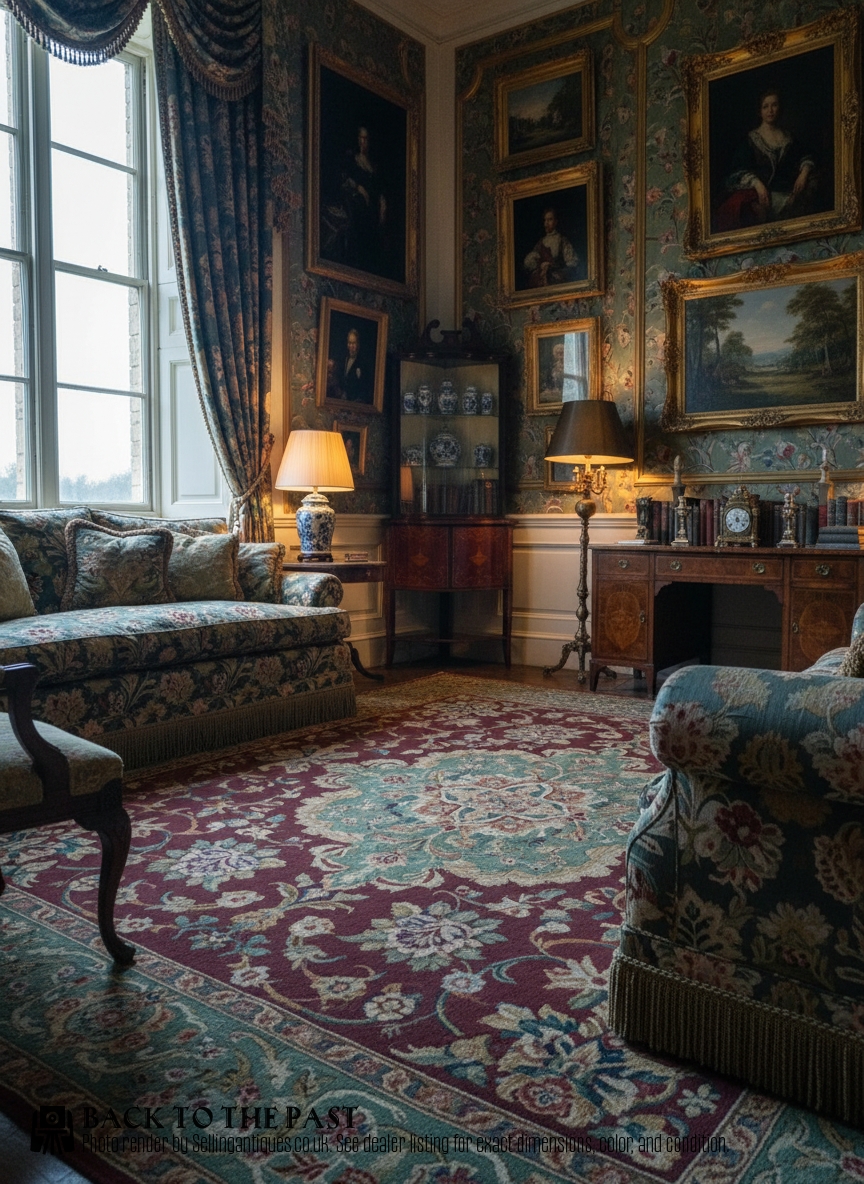
Materials and construction
Cabinet makers utilised prime timbers such as mahogany and oak for structural carcasses, often applying decorative satinwood inlay to the exterior surfaces. Brass hardware, including hinges and escutcheons, secures the doors and adds functional metalwork detail.
Glazing techniques involve fitted glass panels held within timber framing, creating single or triple aspect fronts to maximise visibility. Construction methods rely on traditional joinery tailored to acute angles, ensuring the heavy timber units fit tightly into room corners.
Antique Corner Display Case Retail Price Guide 2026
Typical asking prices for corner display case among the pieces listed under this phrase on Sellingantiques today, from the lower quarter to the upper quarter. They describe what is for sale here now, not the wider market.
Listings feature pieces spanning the Georgian, 18th Century, Edwardian and 19th Century periods, constructed primarily in mahogany and oak with glass and brass elements.
Qualities of distinction
The distinction between standard utility cupboards and superior pieces lies in the choice of timber figure and the crispness of the inlay work. Finer examples display carefully selected mahogany grain, complex serpentine shaping, and intricate marquetry rather than plain functional panels.
Proportion and glazing sophistication also elevate a piece, particularly where arched doors, astragal bars, or bow fronts require advanced carpentry skills. Original glass panes and untouched brass hardware contribute significantly to the integrity of the cabinet.
Edwards And Roberts
The Antique Corner Display Case Glossary
- Bow front
- A convex curved cabinet face that softens the sharp angles of a corner unit. This shape requires advanced woodworking skill to construct.
- Astragal
- The narrow wooden moulding that divides individual panes of glass within a cabinet door. These bars hold the glass securely in place.
- Marquetry
- Decorative veneer patterns formed by fitting together small pieces of different coloured wood and inlay materials. It creates pictorial or geometric surface designs.
- Serpentine
- A shaped furniture front featuring a concave centre flanked by two convex curves. This flowing profile indicates higher status cabinet making.
- Escutcheon
- A protective plate surrounding a keyhole, usually fashioned from brass. It prevents the timber around the lock from sustaining wear.
Antique Corner Display Case: Frequently Asked Questions
What is an antique corner display case?
An antique corner display case is a timber cabinet built specifically to fit into the 90-degree angle of a room. These pieces provide storage and display space while making efficient use of awkward floor layouts.
They appear as hanging wall cupboards or tall standing furniture, often featuring glazed doors to protect collections of ceramics or glass from dust.
How were these corner cabinets used historically?
Historically, these cabinets stored and displayed household valuables, porcelain sets, and occasionally books. Their prominent placement in dining rooms or parlours allowed hosts to showcase their refined taste to visitors.
The glass fronts kept prized possessions secure yet visible, serving a dual purpose of practical storage and decorative display.
How do I date a Georgian corner cupboard?
Dating relies on timber selection, construction methods, and prevailing decorative styles of the era. Georgian pieces frequently utilise solid mahogany or oak with hand-cut dovetails and traditional glazing bars.
Looking at the backboards, hinges, and lock mechanisms provides further clues to the period of manufacture, distinguishing 18th-century work from later Edwardian reproductions.
How do I fit one into a modern room?
Measure the wall clearance carefully, as antique corner units have fixed dimensions and angled backs that require a true 90-degree corner. Standing models require stable floor placement, while hanging versions need secure wall fixings to bear the weight of the timber and glass.
Consider the room lighting so that glazed doors can catch natural light and illuminate whatever items you choose to exhibit inside.