
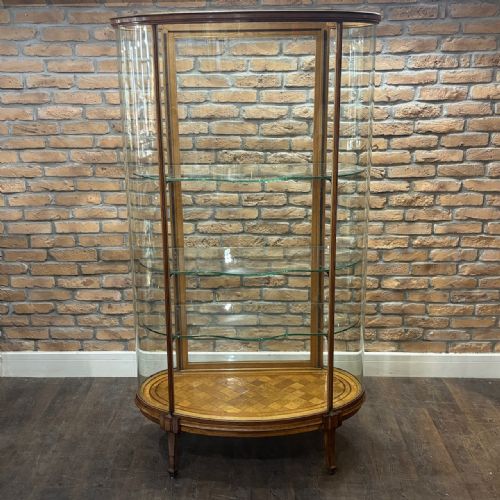
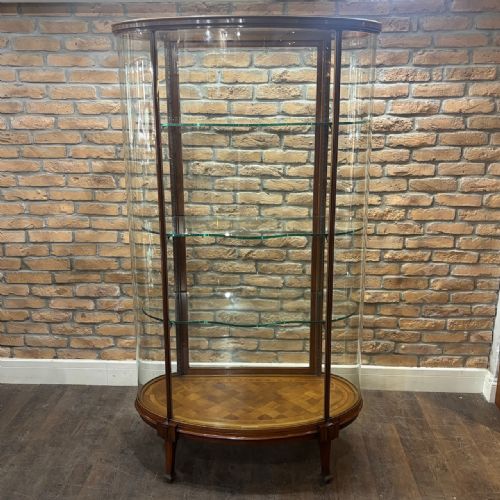
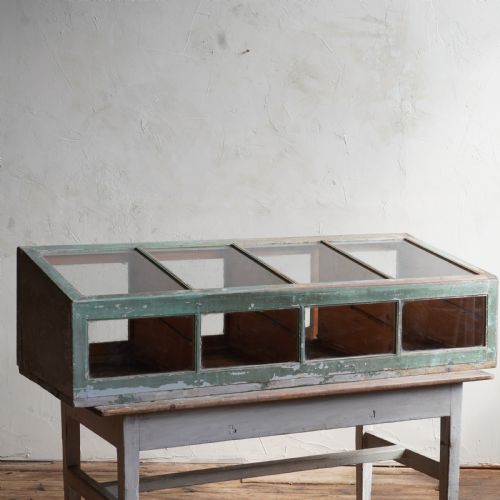
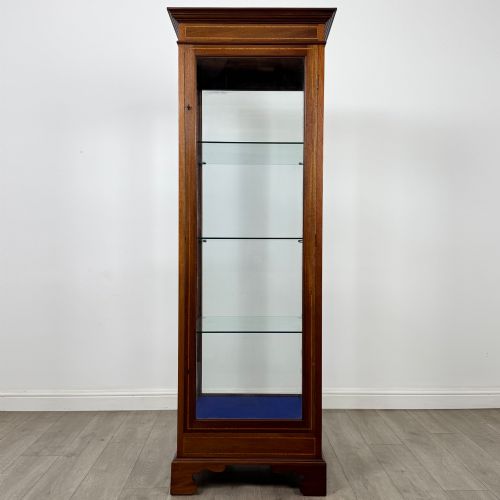
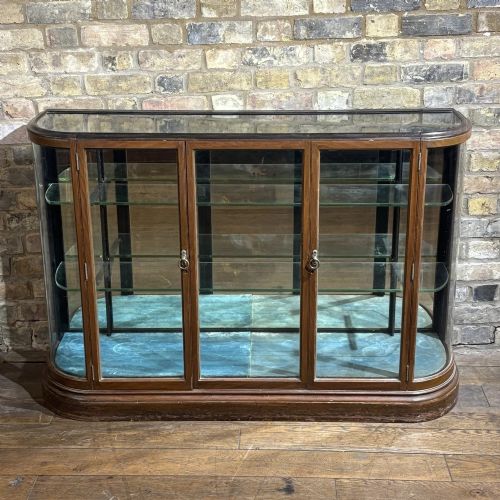


Glass Shop Display Case
A glass shop display case puts merchandise behind clear panels to show goods while keeping them secure.
Glass Shop Display Case
A glass shop display case serves to present retail goods clearly to customers while protecting them from handling. When you search for this phrase, you encounter structures designed for commercial interiors, ranging from compact countertop versions to large freestanding cabinets and counters.
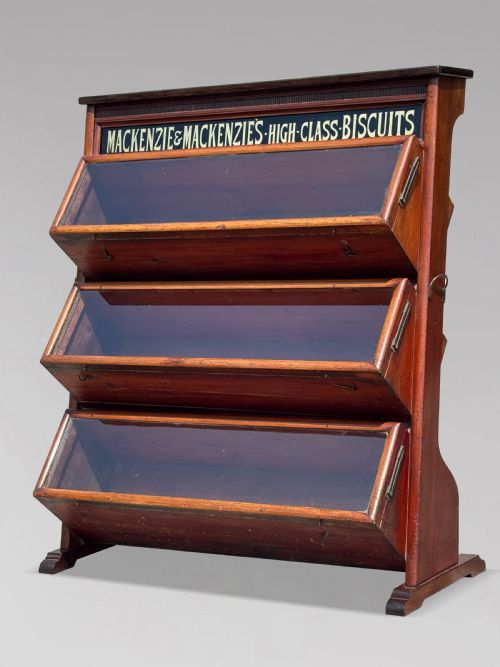
The pieces on this page stem largely from the Victorian and Edwardian eras through to the 1930s. Mahogany and oak dominate the timber frames, paired with extensive glazing to maximise visibility for confectionery, biscuits, pharmacy goods and general retail items.
Materials and Construction Methods
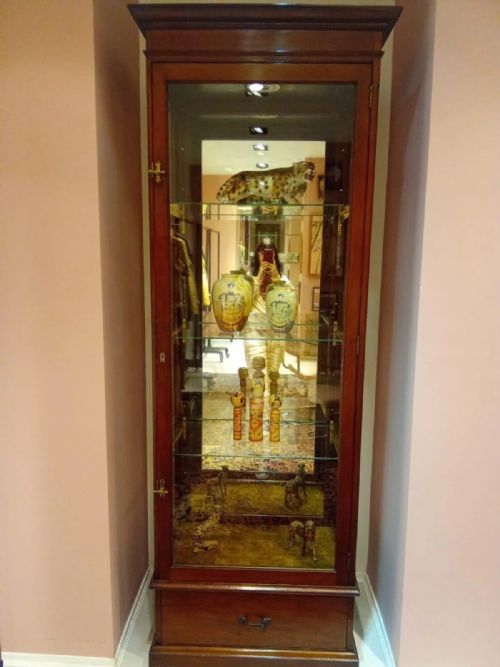
Maker workshops built these retail units using solid timbers such as mahogany and oak, often incorporating brass hardware and mirrored interiors to reflect light through the display space. Large sheets of glass were set into rebated frames to enclose the merchandise securely.
Commercial demands dictated robust joinery, with adjustable shelving systems and tight-fitting glazed doors or sliding panels. Aluminium frames appear in later twentieth-century iterations, shifting the aesthetic towards industrial utility.
Listings feature oak, mahogany, and brass materials across Victorian, Edwardian, and 1930s periods.
Assessing Build Quality and Provenance
The distinction between standard retail utility pieces and superior examples lies in the refinement of timber selection and specialised shopfitting markers. Pieces bearing manufacturer stamps or original trade branding, such as specialist confectioner signwriting or maker plaques, command greater interest.
Superior construction involves sophisticated joinery like bow ends, pentagonal configurations, or ebonised and brass-mounted finishes. The presence of original mirrored backs, intact glazing, and functional hardware elevates an ordinary commercial counter into a notable example of period retail design.
F. Sage & Co·Mackenzie's Biscuits·Fry’s Chocolate·Robert West Gunsmith·Kemps Pharmacy Chemist & Opticians·John Stow Ltd of Bradford·Ermen & Roby·Cadbury’s·Rowntree’s Chocolates
The Glass Shop Display Case Glossary
- Countertop display cabinet
- A smaller glazed showcase designed to sit upon a retail shop counter for eye-level customer browsing. These units often housed confectionery, tobacco, or small apothecary items.
- Haberdashery cabinet
- A specialised multi-drawer or glazed retail unit utilised for storing and displaying textiles, threads, and sewing accessories. They frequently incorporate glass-fronted pull-out drawers for immediate stock inspection.
- Bow end
- A curved glass or timber termination at the end of a cabinet or counter. This technique softens the rectangular silhouette and provides panoramic viewing angles for shop merchandise.
- Ebonised
- Timber treated with a dark stain or chemical finish to imitate ebony. This process was popular for achieving a stark, formal contrast alongside brass mounts in commercial settings.
- Bijouterie case
- A glass-topped table or countertop case traditionally used for displaying small precious objects, jewellery, or collector specimens. They usually feature hinged lids for secure access.
Glass Shop Display Case: Frequently Asked Questions
How were these cases used originally?
Merchants utilised these glazed units on shop counters and floors to exhibit high-value or delicate goods. Items like chocolates, tobacco, pharmaceuticals, and small wares sat inside to entice buyers while remaining protected from dust and handling.
Retailers positioned them strategically near service points to encourage impulse purchases. The clear glass barrier allowed customers to inspect details without touching the stock directly.
How do I fit a large cabinet into a modern room?
Freestanding display cases and counters provide substantial vertical storage and surface area while maintaining an open feel due to their glass panels. Positioning them against a solid wall allows the timber frame to anchor the room's proportions.
Lighting placed near or inside the cabinet enhances the visibility of displayed collections. Ensure you measure floor space and ceiling height carefully before introducing large commercial proportions to domestic interiors.
How do I distinguish Edwardian cases from Victorian ones?
Victorian display cases often feature darker, heavier timber applications such as solid mahogany or oak with robust, formal joinery. Their design prioritizes sturdiness and traditional ornamentation suited to nineteenth-century mercantile spaces.
Edwardian examples frequently lighten in tone and form, sometimes incorporating inlaid stringing, more expansive glass areas, and refined proportions. Transitional pieces from the early twentieth century bridge these decorative shifts.
What is the difference between a counter and a cabinet?
A shop display counter incorporates a flat working surface on the operator side with glazed display areas facing the customer. Staff members stood behind the counter to serve, using the top surface for transactions.
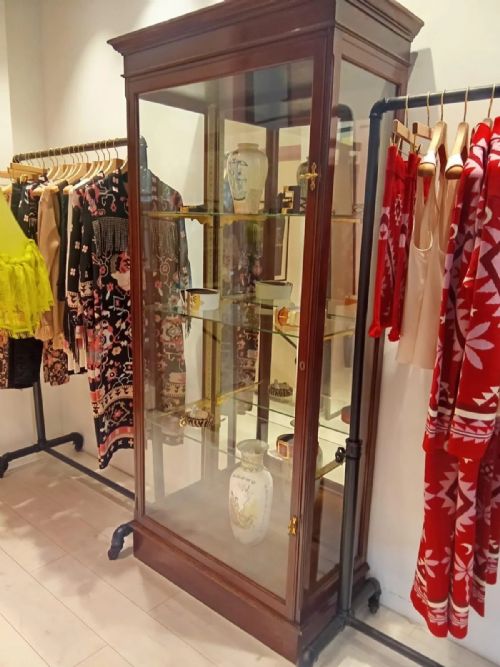
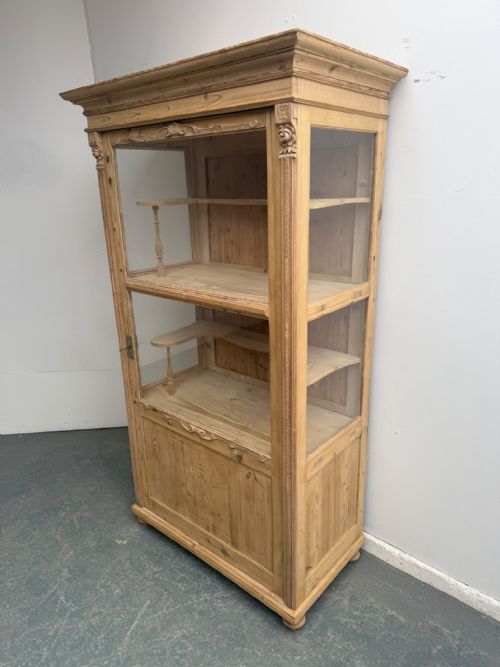
A display cabinet stands independently as a storage and viewing unit, often featuring full-length glass doors on the front or sides. These tall or countertop units rely entirely on visual presentation rather than serving as a workspace.