










Retail Advertising Cabinet
These retail advertising cabinets are functional shop display units bearing period brand names, offering collectors a tangible piece of commercial history.
Retail Advertising Cabinet
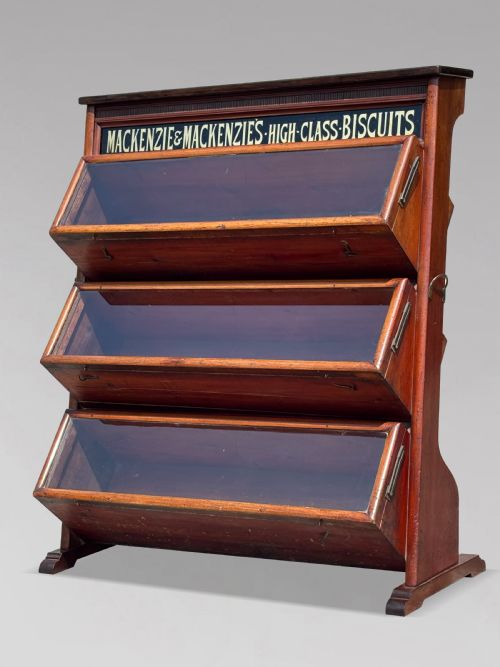
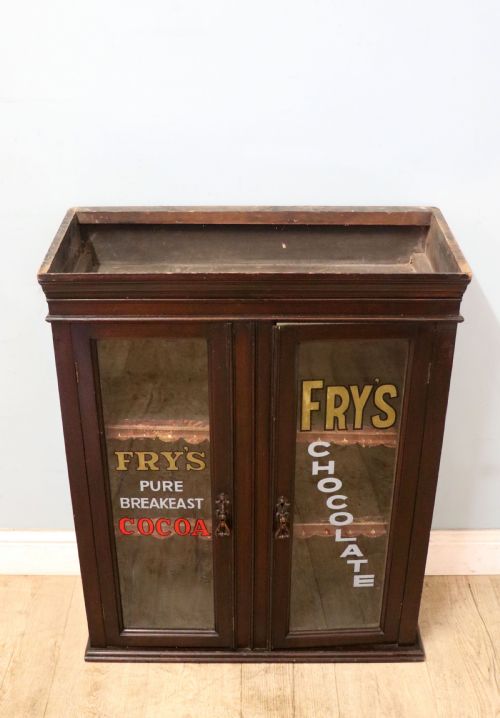
A retail advertising cabinet serves as a countertop display unit designed to showcase confectionery, tea, chocolate, pencils, or other household goods in historical shops and commercial spaces. These pieces span the 19th Century, Victorian, Edwardian, and early 20th Century periods, incorporating styles such as Victorian Commercial, Edwardian Commercial, Industrial Commercial, and Art Deco.
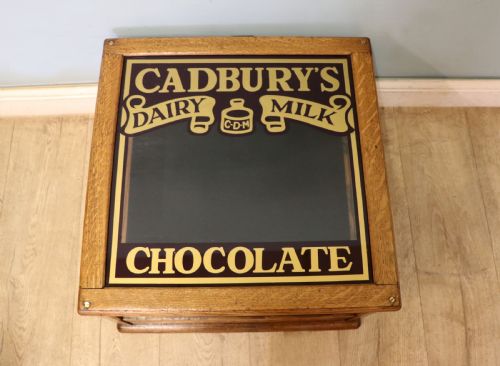
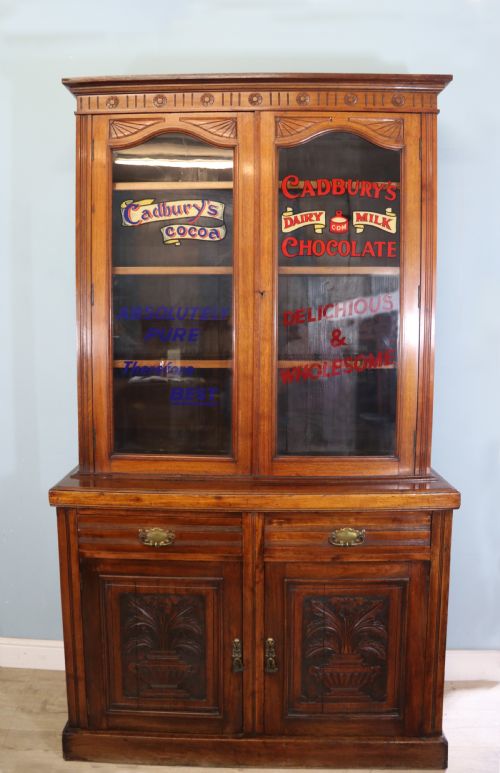
The most common examples encountered on this page include glazed shop counter display cabinets and tabletop cases featuring hand sign-written decoration or original manufacturer branding.
Makers and brands appearing across the evidence include Mackenzie's Biscuits, Fry's Chocolate, Cadbury's, Rowntree's Cocoa, OXO, Empire Tea, and Venus Pencil.
How They Were Made
These cabinets rely on timber frames built from mahogany, oak, walnut, hardwood, and general wood, paired with glass panels to protect the goods while keeping them visible to customers.
Structural and decorative details often incorporate brass hardware, mirror elements, and gold leaf alongside hand sign-written advertising applied directly to the woodwork or glass.
Retail Advertising Cabinet Retail Price Guide 2026
Typical asking prices for retail advertising cabinet among the pieces listed under this phrase on Sellingantiques today, from the lower quarter to the upper quarter. They describe what is for sale here now, not the wider market.
Listings span multiple eras from the 19th Century through the 1920s and 1930s, utilising materials like mahogany, oak, glass, and gold leaf.
What Varies in Quality
Quality rests upon the originality of the sign-written decoration, distinguishing period manufacturer lettering from later or secondary sign-writing applied to the timber.
Construction standards differ between robust commercial shopfittings built for heavy daily use and lighter countertop display cases, alongside the choice of cabinet timbers such as figured mahogany or oak.
Mackenzie's Biscuits·Cadbury's·Venus Pencil
The Retail Advertising Cabinet Glossary
- Sign-written
- Lettering painted by hand onto glass or wood surfaces to promote specific commercial brands and products. This technique defines the advertising purpose of these cabinets.
- Countertop display cabinet
- A compact shop display unit designed to sit directly on a retail counter for customer viewing. These cases typically feature glazed doors or panels.
- Gold leaf
- Metal beaten into extremely thin sheets used for gilding letters and decorative accents on shop fittings. It provides a bright metallic finish.
- Hardwood
- Timber derived from broad-leaved trees, such as mahogany and oak, chosen for durability in commercial furniture. It forms the structural carcass of many display units.
Retail Advertising Cabinet: Frequently Asked Questions
What were retail advertising cabinets used for?
Shopkeepers utilised these glazed cabinets on counters to display and protect small goods such as chocolates, biscuits, tea, and pencils while advertising specific brands to buyers.
The transparent glass allowed customers to inspect the merchandise clearly while keeping stock secure from handling until purchase.
How do I identify a Victorian advertising cabinet?
Victorian examples typically feature heavier timber framing in mahogany or oak combined with traditional hand sign-writing and period brass hardware.
They reflect the commercial shopfitting styles characteristic of the nineteenth century before the emergence of later Edwardian and Art Deco designs.
Are the advertising signs on these cabinets original?
Some cabinets retain their original period sign-writing applied during manufacture, whereas others feature later sign-written decoration added subsequently.
Examining the wear, paint pigmentation, and surface integration helps distinguish original factory branding from later decorative updates.
How do I fit a shop display cabinet into a home?
These compact countertop and tabletop units sit easily on sideboards, desks, or kitchen counters, offering functional storage with a distinct historical aesthetic.
Their glass panels provide a practical way to display modern collections or small objects while maintaining a clear view of the interior.