





Glazed Advertising Case
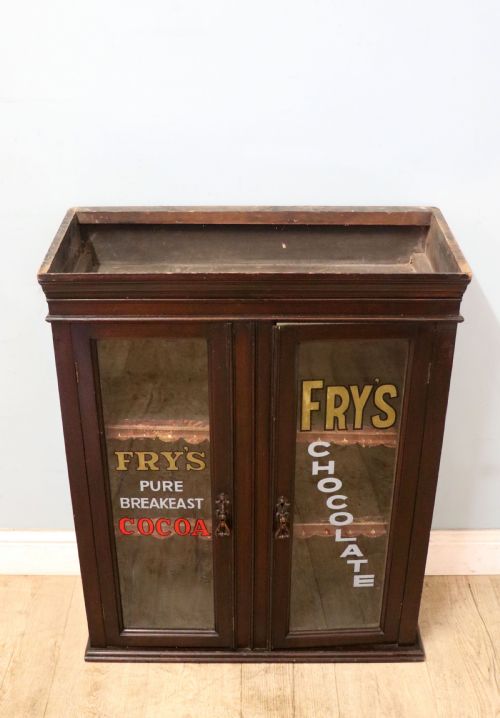
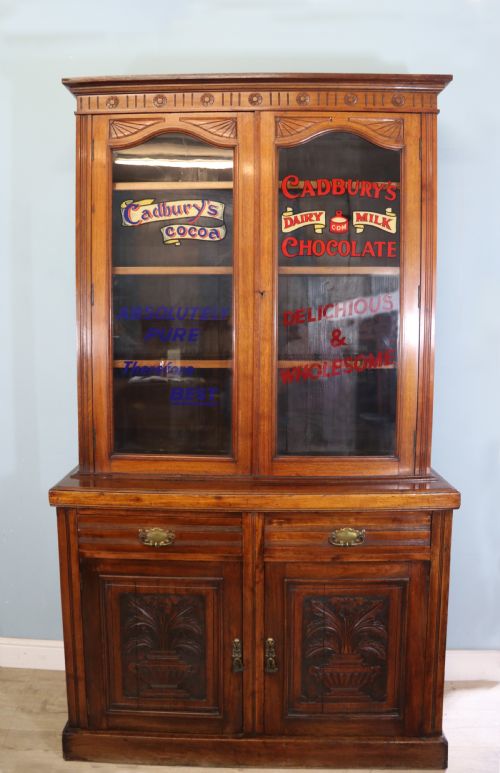
These glazed advertising case examples are commercial display pieces that bring period retail character and tabletop or wall presence into a room.
Glazed Advertising Case
A glazed advertising case serves as a shop counter or wall display piece, designed originally to showcase confectionary, tobacco, or provisions to the public. These cabinets combine transparent glass panels with timber frames to protect goods while keeping brand names prominent.
The versions most commonly met here originate from the Victorian and Edwardian eras, running through the 1920s and 1930s. Alongside traditional chocolate and cocoa cabinets, the selection includes barometers adapted for clothing advertisements and specialised tea room cases.
Makers utilised familiar names such as Fry's, Rowntree's, and Cadbury's to draw the eye, often applying hand sign writing either during production or at a later date. This commercial heritage gives each glazed advertising case a direct connection to early twentieth century retail history.
How they were made
Construction relies primarily on sturdy timbers like mahogany, American walnut, and assorted hardwoods to support heavy glass panels and daily shop use. Brass hinges, catches, and corner brackets provide structural reinforcement while adding metallic detail to the timber framework.
Surface decoration frequently involves hand sign writing in gold leaf or contrasting pigments directly onto the glass or wood. Some Edwardian examples incorporate satinwood inlay and delicate floral painted motifs alongside the core commercial lettering.
Glazed Advertising Case Retail Price Guide 2026
Typical asking prices for glazed advertising case among the pieces listed under this phrase on Sellingantiques today, from the lower quarter to the upper quarter. They describe what is for sale here now, not the wider market.
Weatherproofing and chocolate share cabinet space here, proving that even a barometer needed a good coat.
What varies in quality
The distinction between standard commercial units and superior examples rests on the choice of timber and the sophistication of the joinery. Solid mahogany and figured American walnut frames demonstrate a higher grade of manufacture than basic utility hardwoods.
The execution of the sign writing and lettering alters the visual authority of the piece, with crisp, skilled brushwork commanding greater attention. Surviving original glass panels and refined brass hardware further elevate the standing of an individual case.
Fry's·OXO·Cadbury's·Aitchison·Zambrene
The Glazed Advertising Case Glossary
- Glazed advertising case
- A commercial cabinet featuring glass viewing panels and brand lettering used historically for retail display. These units protect merchandise while promoting household names to customers.
- Counter top
- A descriptive term for smaller shop fittings designed to sit directly upon a retail counter for close customer inspection. They position goods at eye level near the till.
- Sign written
- Painted lettering applied by hand to timber or glass surfaces for commercial branding. This technique creates the distinctive trade names seen across period shop fittings.
- Vitrine
- A glass-fronted display cabinet traditionally used for delicate objects or curiosities. In commercial contexts, it offers all-around visibility for high-end confectionary or tea.
- Aneroid barometer
- A non-liquid weather forecasting instrument housed within a decorative case. Examples found in commercial contexts often double as advertising space for clothing manufacturers.
Glazed Advertising Case: Frequently Asked Questions
Where were these cabinets used?
These cases stood on counters and shelves in Edwardian and Victorian confectioners, grocers, and tea rooms. Retailers placed them strategically near cash desks to tempt customers with chocolate, cocoa, and provisions.
Today, they transition easily into domestic spaces, sitting on sideboards or kitchen counters to hold collections or dry goods while retaining their original commercial charm.
How do I clean the glass safely?
Use a gentle glass cleaner applied to a soft cloth rather than directly onto the panel, ensuring liquid does not seep behind the lettering or timber frame. Dry the surface immediately with a lint-free cloth to maintain clarity.
Take care around hand sign written areas, as historic paint can be delicate and vulnerable to aggressive wiping or modern chemical solvents.
Can I wall mount a counter case?
Most counter top cabinets were built to rest on horizontal surfaces and lack integrated wall-mounting brackets. Securing them safely to a wall requires professional framing support to bear the weight of the timber and glass.
Placing them on existing shelves, sideboards, or tables avoids altering the original structure and keeps the piece stable.
How do I spot later sign writing?
Later sign writing often appears on older cabinets where the retailer or a subsequent owner added brand lettering to enhance decorative appeal. Examine the paint edge under magnification to see if it sits over existing wear or crackle in the finish.
Both original and later hand lettering contribute to the visual history of the piece, reflecting the enduring popularity of classic confectionary brands.