


Gilt Ebonised Seating
Gilt ebonised seating brings dark timber and bright metal together, offering strong silhouettes that anchor a room with crisp contrast.
Gilt Ebonised Seating
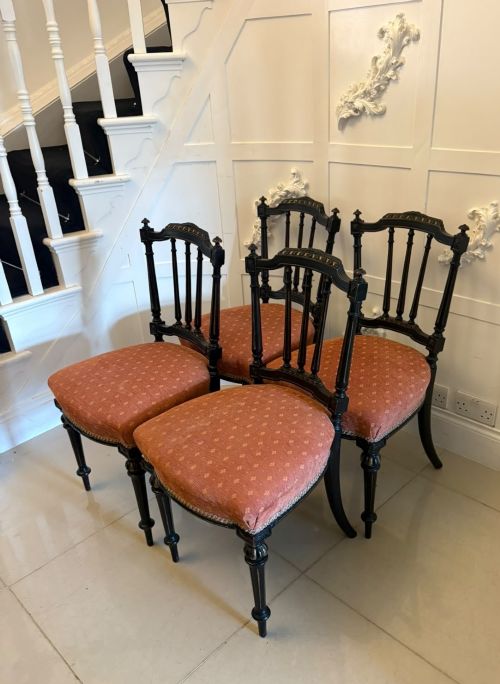
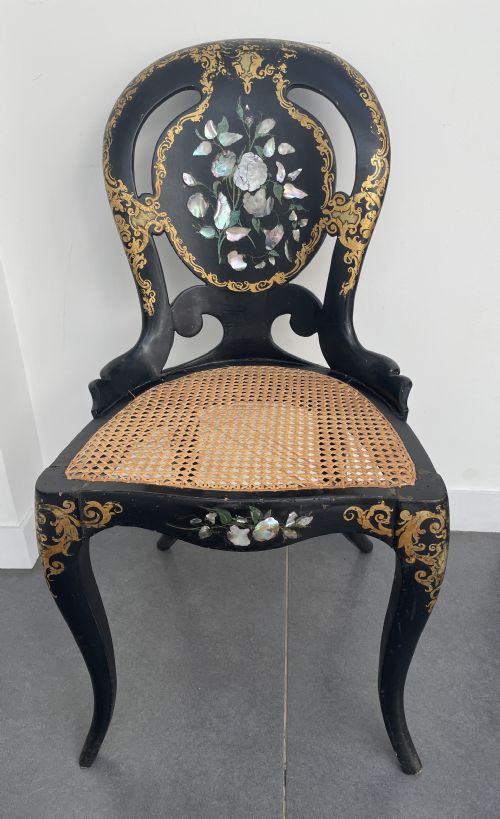
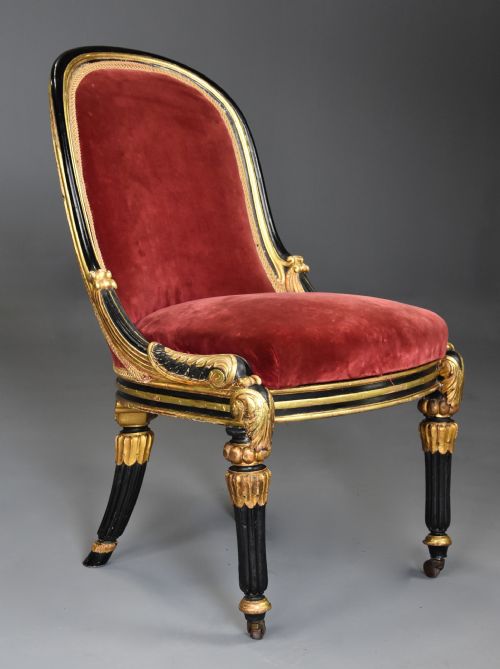
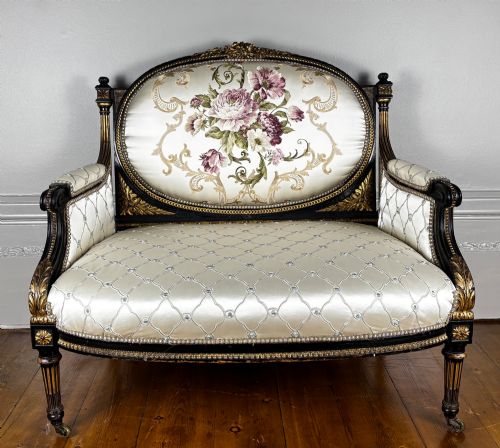
Gilt ebonised seating encompasses chairs, sofas, stools, and window seats finished in blackened wood paired with gold leaf or metallic paint.
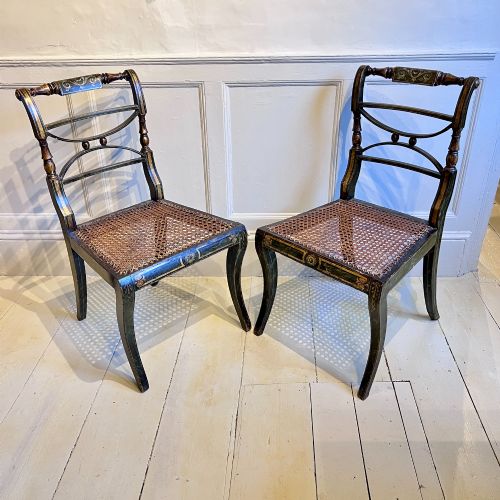
The pieces on this page span the nineteenth and early twentieth centuries, drawing heavily on Regency, Victorian, and Aesthetic Movement designs.
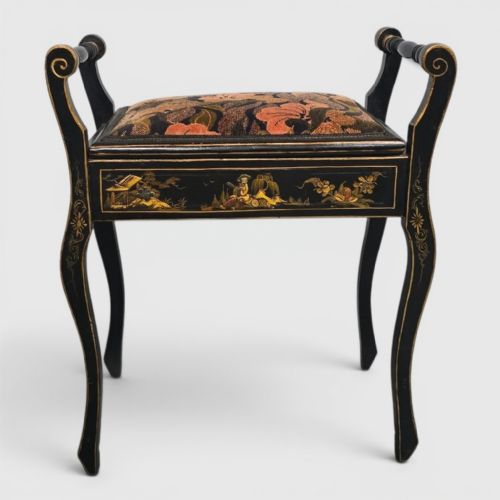
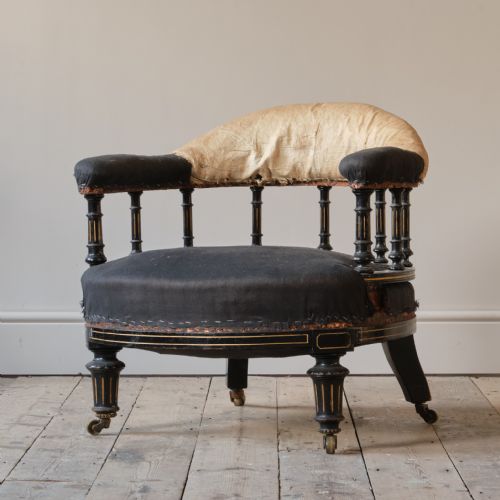
Buyers encounter forms ranging from dining chairs and nursing chairs to large settees, side chairs, and piano stools.
Origins include English, French, and Continental workshops, with revival styles appearing alongside period pieces.
What varies in quality
The refinement of the carving and the crispness of the turning distinguish workshop production from standard commercial output.
The application of the ebonised finish and the purity of the gilt details determine the visual impact of the piece.
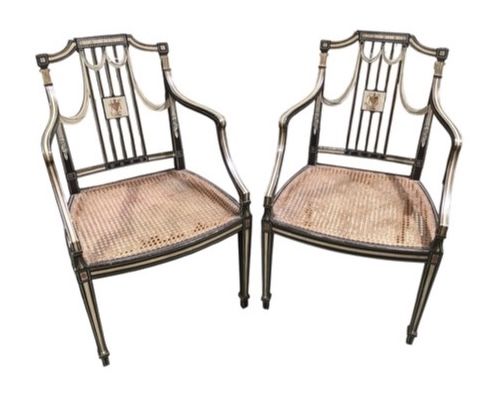
The integrity of the underlying timber frame and the quality of retained elements like cane or inlay separate robust examples from weaker ones.
Sunflower motifs sneak into Aesthetic Movement frames, letting nineteenth-century makers bring a bit of garden sunshine into the parlour.
Gillows·Holland & Son
The Gilt Ebonised Seating Glossary
- Ebonised
- Wood stained or painted black to imitate costly ebony. This dark finish provides a sharp ground for gilt highlights.
- Gilt
- Covered with gold leaf or a gold-coloured substance. It catches the light against the blackened timber.
- Aesthetic Movement
- A late nineteenth-century design style focusing on artistic expression. Pieces from this era often feature sunflower motifs and stylised decoration.
- Cane
- Woven rattan material used for seat panels. It offers a light, breathable surface texture.
- Parcel Gilt
- Partially gilded, leaving portions of the underlying wood or ebonised surface exposed. This technique creates a controlled contrast across the frame.
Gilt Ebonised Seating: Frequently Asked Questions
Where did people use these seats?
These seats served formal and private spaces alike, appearing in drawing rooms, bedrooms, and music rooms.
Smaller forms like nursing chairs and piano stools catered to specific domestic tasks, while larger sofas and dining sets furnished reception rooms.
How do I date a piece?
Dating relies on stylistic markers such as Regency curves, Victorian proportions, and Aesthetic Movement motifs.
Materials like mother of pearl inlay and papier mâché further help place a piece within the nineteenth century.
Can I mix these with modern furniture?
The high-contrast dark wood and gold finish allows these chairs to stand out as accent pieces in contemporary interiors.
Their distinct silhouettes pair well with neutral schemes and minimalist surroundings.
Are these seats comfortable for daily use?
Many forms, such as upholstered armchairs and sofas, offer generous padding and supportive backs for regular seating.
Side chairs and hall chairs are firmer and suit occasional use or decorative placement.