


Late Victorian Tub Chair
A late victorian tub chair offers deep, enclosing comfort paired with the compact elegance characteristic of the period.
Late Victorian Tub Chair
The evidence shows these pieces originating across the Victorian era, particularly around eighteen ninety, with occasional overlap into the Edwardian period. They function primarily as desk chairs, library armchairs, and nursing chairs within domestic settings.
Makers of the period utilised a mix of native timbers and decorative treatments, producing both sturdy vernacular seating and refined inlaid salon examples. This variety ensures that a late victorian tub chair suits studies, drawing rooms, and bedrooms alike.
Materials and construction
Construction relies heavily on solid hardwoods such as beech, elm, ash, walnut, and mahogany, often paired with turned or curved supports. Makers selected these timbers for strength in the characteristic rounded backs and supporting legs.
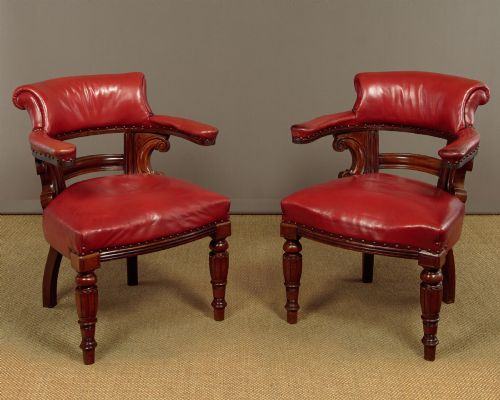
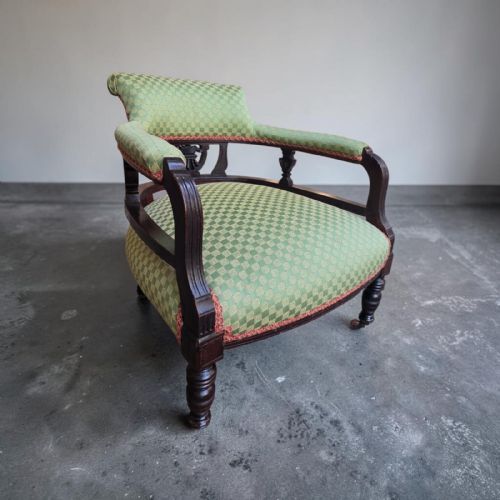
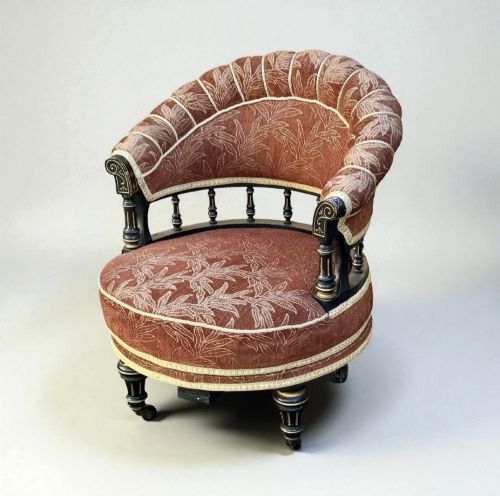
Upholstered examples combine traditional stuffing with leather or fabric coverings, sometimes accented by brass details, ebonising, or delicate inlay. These surface treatments define whether a chair leans towards country utility or formal parlour elegance.
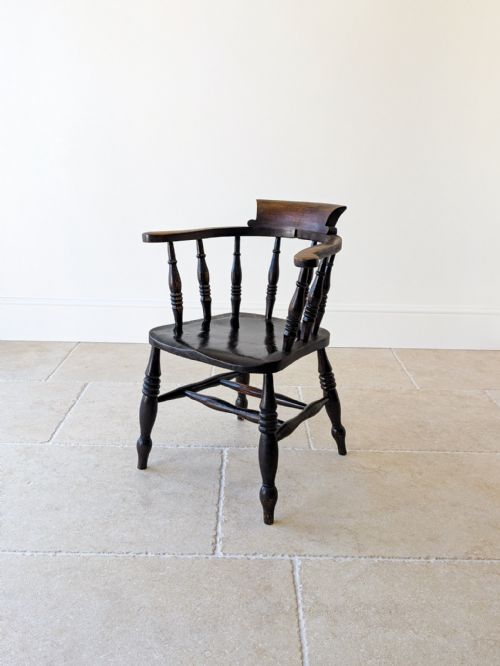
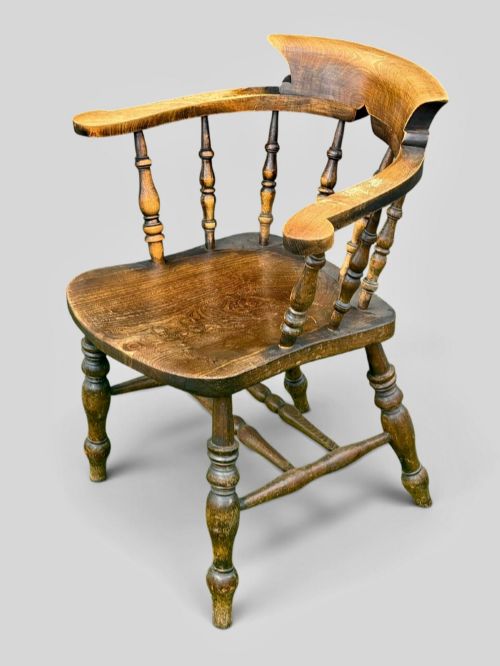
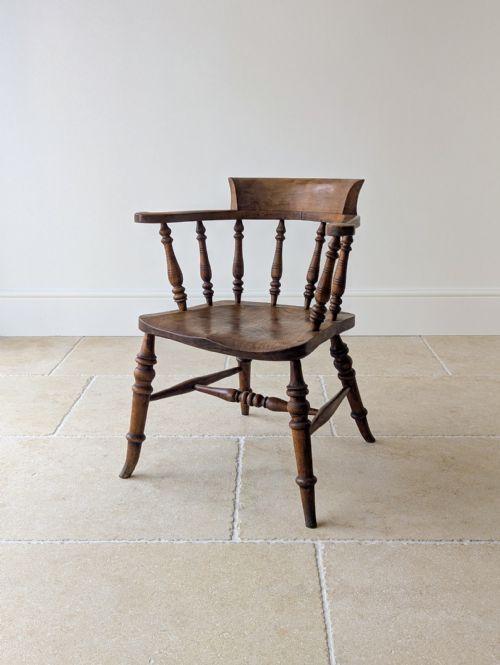
Smokers bows and captain chairs occasionally reveal ink stains on the arms, whispering of long hours spent penning letters by candlelight.
Distinctions in quality
Quality varies significantly through the choice of timber and the sophistication of the timber bending techniques used to form the continuous tub rail. Finer examples employ burr elm, finely figured walnut, or satinwood, whilst simpler pieces rely on utilitarian beech and elm.
The refinement of the carving, inlay, and ebonising separates standard seating from high-status salon chairs. Furthermore, the retention of original upholstery and supportive framing dictates the overall integrity of the piece.
The Late Victorian Tub Chair Glossary
- Tub chair
- An armchair featuring a continuous curved back and sides that enclose the sitter. This form provides a snug and supportive seat.
- Captain's chair
- A sturdy wooden armchair with a low curved back designed for desk use. These often incorporate elm and ash construction.
- Bergere
- An enclosed armchair with cane or upholstered sides and back. It represents a more formal seating style.
- Ebonised
- Timber treated to resemble ebony through a dark staining or painting process. This finish creates a striking contrast against gilded or polished details.
Late Victorian Tub Chair: Frequently Asked Questions
Where should I place a tub chair?
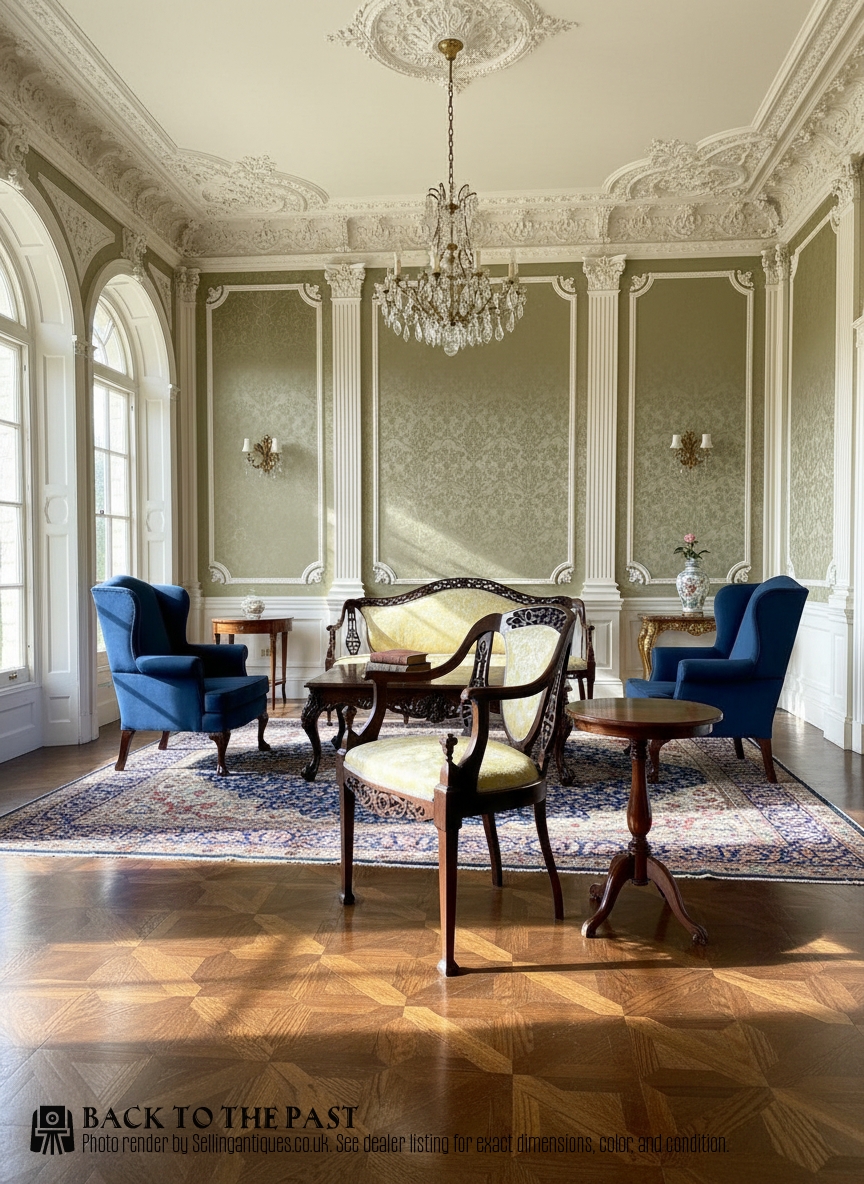
A late victorian tub chair fits well in a study, library, or bedroom where its compact, enclosing shape provides comfortable seating without dominating the room.
Because many examples function as desk or nursing chairs, they adapt easily to corners and smaller spaces while maintaining period character.
How do I identify a late victorian piece?
Identification relies on a combination of timber selection, construction methods, and stylistic cues such as turned legs or characteristic upholstery.
Reference to the eighteen nineties and surrounding decades helps date the piece, alongside specific vernacular or revival design traits.
Are these chairs comfortable for daily use?
The curved, enclosing back provides natural support, making them well-suited for reading or desk work.
Upholstered variants offer additional padding, though comfort ultimately depends on the condition of the internal stuffing and springing.
What woods were commonly used?
Cabinet makers and vernacular craftsmen utilised a wide range of timbers, including walnut, mahogany, beech, elm, and ash.
Walnut and mahogany appear frequently in formal salon chairs, whilst elm and beech dominate sturdy desk and smokers chair variations.