
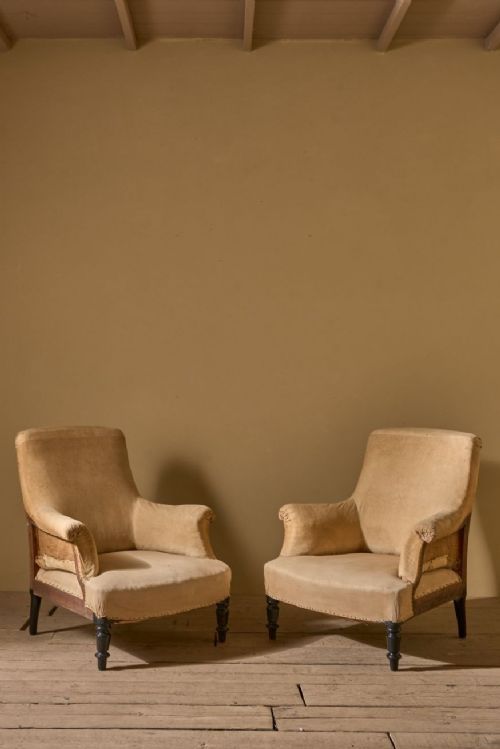
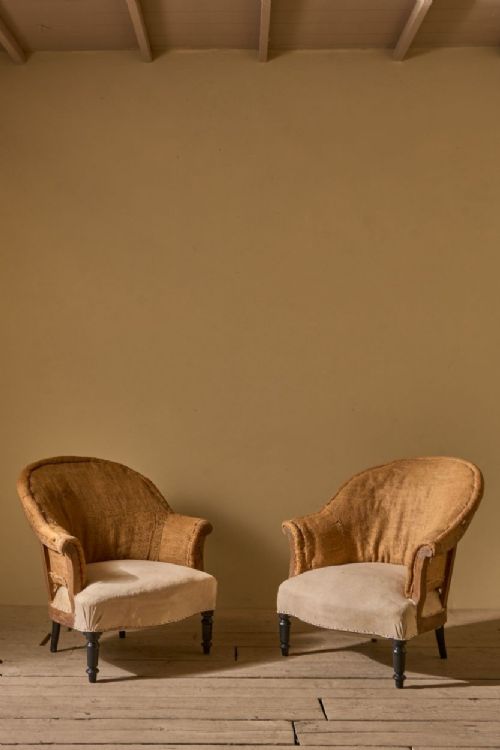
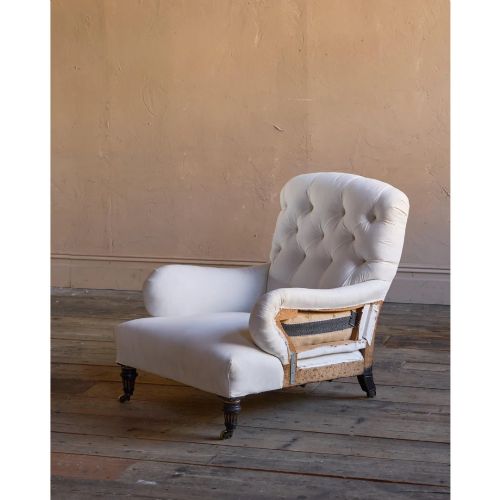
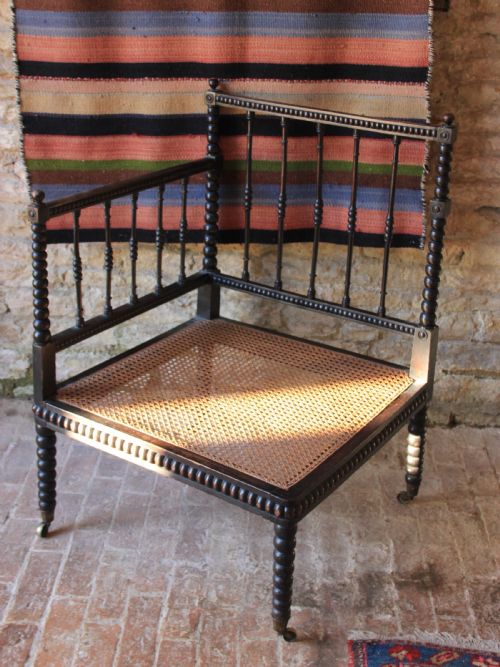


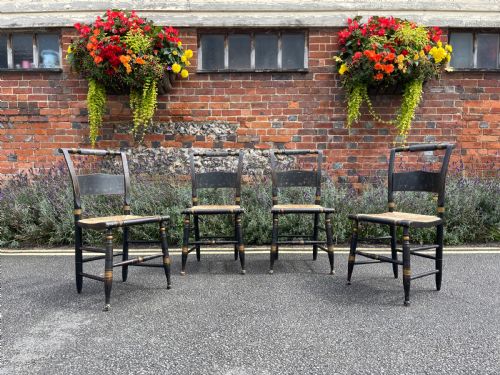
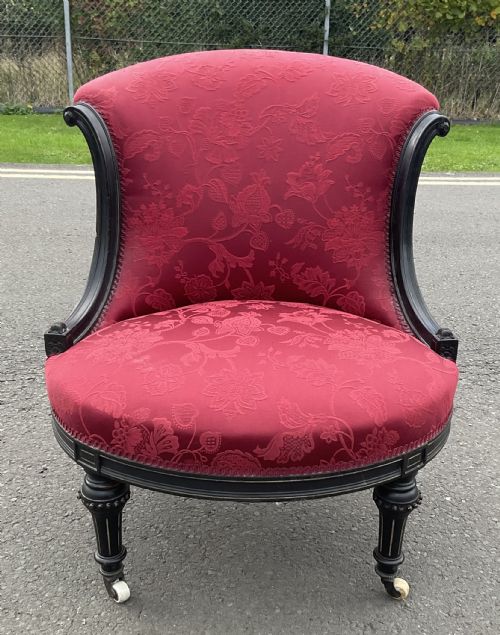

Ebonised Turned Leg Chair
These ebonised turned leg chair examples bring dark wood frames and distinct nineteenth-century silhouettes into modern rooms.
Ebonised Turned Leg Chair
When you search for an ebonised turned leg chair, you enter a field dominated by nineteenth-century seating, from Victorian nursing chairs to Napoleon III armchairs. These pieces feature dark-finished timber frames paired with distinctive turned spindle or bobbin legs.
The selections available here span diverse forms including low nursing chairs, piano stools, bedroom chairs, and chaise longues. Styles range from English Victorian and Aesthetic Movement to French Napoleon III and Regency designs.
Most examples rely on beech or mahogany treated to imitate ebony, often highlighted with gilt details or upholstered in calico, cotton, and hessian. The forms reflect domestic comfort and parlour display from the eighteen-eighties through to nineteen-hundred.
Materials and construction
Maker workshops utilised dense hardwoods such as beech and mahogany as the structural core for these chairs. Craftsmen then applied a dark ebonising stain or lacquer to the timber surface to achieve the desired black finish.
The iconic turned legs were shaped on a lathe to create bobbin, spool, or smooth cylindrical profiles. Many frames incorporate additional decorative elements like brass castors or subtle gilt highlights applied directly to the ebonised wood.
Upholstery methods relied on traditional stuffing materials housed beneath outer coverings of calico, cotton, hessian, and patterned fabric. Button upholstery and piecrust shaping appear frequently on the sprung backs and seats.
Listings feature nineteenth-century periods, including Victorian, Regency, and eighteen-eighty Aesthetic Movement designs.
Assessing quality and craftsmanship
The definition of the turning on the legs separates standard production from superior work. Crisp, deeply cut bobbins and smooth cylindrical turnings indicate skilled lathe work, whereas worn or blunt edges suggest mass production.
The integrity of the ebonised finish significantly influences the character of the piece. Original surface patination with subtle wear demonstrates age, while flaking modern paint obscures the underlying hardwood timber.
Structural joinery in the frame dictates longevity. Firmly pegged joints and substantial timber scantlings ensure stability in armchairs and nursing seats, unlike loose connections caused by dry wood and heavy use.
The Ebonised Turned Leg Chair Glossary
- Ebonised wood
- Timber stained or painted black to imitate expensive ebony. This treatment was particularly popular during the nineteenth century for accentuating carved and turned details.
- Turned leg
- A wooden support shaped on a lathe by rotating the stock against cutting tools. Common variations include bobbin, spool, and tapered profiles.
- Nursing chair
- A low-seated Victorian chair designed for comfort, often positioned near a nursery hearth or bedroom fireplace. They typically feature upholstered backs and short legs.
- Aesthetic Movement
- A late nineteenth-century design style emphasising visual beauty over narrative function. Pieces from this movement often utilise ebonised finishes and simple geometric forms.
- Napoleon III style
- French nineteenth-century design incorporating eclectic revivals and luxurious upholstery. These chairs frequently feature dark frames paired with decorative trim and tuffted fabric.
Ebonised Turned Leg Chair: Frequently Asked Questions
What is an ebonised turned leg chair?
An ebonised turned leg chair is a nineteenth-century seat featuring dark-finished timber and legs shaped on a lathe. These pieces include nursing chairs, armchairs, and piano stools.
They reflect Victorian, Regency, and Aesthetic Movement tastes, combining dark wood surfaces with traditional upholstery like calico and hessian.
How do I date an ebonised chair?
Dating relies on examining the upholstery techniques, timber species, and stylistic markers such as Victorian buttoning or Napoleon III framing. Construction methods and joinery also offer clues to the decade of origin.
Most examples date from the nineteenth century, specifically around eighteen-eighty to nineteen-hundred, aligning with Victorian and Aesthetic Movement production.
Where should I place a nursing chair?
Nursing chairs suit low seating arrangements in bedrooms, studies, or living rooms. Their compact proportions make them ideal for smaller corners.
Pair them with complementary nineteenth-century furniture to maintain historical context within a modern interior scheme.
Are these chairs comfortable for daily use?
Many nineteenth-century chairs provide comfortable seating thanks to sprung bases and padded backs. However, older internal stuffing may require professional assessment for regular lounging.
Upholstered variants covered in sturdy cotton or hessian offer practical utility alongside decorative presence.