


Needlepoint Nursing Chair
A needlepoint nursing chair brings low-slung Victorian comfort and vibrant wool upholstery to a bedroom or fireside.
Needlepoint Nursing Chair
A needlepoint nursing chair is a low-seated Victorian chair designed for comfort and close fireside tasks. Buyers searching this phrase will find compact occasional seats, salon chairs, and bedroom chairs created during the nineteenth century.
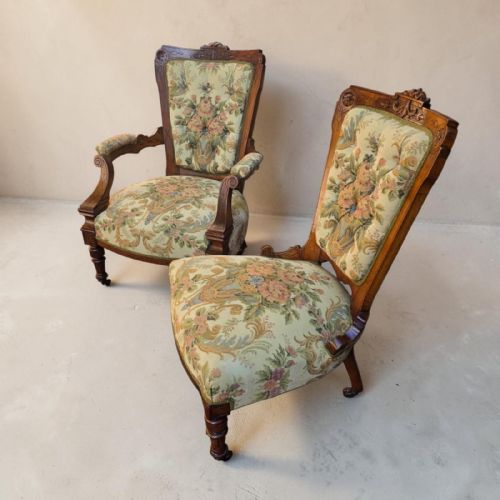
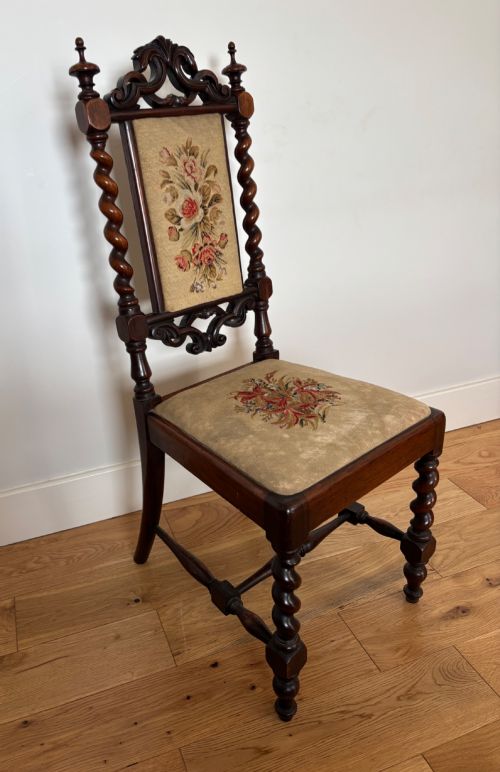
The versions most commonly met on this page date from the Victorian and Edwardian eras, spanning walnut and mahogany frames. These pieces often feature low seats and supportive backs upholstered in wool tapestry or floral tapestry fabric.
Makers and designers of the period produced these forms alongside related side chairs and gossip chairs. Their smaller scale makes them adaptable accent chairs for modern homes.
How They Were Made
Frames rely on solid hardwoods like walnut and mahogany, sometimes shaped through Victorian Rococo Revival or Chippendale Revival woodworking techniques. Carved details adorn the crest rails and cabriole legs of finer examples.
Upholstery involves wool tapestry, needlepoint tapestry, and textile covers applied over traditional padding. Ceramic castors and brass hardware occasionally appear on the legs of these chairs.
Some Victorian chairs came paired as gossip seats, designed so two people could chat face-to-face without turning their necks.
What Varies in Quality
The refinement of the timber carving and the complexity of the frame dictate the distinction between standard and superior pieces. Elaborate walnut frames with scroll backs or aesthetic movement details demonstrate greater craftsmanship than plain structural forms.
The execution of the needlepoint or tapestry upholstery influences the overall character of the seat. Hand-worked wool tapestry in original condition carries more integrity than later replacement textiles.
R Whytock of Edinburgh·Gillows·Wheeler
The Needlepoint Nursing Chair Glossary
- Nursing chair
- A low-seated Victorian chair originally used for feeding infants or general bedroom tasks. These pieces sit closer to the floor than standard dining chairs.
- Needlepoint
- A type of canvas work embroidery using wool yarn to create dense floral or pictorial patterns. It forms the primary upholstery for many Victorian seat covers.
- Cabriole leg
- A furniture leg that curves outward and then tapers inward, finishing in a scroll or plain foot. This shape is common on mid-nineteenth-century seating.
- Aesthetic movement
- A late nineteenth-century design style emphasising visual beauty over narrative meaning. Chairs from this period often display simpler lines and stylised motifs.
- Scroll back
- A chair back featuring an outward-curved top rail resembling a scroll. This profile adds decorative movement to the upper portion of the frame.
Needlepoint Nursing Chair: Frequently Asked Questions
What is a needlepoint nursing chair?
A needlepoint nursing chair is a low Victorian seat upholstered in hand-worked wool tapestry. These compact chairs were built for bedrooms and firesides.
Their reduced height made them practical for domestic tasks during the nineteenth century. Today, they function as decorative accent chairs.
How do I date a nursing chair?
Dating relies on timber choices, frame styles, and upholstery materials. Victorian examples often feature walnut or mahogany with carved scroll backs.
Edwardian pieces show lighter proportions and different turning styles. Comparing the woodwork to documented nineteenth-century forms provides clarity.
Where should I place a nursing chair?
These chairs suit bedrooms, dressing rooms, and firesides due to their compact scale. Their low seats fit comfortably in smaller corners where standard armchairs overwhelm the space.
Pairing them with low tables or placing them as accent pieces highlights their proportions.
Are the tapestry covers original?
Many chairs retain period wool tapestry or needlepoint upholstery from the nineteenth century. Examining the wear and weave helps determine age.
Some pieces have been re-covered in complementary textile fabrics during later restorations to ensure daily usability.