


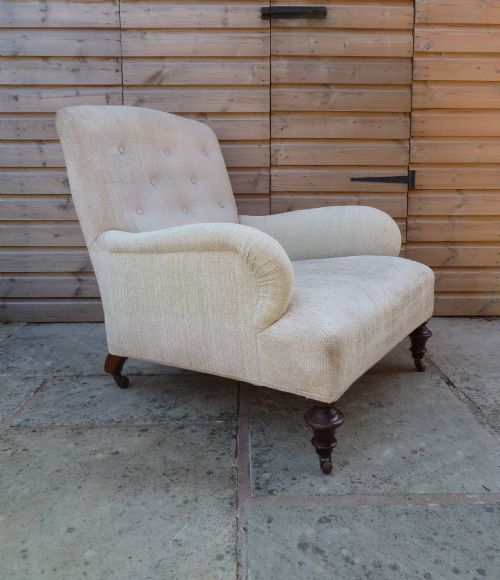
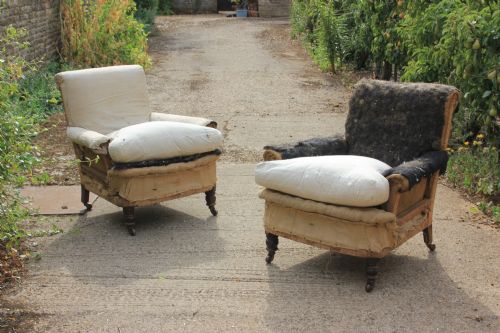
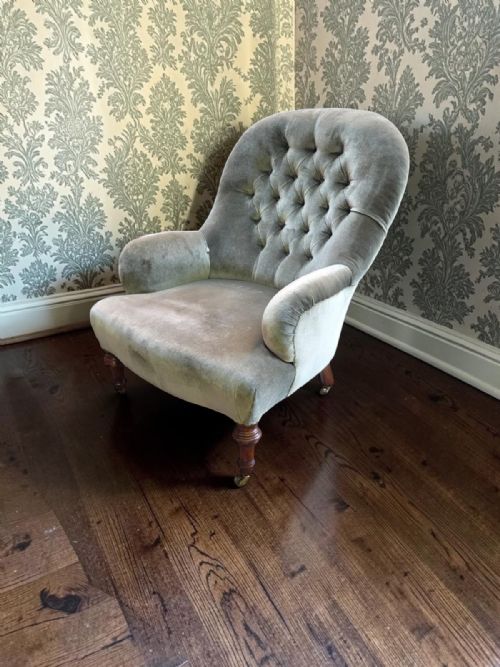
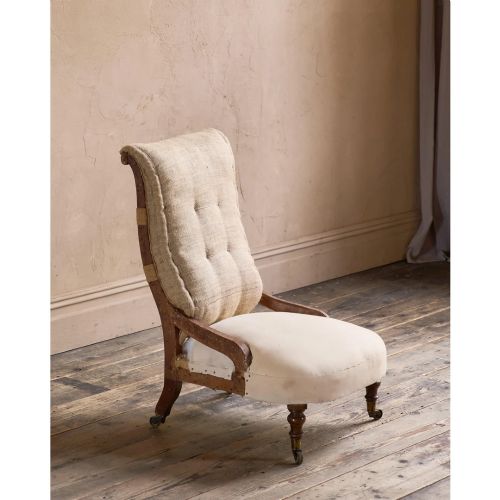
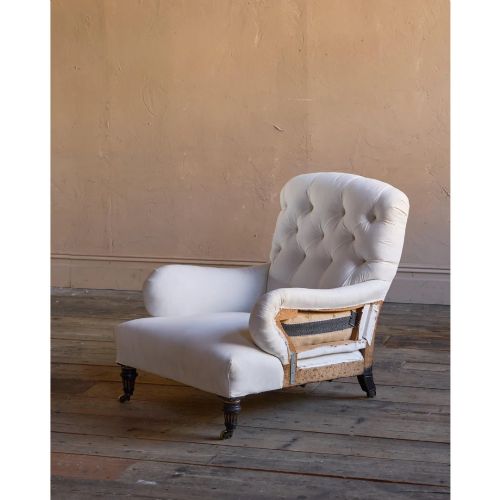
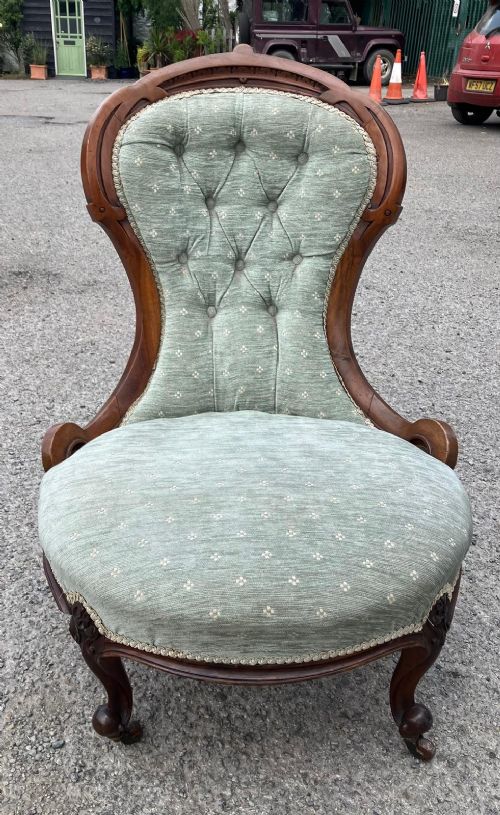
Low Seat Armchair
A low seat armchair offers a relaxed, ground-level sit that brings distinct character and comfort to any traditional room.
What They Are
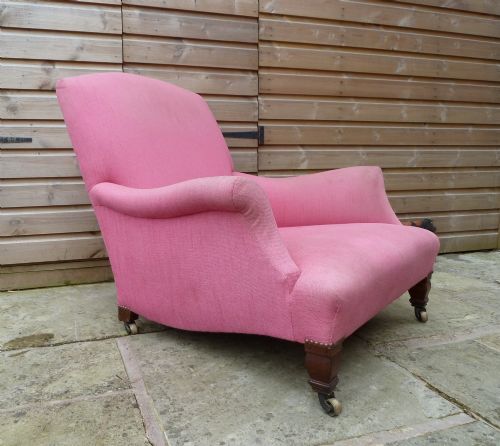
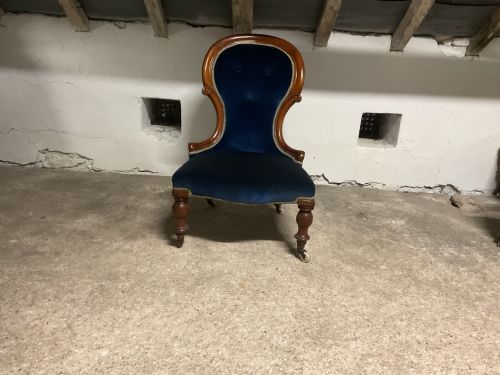
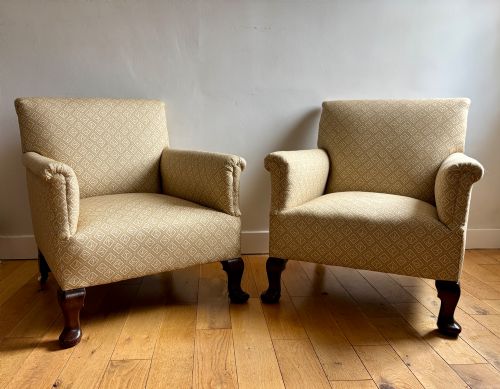
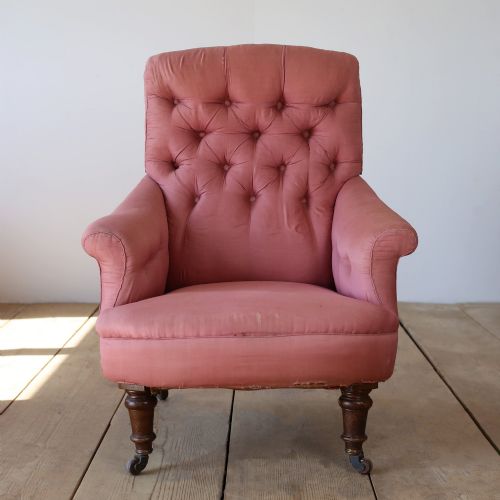
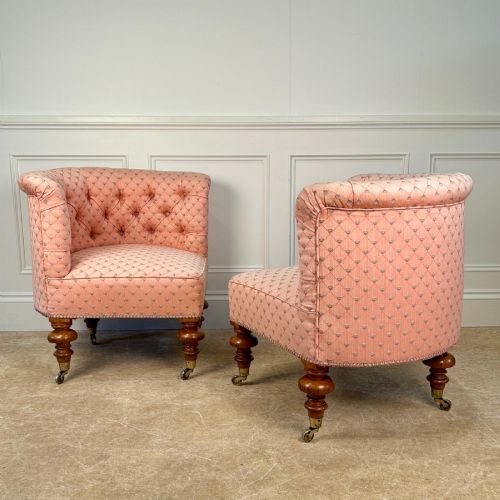
A low seat armchair brings together compact proportions and deep comfort, designed historically for firesides, bedrooms, and informal drawing rooms. When you search for low seat armchair, you encounter nineteenth-century pieces alongside Victorian and Edwardian examples that prioritise a lower profile.
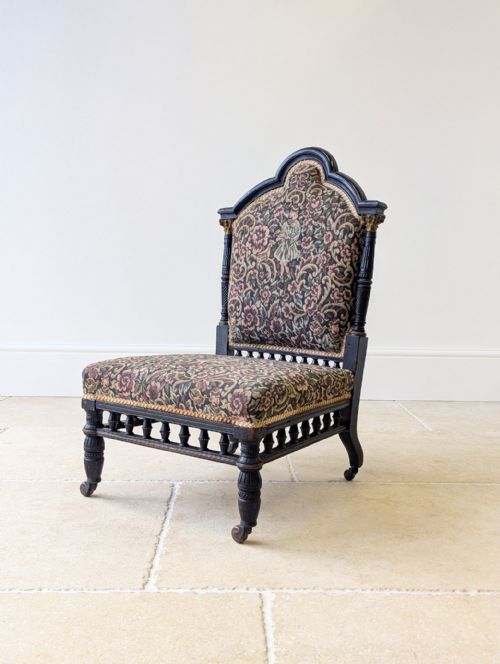
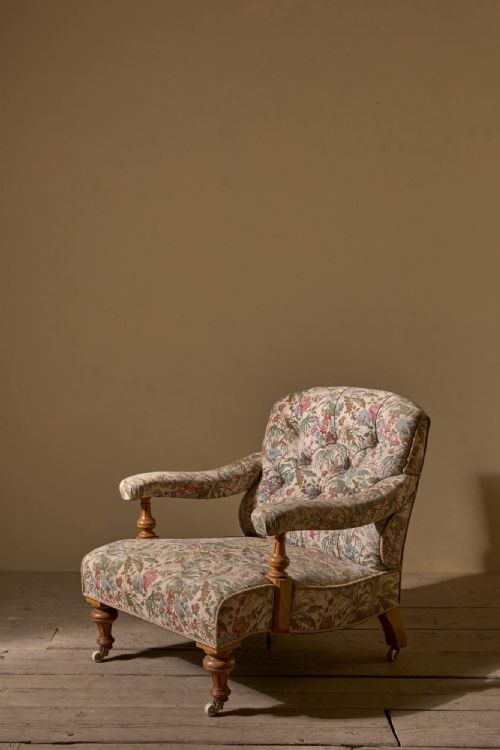
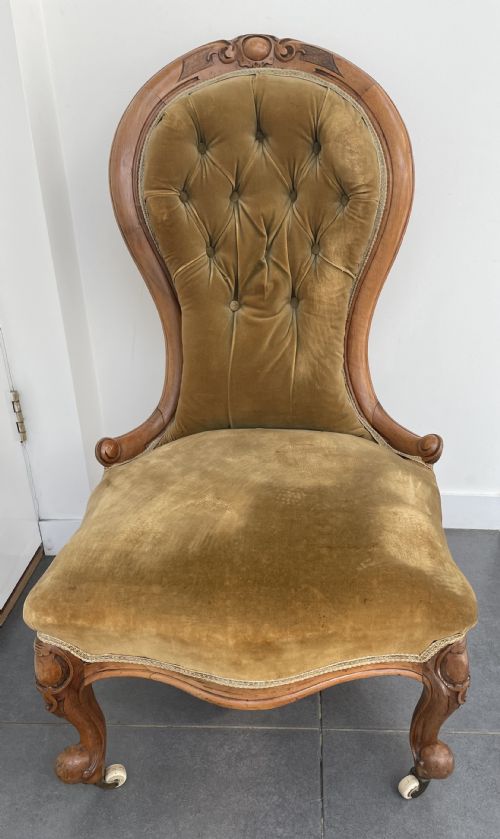
The selections span distinct regional and stylistic variations, including English country house models, Aesthetic Movement designs, and nursing chairs. Many examples feature deep seats, spoon backs, or rush seating supported by hardwood frames in walnut, mahogany, oak, ash, and elm.
Makers and retailers such as Liberty and Co shaped this tradition, producing upholstered and ladder-back forms that remain sought after for their smaller scale. These chairs suit spaces requiring intimate seating arrangements without dominating the room.
How They Were Made
Cabinetmakers and joiners constructed these frames using sturdy hardwoods like mahogany, walnut, oak, ash, and elm. Turned or shaped wooden supports provide the structural foundation for both upholstered and open-back variants.
Traditional upholstery methods involved internal stuffing secured with hessian and calico layers before the final textile covering. Rush seating also appears on specific ladder-back chairs, woven tightly around wooden rails.
Brass castors frequently feature on the legs of nineteenth-century upholstered pieces to aid movement across carpets and floorboards. Joinery techniques varied from simple pegged joints in country chairs to complex sprung frames in Howard-style models.
Retail Price Guide 2026
Typical UK retail prices for low seat armchair, calculated from the Sellingantiques database of over a million retail prices indexed since 2003. This retail price guide relies exclusively on Sellingantiques data; no external sources or auction records are used, so the figures do not describe the wider market.
Some nineteenth-century chairs sit remarkably close to the floor at just over eight inches, designed for maximum warmth by the hearth.
What Varies in Quality
The integrity of the underlying timber frame dictates the longevity and stability of each chair. Finer examples display meticulous joinery and substantial timber scantlings that prevent wobble over decades of use.
Upholstered depth and spring resilience separate standard seating from exceptional craftsmanship. Superior nineteenth-century pieces utilise traditional coil springing and multi-layered stuffing that maintain their contour and support.
The refinement of turned wooden legs, the cleverness of shaped supports, and the selection of original fabrics or Liberty textiles elevate certain pieces above utilitarian workshop output.
Liberty and Co·Godwin
The Low Seat Armchair Glossary
- Nursing chair
- A low-seated chair traditionally designed for nursing infants, often featuring an upholstered back and a reduced height from seat to floor.
- Howard style
- A nineteenth-century deep-seated upholstered design known for generous proportions and rolled arms, associated with comfort and quality craftsmanship.
- Aesthetic Movement
- A late nineteenth-century design style emphasising visual beauty and artistic expression over heavy Victorian ornamentation, linked to makers like Godwin.
- Bergere
- An enclosed upholstered armchair with exposed wooden framing and cane or rush back panels, originating in France and adapted in British cabinetmaking.
- Calico
- A plain-woven unbleached textile historically utilised as the inner lining or base cover beneath decorative upholstery fabrics.
Frequently Asked Questions
How do I identify a Victorian low seat armchair?
Victorian examples typically display distinct period characteristics such as walnut or mahogany frames, turned wooden legs, and sometimes brass castors. Stylistic cues often point toward the Aesthetic Movement or deep-seated country house designs.
Examining the construction methods beneath the upholstery reveals period-specific tacks, webbing, and stuffing materials that distinguish nineteenth-century work from later reproductions.
Were these chairs used only in bedrooms?
While many nursing chairs and bedroom armchairs served private dressing rooms, others formed part of the primary reception rooms in country houses. Deep-seated variants provided relaxed seating in libraries and drawing rooms.
Their versatile scale meant they moved easily between different rooms depending on household needs and social habits.
How do I care for antique upholstery and wood?
Protect the wooden framework by applying suitable wax polish sparingly to nourish hardwoods like walnut and mahogany. Avoid placing upholstered pieces in direct sunlight to prevent textile fading.
Gentle vacuuming with a soft brush attachment removes surface dust from vintage fabrics like calico, hessian, or Liberty cottons without stressing the internal stuffing.