

Antique Ebonised Chair
An antique ebonised chair brings dark wood drama and tactile grain into a room, spanning Regency swagger and Aesthetic Movement simplicity.
Antique Ebonised Chair
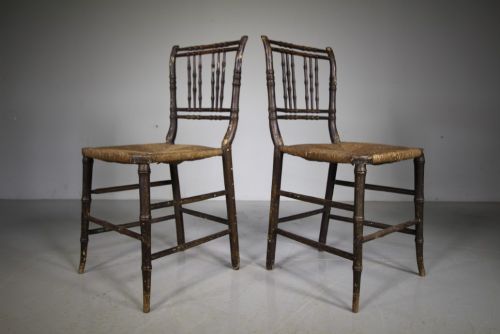
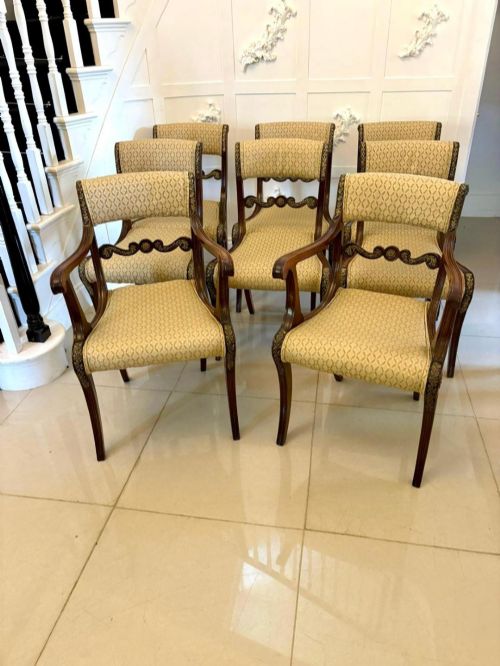
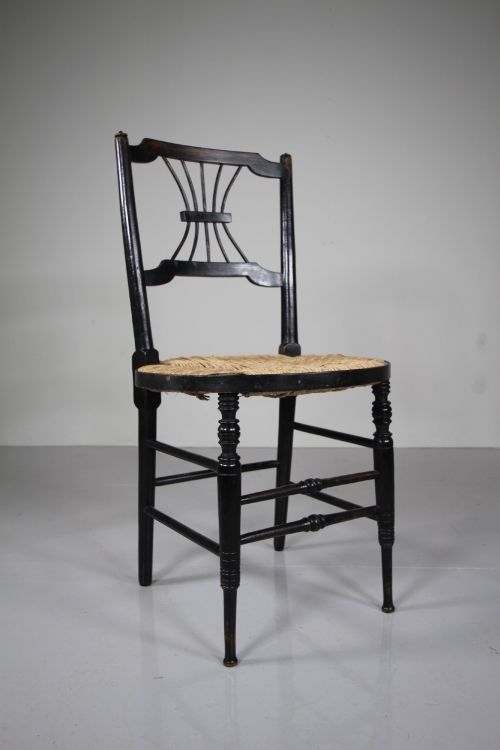
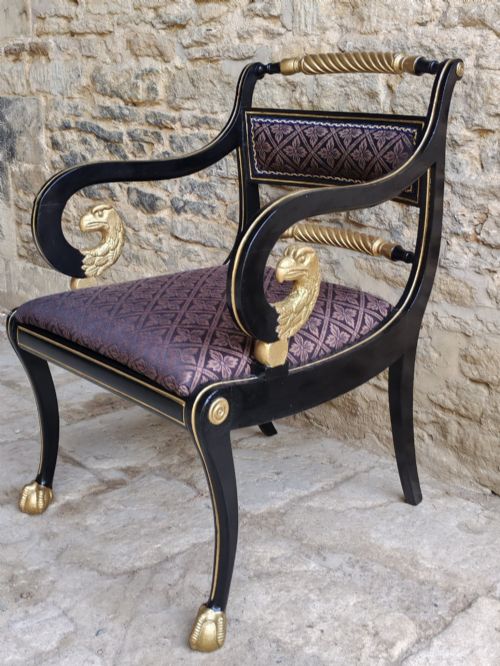
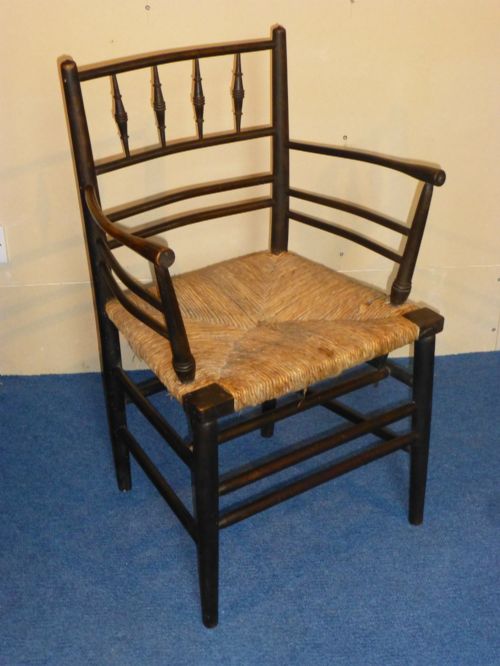
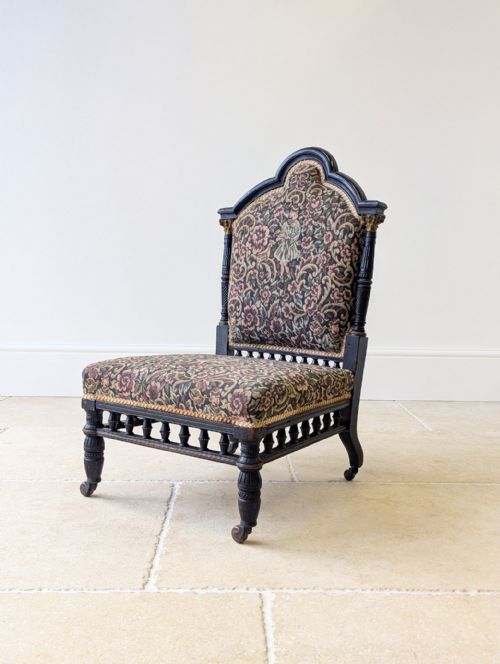
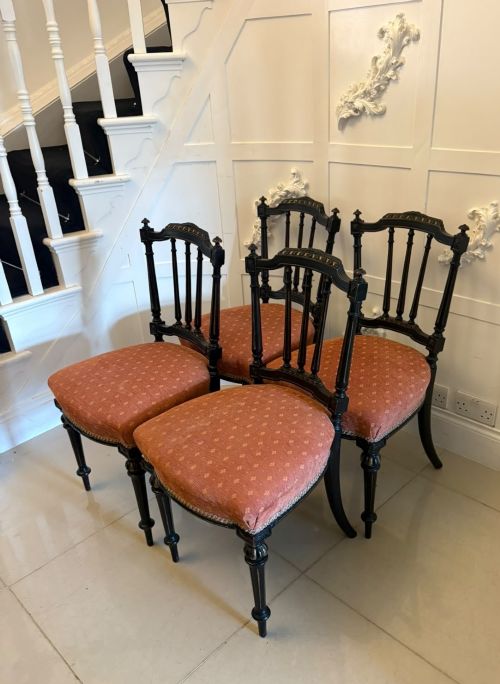
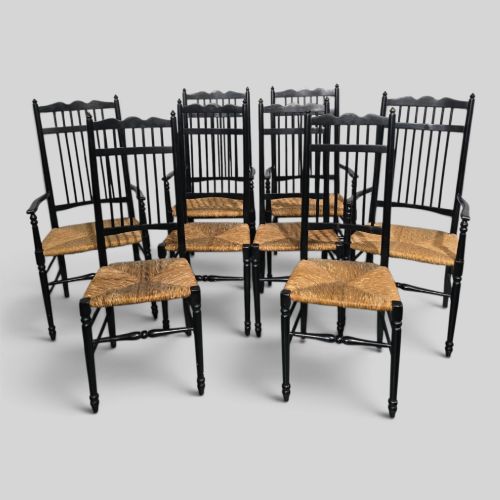
The search for an antique ebonised chair opens up a diverse world of dark-finished seating, from modest bedroom chairs to grand salon armchairs. Buyers meet everything from simple spindle-backed Sussex models to ornate French revival pieces decorated with gilding.
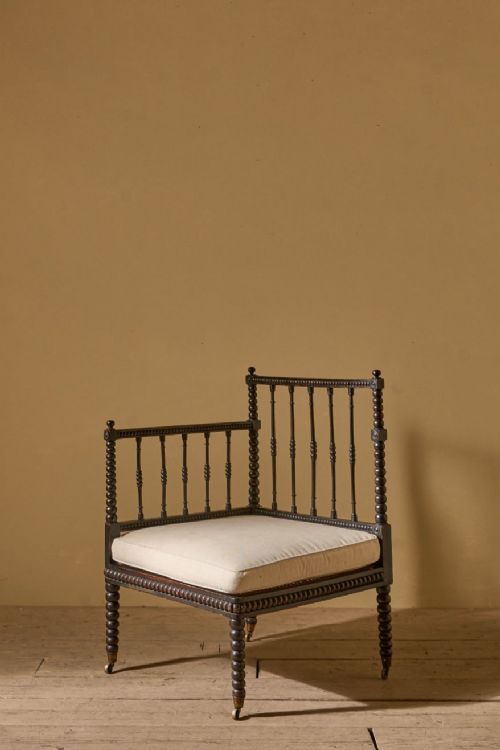
Nineteenth-century examples dominate the selection, heavily influenced by Regency, Victorian, and Aesthetic Movement tastes. Forms range from low salon chairs and corner seats to dining chairs and rocking chairs.
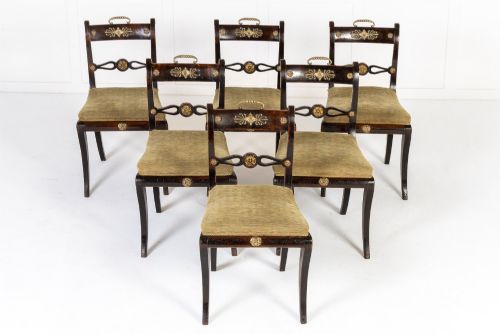
Makers utilised dark finishes to imitate costly exotic hardwoods like ebony, creating striking visual contrast against gilded highlights or inlaid mother of pearl.
How They Were Made
Workshops achieved the dense black finish using various methods, ranging from direct staining and painting on timbers like beech and birch to ebonising fruitwoods. This process often involved chemical treatments or layered pigments that allowed the underlying grain of the wood to remain faintly visible.
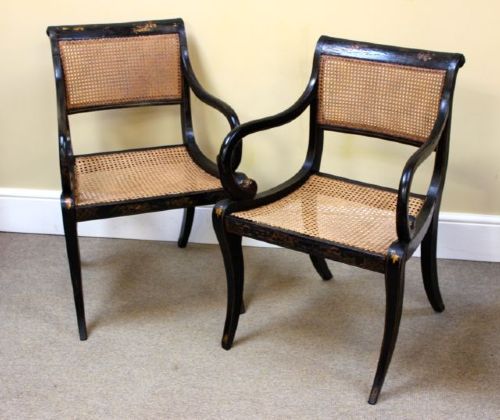
Construction techniques varied according to the period and purpose, utilising turned bobbin components, steam-bent elements, or carved frames. Seats were frequently fitted with cane, rush, or upholstered pads finished in calico, velvet, or hessian.
Common forms include nursing chairs, corner chairs, and folding rocking chairs finished in simulated rosewood and black paint.
What Varies in Quality
The integrity of the ebonised finish and the crispness of the underlying carving dictate the hierarchy of these chairs. Pieces that retain their original layered surface without heavy modern overpainting command greater interest.
Structural joinery and the survival of delicate details, such as inlaid mother of pearl, gilt highlights, or original caning, separate utilitarian items from exhibition-grade examples.
William Morris·Rossetti·Philip Webb·Marsh Jones of Leeds
The Antique Ebonised Chair Glossary
- Ebonisation
- The process of treating timber to simulate the appearance of ebony. This dark finish was especially popular during the Victorian and Aesthetic Movement periods.
- Bobbin
- A turned wooden furniture component shaped like spools of thread. Chairs utilising this form of turning appear frequently in nineteenth-century designs.
- Aesthetic Movement
- A late nineteenth-century design style emphasising visual beauty over narrative content. Pieces from this movement often feature ebonised surfaces and minimalist or Japanese-inspired lines.
- Savonarola chair
- A folding chair of Italian Renaissance origin constructed from curved wooden slats. Antique iterations often feature ebonised wood and intricate inlay.
- Trafalgar leg
- A heavy, sabre-shaped furniture leg associated with the Regency period. These supports are frequently found on ebonised dining and side chairs from the early nineteenth century.
Antique Ebonised Chair: Frequently Asked Questions
How do I date an ebonised chair?
Dating relies on combining the chair's overall silhouette with stylistic clues such as turnings, upholstery methods, and decorative motifs. Regency examples often display sabre legs, while Victorian pieces lean towards gilt highlights and mother of pearl inlay.
Examining the construction of the frame and the wear patterns on the ebonised surface also helps establish the era of manufacture. Comparing the piece against documented designs from makers like William Morris provides further chronological clarity.
Were all ebonised chairs made of ebony?
True ebony was rarely used due to its high cost and density, so makers instead applied black finishes to more accessible timbers. Beech, birch, mahogany, and fruitwoods served as common substrates for the ebonisation process.
Craftspeople stained, painted, or chemically treated these domestic woods to mimic the luxurious dark material. This technique allowed wider access to fashionable dark furniture without prohibitive material costs.
How should I care for an ebonised finish?
Maintenance requires gentle dusting with a soft, dry cloth to prevent abrasive particles from scratching the dark surface. Avoid harsh chemical cleaners or silicone polishes that can degrade the historic finish over time.
Maintaining stable room humidity protects the underlying timber from warping and prevents the ebonised coating from flaking. Applying occasional specialised wax preserves the depth and lustre of the wood.