
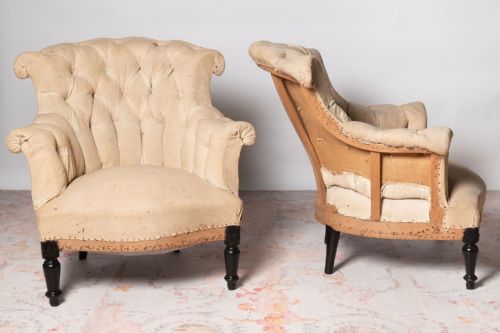


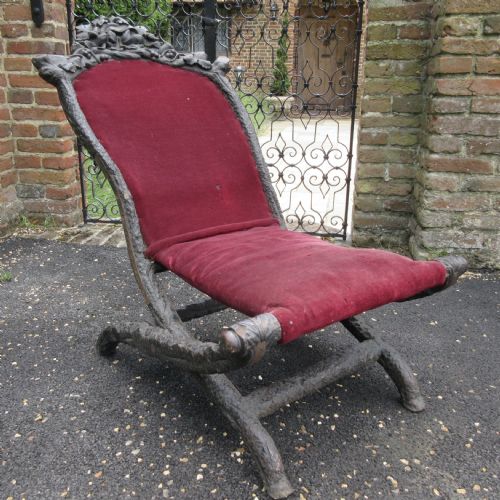


Black Frame Armchair
A black frame armchair brings striking dark timber and ironwork into a room, offering both robust seating and a strong silhouette.
Black Frame Armchair
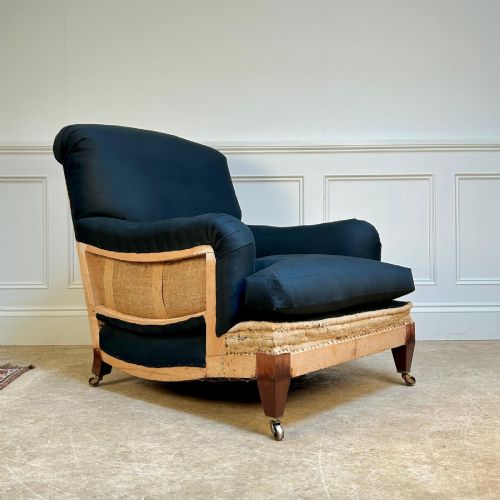
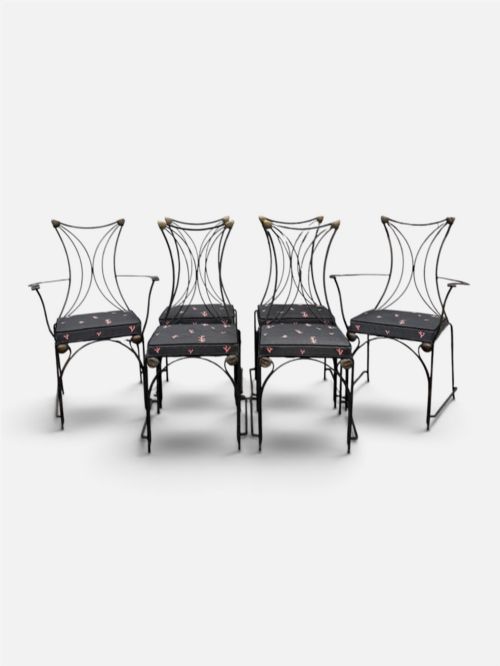
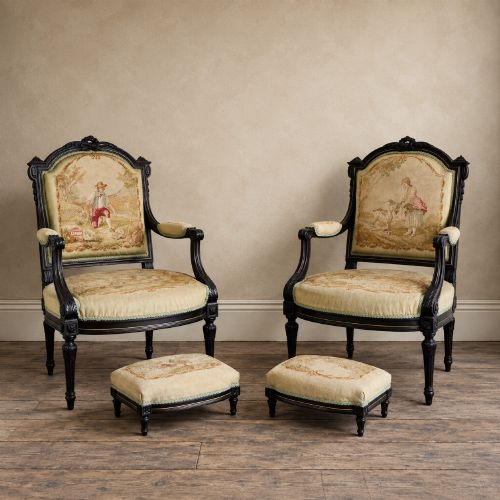
When you search for a black frame armchair, you encounter seating constructed from darkly finished woods, ebonised timber, and wrought iron spanning the nineteenth century through the mid-twentieth century. The selection ranges from Victorian ladies chairs and library armchairs to Regency ebony pieces and French Louis XVI revival salon chairs.
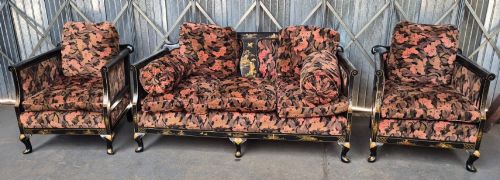
The most common forms on this page include ebonised wood frames, mahogany structures, and beech frameworks paired with fabric, hessian, cane, or leather upholstery. These dark frames appear across various styles such as Edwardian Chinoiserie, French Napoleon III, Anglo-Indian, and 1930s traditional designs.
Buyers select these chairs for their distinct structural outlines and dark finishes that contrast sharply with light upholstery or gilded details. Whether choosing a folding chair, a swivel office armchair, or a three-piece suite, each piece demonstrates how dark framing techniques were applied across different eras.
Materials and construction
Makers utilised dense hardwoods such as mahogany, beech, and ebony, alongside ebonised wood to achieve a deeply dark surface finish. Iron and brass also feature prominently in structural elements and decorative details.
Upholstery methods involved traditional materials like hessian and fabric, complemented by cane work and leather inserts. Frames were carved, turned, and sometimes highlighted with gilt accents or shell detailing.
Folding mechanisms and reclining frames required precise joinery and metal hinges, particularly visible in specialised seating like nineteenth-century folding chairs and reclining armchairs.
Current listings feature materials including brass, ebonised wood, mahogany, fabric, beech, hessian, ebony, and cane across multiple centuries.
Evaluating the craftsmanship
Quality rests in the precision of the woodwork and the integrity of the dark finish, whether achieved through natural ebony or applied ebonisation. Superior pieces display crisp carving, balanced proportions, and robust joinery.
The condition of the original materials, from cane panels to leather upholstery and brass fittings, dictates the overall integrity of the chair. Finer examples retain their structural stability and original decorative details without extensive rebuilding.
The Black Frame Armchair Glossary
- Ebonised Wood
- Timber treated with a dark stain or finish to imitate expensive ebony. This technique was popular during the Victorian and revival periods for creating stark, elegant furniture frames.
- Cane
- Woven plant material used for seat panels and backrests. It provides a lightweight, flexible surface that contrasts with heavy wooden frames.
- Hessian
- A coarse woven fabric typically used as a foundational upholstery layer beneath outer coverings. It supports the internal padding of traditional armchairs.
- Louis XVI Revival
- A nineteenth-century design style referencing eighteenth-century French neoclassical forms. Pieces often feature straight tapered legs and classical decorative motifs.
Black Frame Armchair: Frequently Asked Questions
What periods do these armchairs come from?
The listings span from the Regency era and nineteenth century through the Victorian period, Edwardian times, and up to the 1930s and 1950s.
Each period brings distinct stylistic influences, ranging from French revival designs to traditional country house seating.
How do I care for ebonised wood?
Ebonised surfaces require gentle cleaning with a soft, dry cloth to prevent dust accumulation. Avoid harsh chemical cleaners that can strip the dark finish.
Keeping the wood away from direct sunlight and excessive moisture helps preserve the deep colour over time.
Are these chairs suitable for daily use?
Many of these armchairs are structurally robust and designed for regular seating, particularly library, office, and lounge models.
Upholstered pieces may depend on the condition of their internal webbing and padding for comfort during extended sitting.
What is the difference between an ebony and ebonised frame?
An ebony frame is carved from dense, naturally black tropical hardwood. Ebonisation involves staining or painting a more common wood, like beech or mahogany, to replicate that dark appearance.
Both finishes create a similar visual impact but rely on different underlying materials.