

Victorian Ebonised Armchair
A victorian ebonised armchair brings dark elegance and refined nineteenth-century seating to a room, offering rich black finishes and varied upholstery.
Victorian Ebonised Armchair
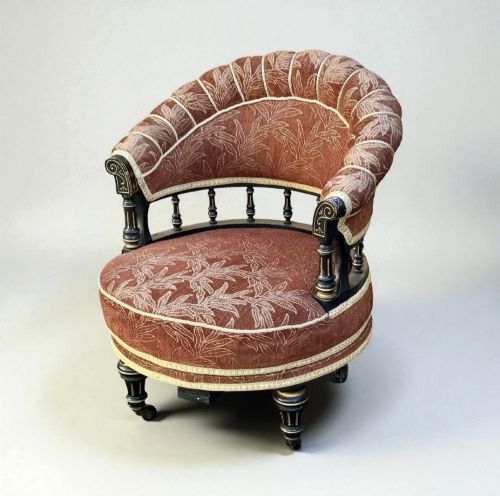
A victorian ebonised armchair spans nineteenth-century seating designed for drawing rooms, libraries, and salons. These pieces emerge in diverse formats, from low lounge chairs and nursing chairs to revolving library seats and substantial reading chairs.
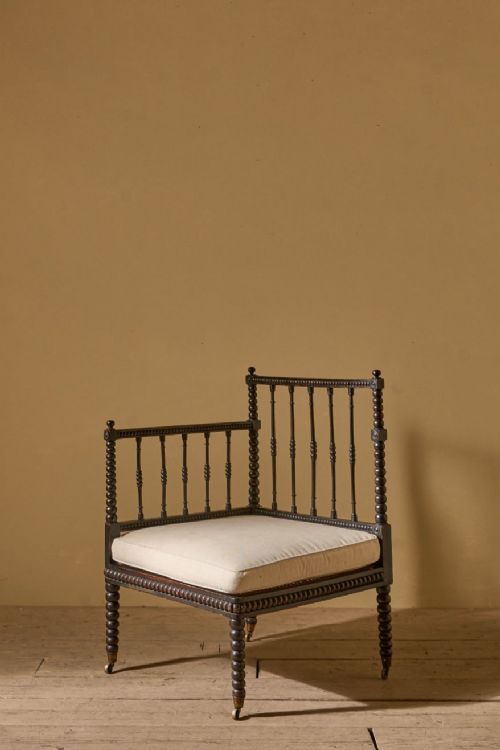
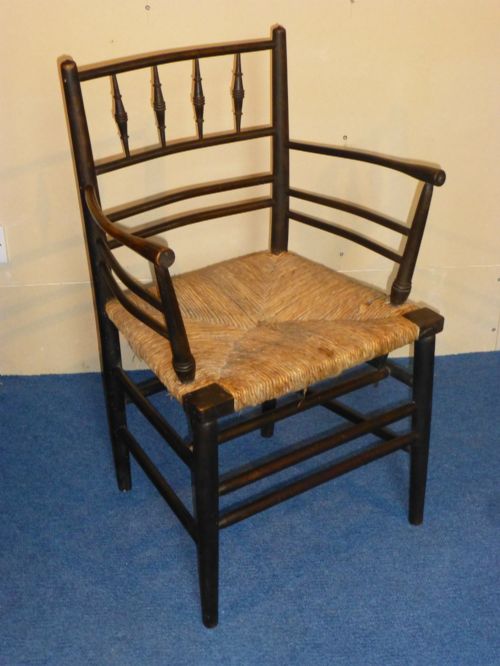
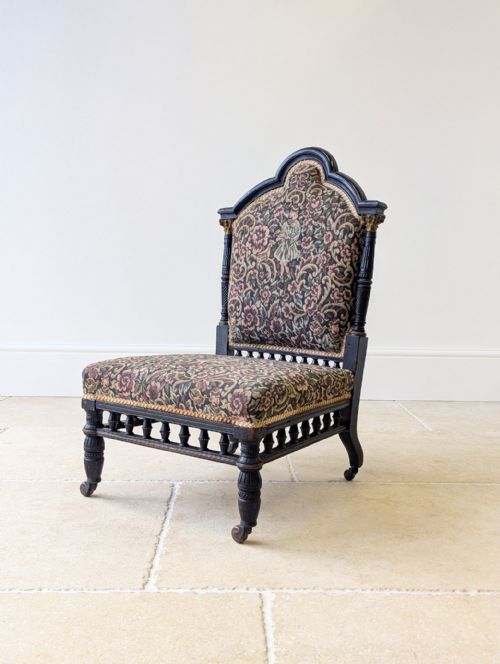
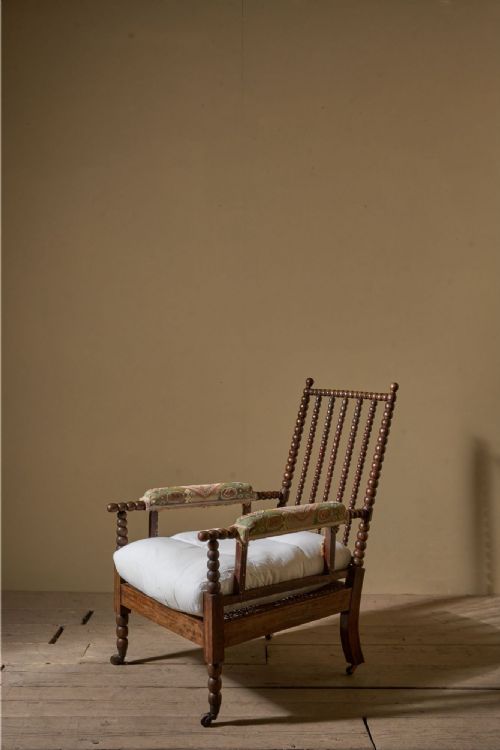
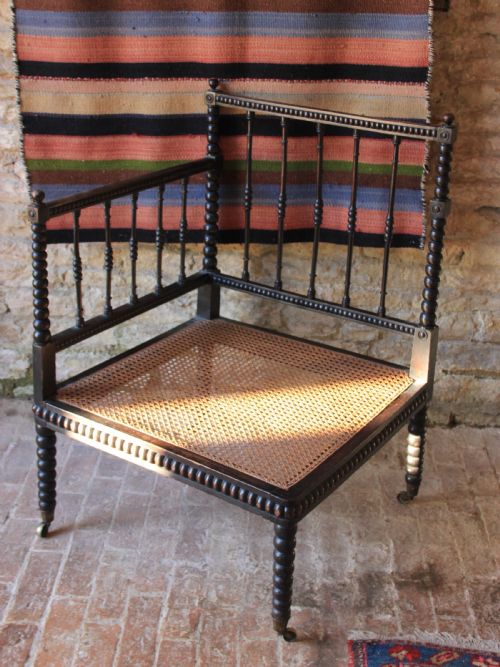
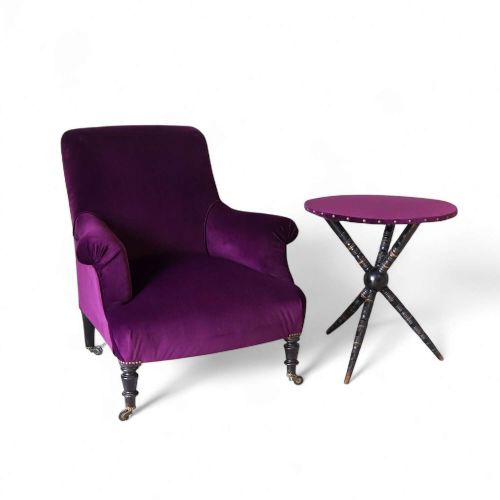
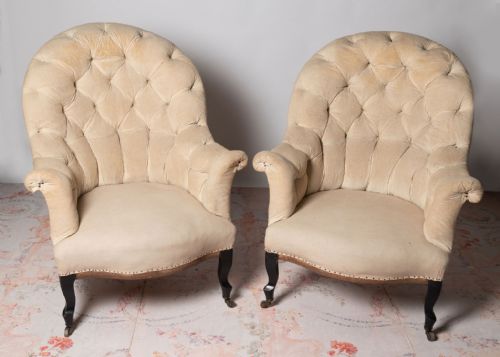
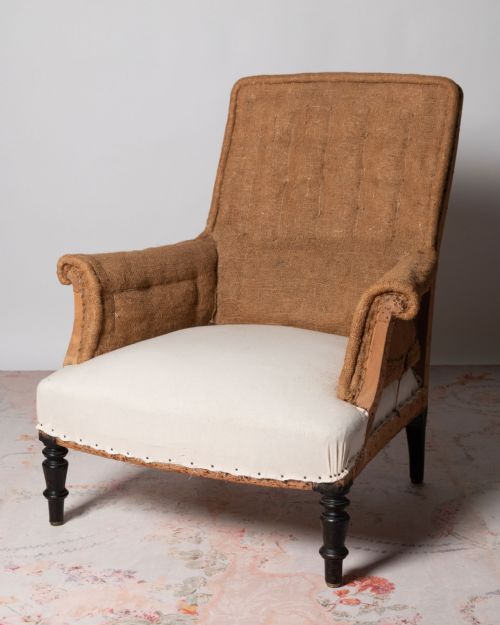
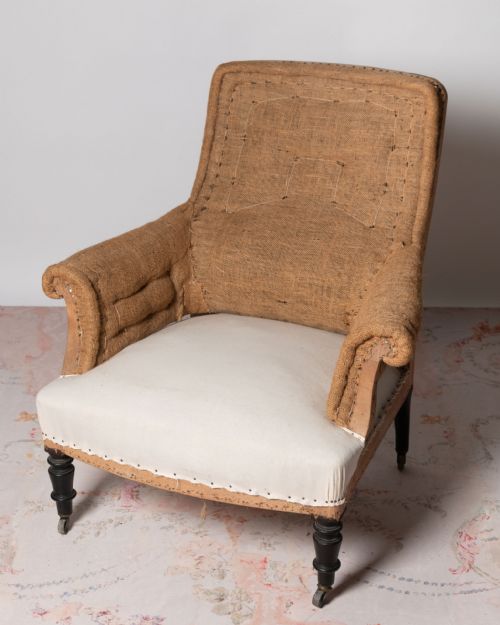
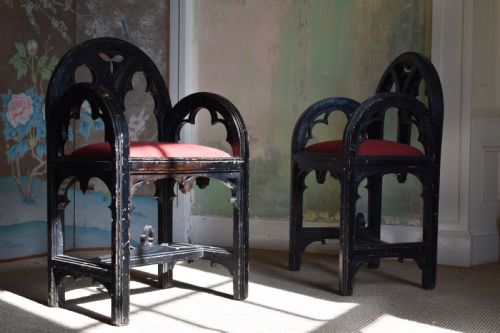
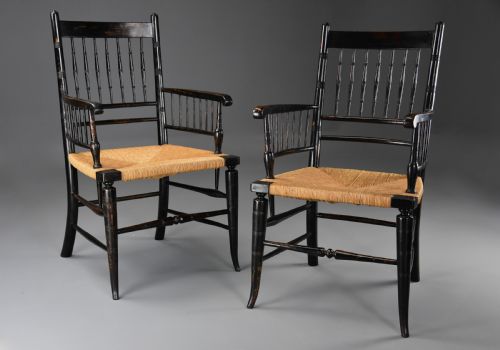
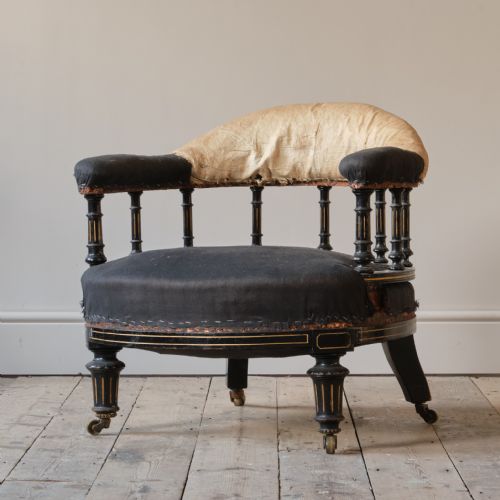
The aesthetic movement and French Napoleon III designs heavily influence the selection on this page, alongside English country house and Gothic Revival interpretations. Buyers frequently encounter low salon chairs, corner chairs with bobbin turnings, and robust armchairs finished in deep, dark coatings.
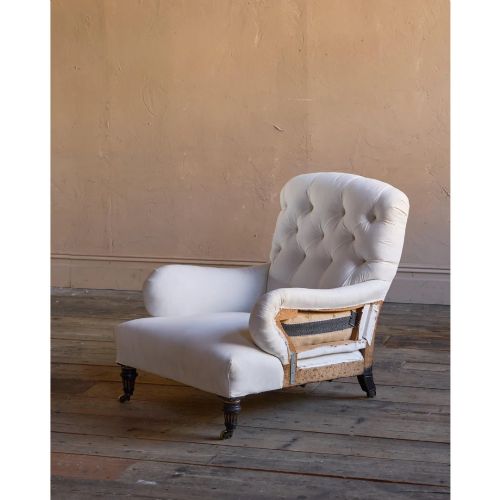
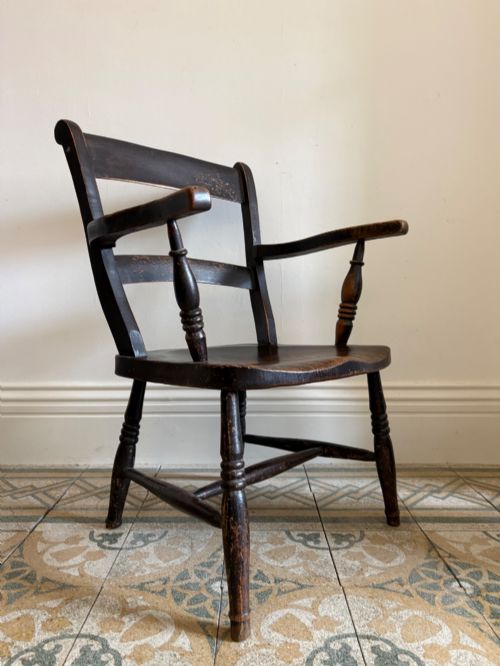
Origin details extend across English workshops, French makers, and regional vernacular pieces. The forms range from upright parlour seating to low, sprung reading chairs tailored for nineteenth-century domestic comfort.
Craftsmanship and Proportion
Superior examples display crisp turning on bobbin legs, precise gilding, and structural integrity within the wooden frame. The refinement of the ebonised surface finish and the retention of original upholstery materials separate standard production from master workshop output.
Proportion and decorative restraint dictate the distinction between typical commercial seating and pieces attributed to prominent design houses. The harmony between the dark wood frame and the textile choice governs the overall visual balance.
Victorian Ebonised Armchair Retail Price Guide 2026
Typical asking prices for victorian ebonised armchair among the pieces listed under this phrase on Sellingantiques today, from the lower quarter to the upper quarter. They describe what is for sale here now, not the wider market.
The inventory includes bentwood rocking chairs alongside formal library armchairs and corner seats.
Morris & Co·Gillows·Collier and Plucknett·James Shoolbred·Maple & Co
The Victorian Ebonised Armchair Glossary
- Ebonised
- Wood finished with a dark stain or paint to imitate expensive ebony. This treatment became popular during the nineteenth century for aesthetic and formal furniture.
- Bobbin turning
- Furniture legs and stretchers shaped on a lathe to resemble a series of wooden reels or bobbins. This decorative detail appears frequently on nineteenth-century seating.
- Aesthetic movement
- A late nineteenth-century design style emphasising visual beauty over narrative subject matter. Pieces from this movement often feature ebonised surfaces and gilt details.
- Napoleon III
- A French design style spanning the mid to late nineteenth century, known for eclectic revivals and comfortable upholstered seating. These frames often pair with rich velvet and gilt accents.
- Gothic Revival
- An architectural and decorative style drawing inspiration from medieval forms. Furniture in this category uses pointed arches, heavy timber, and carved tracery.
Victorian Ebonised Armchair: Frequently Asked Questions
What is an ebonised finish?
An ebonised finish is a black stain or coating applied to cheaper woods like beech or fruitwood to simulate solid ebony. Cabinetmakers used this technique extensively in the nineteenth century to achieve a sleek, dark aesthetic.
The process allowed workshops to produce fashionable dark furniture without relying entirely on scarce tropical hardwoods. Over time, these finishes develop a soft patina that reveals the grain underneath.
How do I identify an aesthetic movement chair?
Aesthetic movement chairs typically feature ebonised wood surfaces, often highlighted with gilt details or incised carving. Their forms lean towards refined simplicity, drawing inspiration from Japanese design principles.
You will frequently find these pieces associated with late nineteenth-century makers who championed art for art's sake in domestic interiors. They often use contrasting upholstery fabrics like rich purple velvet.
Were these chairs used in bedrooms?
Many smaller examples, such as low salon chairs, boudoir chairs, and nursing chairs, served private sitting rooms and bedrooms. Their compact proportions made them suitable for personal dressing spaces and intimate parlours.
These pieces combined comfortable sprung upholstery with lower seating heights, allowing occupants to sit comfortably while resting or tending to clothing.