





Antique Padded Swivel Seat
An antique padded swivel seat brings mechanical ingenuity and domestic comfort together, offering a revolving perch for the piano, desk or parlour.
Antique Padded Swivel Seat
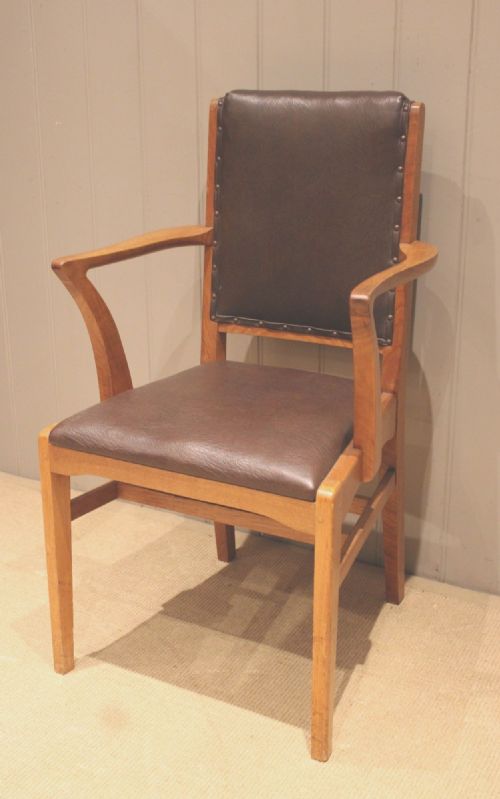
When you search for an antique padded swivel seat, you find domestic seating designed to rotate, most frequently encountered here as piano stools, desk chairs and easy chairs. The selection spans the nineteenth century, the Edwardian era and into the 1920s and 1930s, reflecting changing domestic habits from the Victorian parlour to Art Deco interiors.
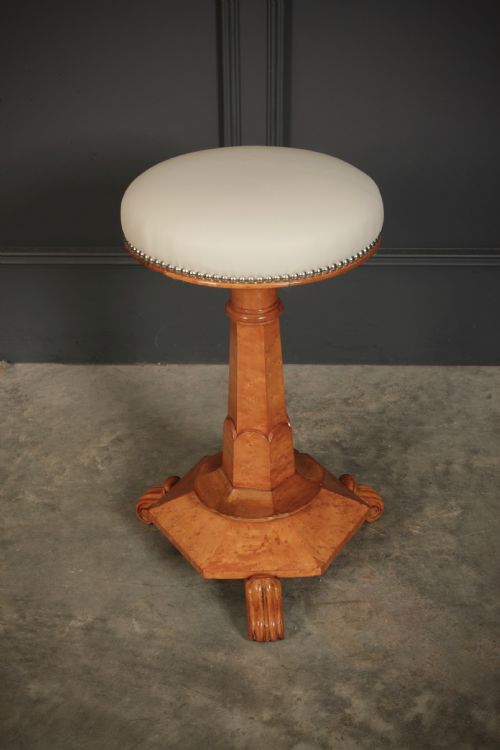
The forms range from circular piano stools and rising seat mechanisms to heavily carved oak ship's chairs and revolving upholstered easy chairs. Walnut, mahogany, rosewood and birds eye maple appear alongside oak, carrying upholstery in leather, velvet, original fabric and textiles.
How they were made
Cabinet makers constructed these frames from dense hardwoods like mahogany, walnut, rosewood and oak, often incorporating intricate carving or gilt paint depending on the stylistic period. Turning and joinery shaped the structural legs and revolving columns, uniting solid timber with mechanical brass screw tops and swivel components.
Padding relied on traditional textile stuffing housed beneath leather, velvet, or woven fabric seats. Makers like James Shoolbred integrated adjustable rising mechanisms that allowed the seated musician or writer to alter their height with a simple turn.
Musicians and pianists of the past spent hours spinning vigorously on these very screw tops just to find the exact middle C height.
What varies in quality
The distinction between ordinary and exceptional examples rests in the ambition of the timber selection and the refinement of the turning. Pieces executed in birds eye maple or richly figured walnut with gilt paint show a higher level of workshop design than plain utilitarian seating.
The sophistication of the swivel mechanism also marks out superior examples. Smooth movement in the brass screw top and tight, stable joinery across the revolving column separate the finer pieces from simpler domestic furniture.
James Shoolbred
The Antique Padded Swivel Seat Glossary
- Swivel seat
- A chair or stool top mounted on a central pivot that allows the user to turn in a complete circle. This mechanism is typically controlled by a threaded metal screw or pin hidden beneath the upholstery.
- Revolving piano stool
- An adjustable seat designed for keyboard players, allowing them to find the correct height and orientation before the instrument. They frequently feature a central wooden column or screw mechanism.
- Rising seat
- A seat fitted with an internal or exposed screw mechanism that elevates the platform as it is turned. It provides precise height adjustment for the user.
- Gilt painted
- A decorative surface treatment where a thin layer of gold leaf or metallic paint is applied over a prepared base. This finish highlights carved details and adds visual warmth to the timber frame.
Antique Padded Swivel Seat: Frequently Asked Questions
How do I adjust the height on these seats?
Most of these seats feature a central wooden or metal screw mechanism hidden beneath the upholstery. By rotating the top of the seat clockwise or anti-clockwise, the mechanism raises or lowers the platform to the desired position.
Older examples rely on smooth hand-turned wooden threads or brass screws that require gentle handling. Regular use benefits from occasional light lubrication of the moving metal parts to ensure smooth rotation.
Were these seats only used for pianos?
While piano stools form a large portion of the selection, revolving seats were also designed for writing desks, shipboard use and general parlour seating. The rotating mechanism served any domestic task where the user needed to turn easily between different angles.
Heavier oak frames and easy chairs provided sturdy support for studies and libraries, while lighter maple and rosewood versions suited musical rooms and drawing rooms.
How do I date an antique swivel seat?
Dating relies on observing the combination of timber, stylistic motifs and mechanical construction. Victorian examples often display deep walnut carving or rosewood finishes, while Edwardian and later pieces might show the cleaner lines of the 1920s and 1930s.
The materials used for the upholstery and the sophistication of the brass or iron swivel mechanism also offer strong clues to the decade of manufacture.
Can I use an antique piano stool at a modern desk?
Many antique piano stools and desk chairs fit comfortably at modern workspaces, provided the height adjustment meets your needs. Their compact circular footprints make them practical choices for smaller rooms.
Checking the maximum and minimum height of the revolving screw top ensures the seat aligns correctly with your desk surface before daily use.