


Deconstructed Upholstery Chair
These deconstructed upholstery chairs lay bare the traditional layers of horsehair, hessian and calico, offering raw character and exposed framing for modern interiors.
Deconstructed Upholstery Chair
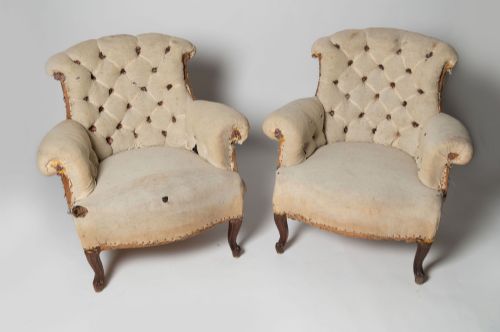
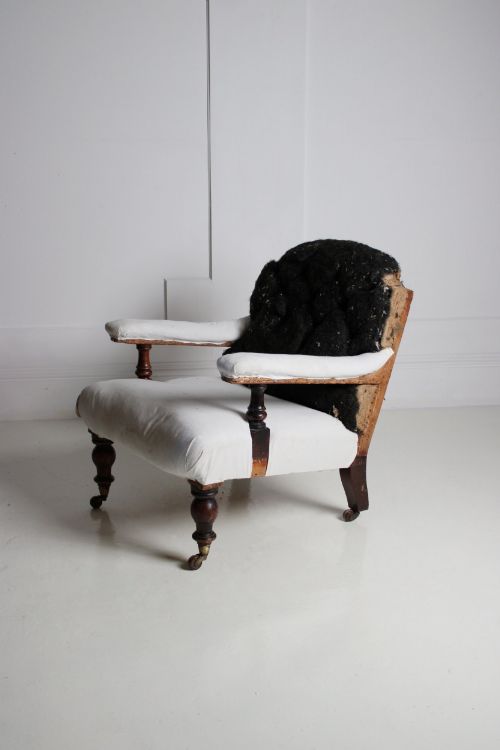
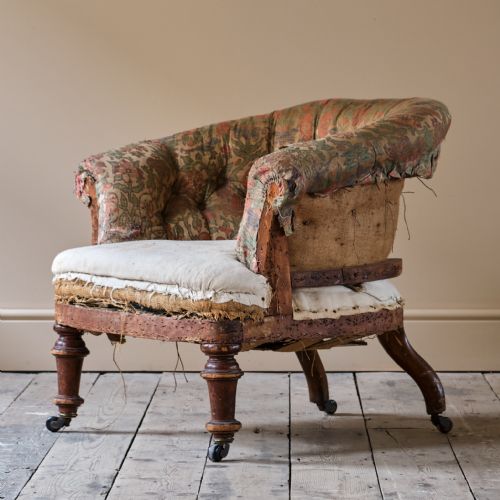
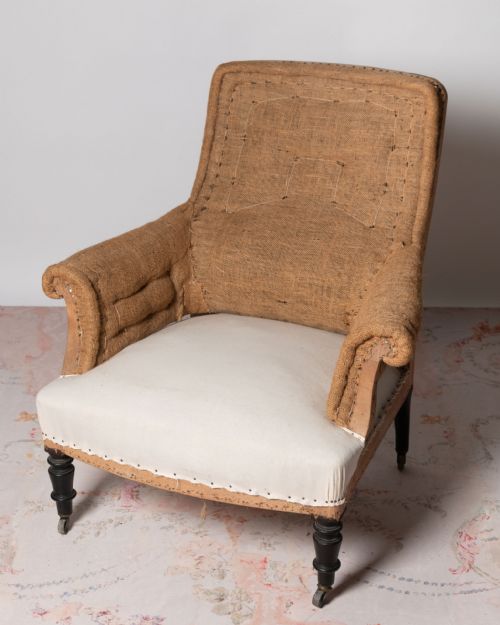
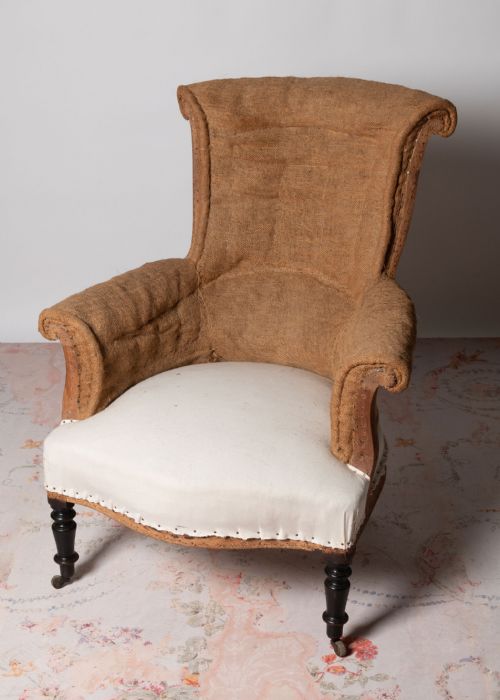
A deconstructed upholstery chair strips away the top fabric to reveal the internal workings of traditional seating. These pieces range from substantial 18th century wingchairs to Victorian armchairs and French seating.
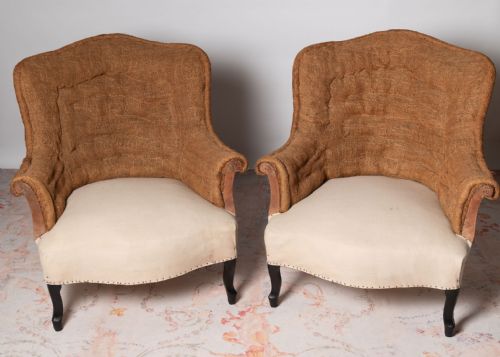
Buyers seeking a deconstructed upholstery chair encounter forms such as tub backs, wingbacks, slipper chairs and nursing chairs. The selection spans English country house pieces and French Napoleon III designs.
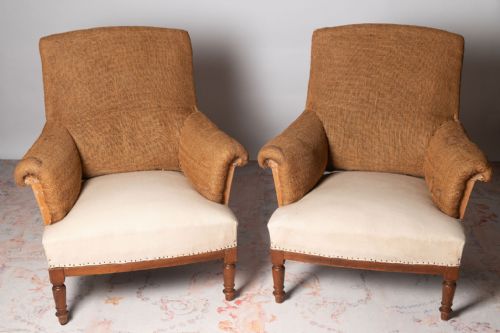
Makers built these frames using robust timbers including mahogany and beech, which now stand exposed after the outer covers are removed. The aesthetic celebrates the structural integrity and hidden foundations of antique seating.
How they were made
Traditional makers built the internal support using natural materials like horsehair and hessian secured over sturdy wooden frames of beech and mahogany. Button back detailing and ribbed legs demonstrate the fine handwork of Victorian and earlier craftsmen.
The process relied on durable layers of calico and webbing to shape the upholstery before finishing with brass tacks. These foundational layers now remain visible on deconstructed pieces, showing the honest construction methods of the period.
Listings feature pieces spanning the 18th century, the Victorian era and 1900, utilising materials such as beech, mahogany, hessian and horsehair.
What varies in quality
Quality rests primarily in the timber frame beneath the coverings, where solid mahogany or beech shows superior carving and structural stability compared to lesser woods. The proportion and curve of a wingback or tub back dictate the elegance of the silhouette.
The integrity of the remaining internal webbing, horsehair stuffing and brass tacks marks the difference between a sound antique frame and one that has suffered overzealous stripping. Original details such as reeded legs elevate the refinement of the piece.
The Deconstructed Upholstery Chair Glossary
- Hessian
- A coarse woven fabric typically made from jute fibres, utilised as a strong foundation layer in traditional seating. It holds the internal stuffing firmly in place.
- Horsehair
- A traditional stuffing material sourced from the mane and tail of horses, prized for its natural spring and durability. Craftsmen layered it beneath calico to build comfortable padding.
- Calico
- A plain-woven cotton fabric placed over the inner stuffing to contain the horsehair before the final decorative cover was applied. On deconstructed pieces, this often forms the visible exterior.
- Wingback
- An armchair featuring protective side panels designed to shield the occupant from draughts near a fireplace. Early examples date to the eighteenth century.
Deconstructed Upholstery Chair: Frequently Asked Questions
What is a deconstructed upholstery chair?
A deconstructed upholstery chair is an antique seating piece stripped of its final decorative fabric to reveal the inner hessian, calico and webbing.
This style highlights the raw wooden frame and the traditional stuffing materials used by historical makers.
How were these chairs originally made?
Craftsmen constructed sturdy frames from beech or mahogany and packed them with layers of horsehair and hessian.
Traditional techniques involved securing the internal padding with brass tacks and heavy stitching before adding outer covers.
How do I style a deconstructed chair?
These chairs work well as statement pieces in contemporary rooms where their exposed framing provides textural contrast.
Their neutral internal fabrics blend easily with various colour schemes while offering a glimpse into historical manufacturing.
Are these chairs comfortable to use?
Despite the stripped exterior, many retain their dense horsehair stuffing and supportive webbing for daily seating.
The level of comfort depends on the original padding and the structural condition of the antique frame.