


Victorian Aesthetic Movement Seating
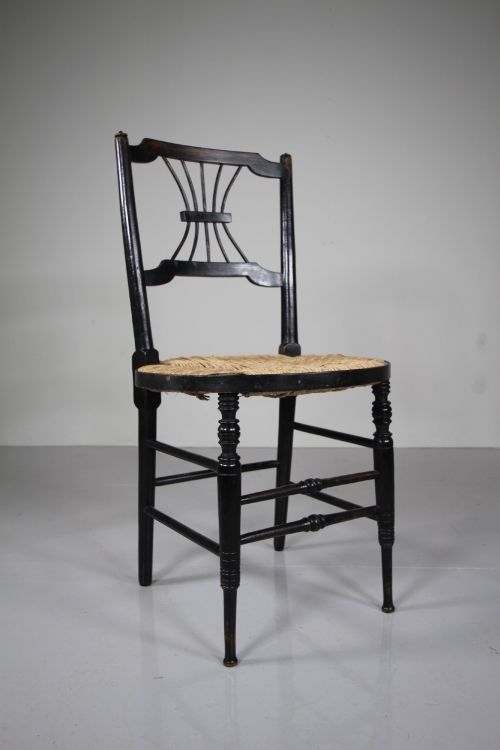
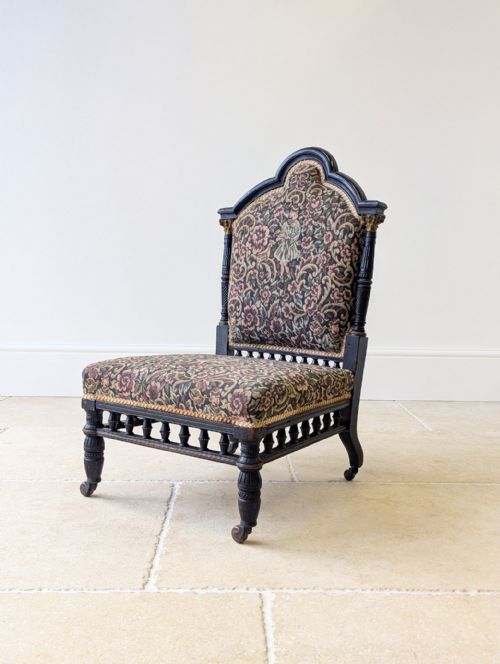
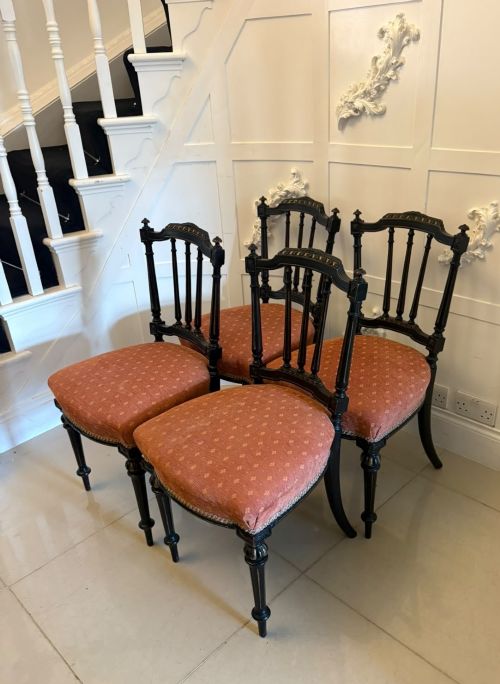
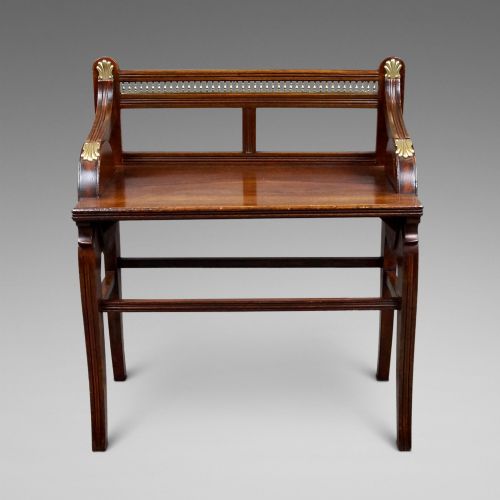
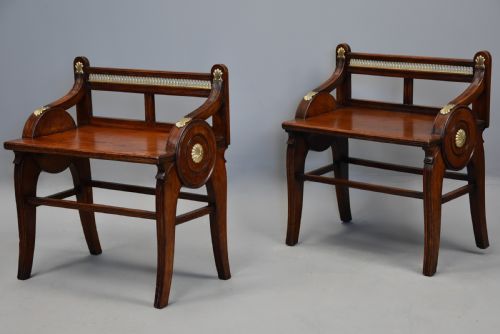
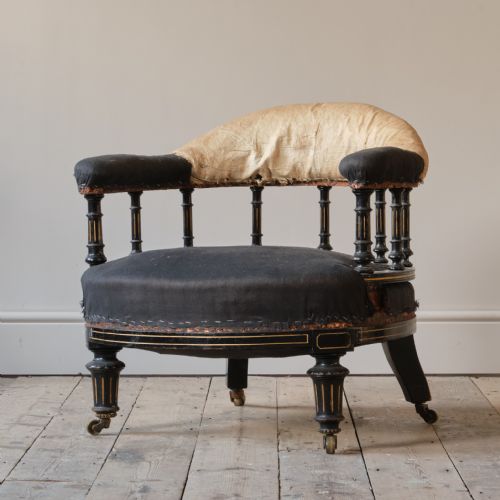
These pieces of victorian aesthetic movement seating bring together ebonised wood, bamboo and brass mounts from the nineteenth century.
Victorian Aesthetic Movement Seating
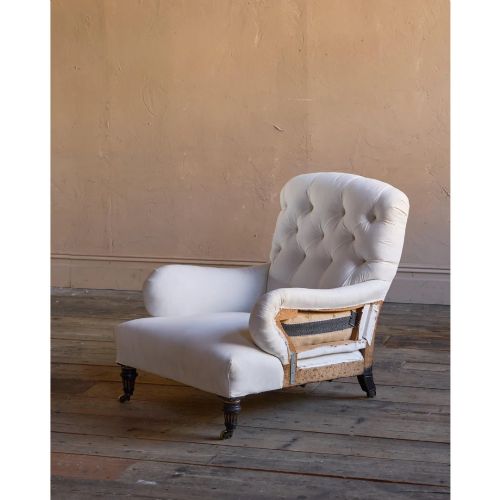
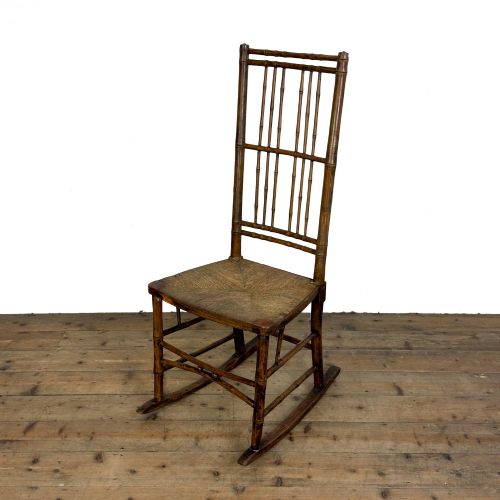
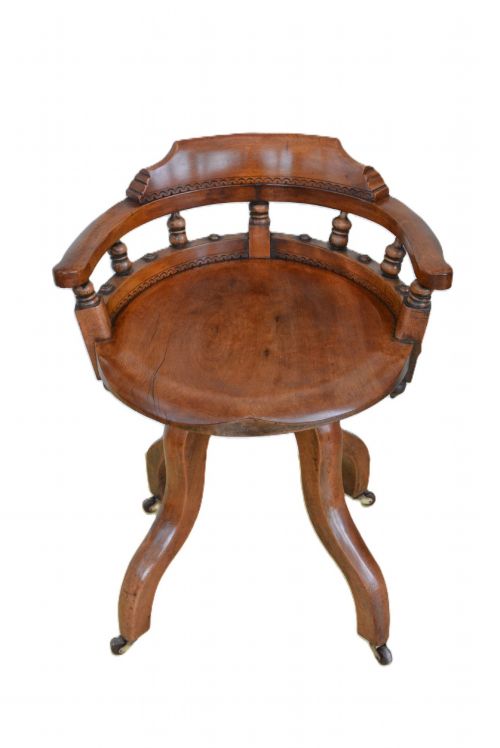
Victorian aesthetic movement seating encompasses a diverse array of chairs, armchairs, benches, settees and stools originating primarily from the nineteenth century. Buyers exploring this selection will encounter varied forms ranging from dining chairs and hall benches to low salon chairs, rocking chairs and nursing chairs.
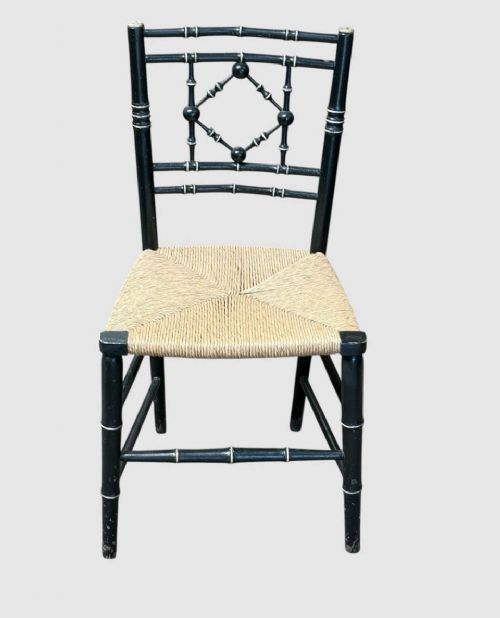
The objects frequently display stylistic influences associated with the period, including Anglo-Moorish details, faux bamboo, and forms derived from the Arts and Crafts and Gothic Revival movements. Ebonised wood finishes combined with gilt highlights dominate the visible output alongside natural timbers.
Makers and designers of note emerge across the listings, connecting specific pieces to workshops such as James Shoolbred and Liberty and Co, as well as designers like E.W. Godwin and Bruce J. Talbert.
Materials and construction
Constructed predominantly from ebonised wood, walnut, oak, mahogany and rosewood, these items frequently employ secondary materials such as brass mounts, bamboo and faux bamboo. Structural frameworks rely on traditional joinery suited to the specific furniture type.
Seating surfaces utilise materials like woven rush, fabric and velvet upholstery to complete the design. Gilding, carved wooden ornamentation and inlaid panels further define the decorative technique applied to the timber frames.
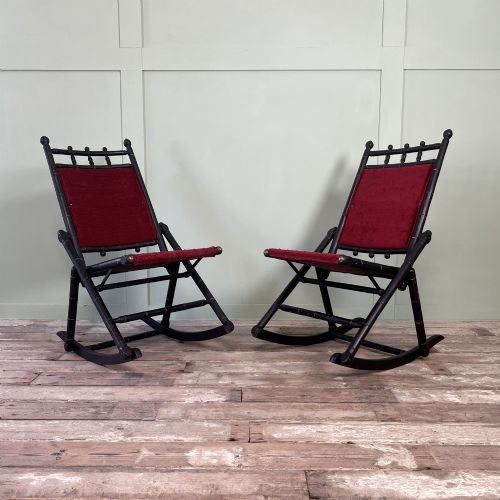
Faux bamboo folding rocking chairs bring botanical mimicry directly to the nineteenth-century parlour.
Gradations in quality
Quality diverges according to the precision of the carving, the execution of inlay work, and the integration of decorative elements such as Mashrabiya panels or brass mounts. Pieces associated with documented makers or specific designers demonstrate superior craftsmanship in their joinery and overall proportions.
The choice of primary timber and the retention of original surface treatments, whether ebonised finishes with gilding or polished hardwoods, distinguish standard production items from finer examples.
James Shoolbred and Co·Liberty and Co·E W Godwin·Bruce J Talbert·Holland and Son·Gillows·Charles Bevan·Maple and Co
The Victorian Aesthetic Movement Seating Glossary
- Ebonised wood
- Timber treated with a dark stain or finish to imitate ebony. This dark surface often serves as a backdrop for gilt details.
- Anglo-Moorish
- A design style incorporating geometric patterns and Islamic architectural motifs into British furniture. Mashrabiya panels frequently appear within this aesthetic.
- Gilt
- A thin layer of gold leaf or paint applied to surfaces. It highlights carved details on ebonised frames.
- Faux bamboo
- Wood turned and carved to resemble bamboo stalks. This technique was popular for lighter seating forms.
Victorian Aesthetic Movement Seating: Frequently Asked Questions
What defines aesthetic movement seating?
Aesthetic movement seating is characterised by a departure from heavy Victorian styles in favour of lighter, often ebonised wooden frames, simplified forms, and decorative influences drawn from Japanese and Middle Eastern art.
These pieces frequently incorporate materials like brass mounts, faux bamboo and rush seating, reflecting a philosophy centred on artistic design within domestic interiors.
How do I identify a Shoolbred piece?
Pieces associated with James Shoolbred and Co often appear as hall benches, oak seating or dining chairs marked by disciplined joinery and subtle brass mounts. Their construction demonstrates commercial manufacturing of high quality during the late nineteenth century.
Attribution usually rests on documented design characteristics, stylistic parallels with verified examples, or direct maker stamps where present on the timber frame.
Where were these chairs used?
Such seating was intended for various rooms within Victorian homes, from formal dining rooms and hallways to drawing rooms, bedrooms and studies. Different forms served specific domestic functions, including low salon chairs for relaxing and hall benches for entryways.
Their decorative yet functional nature allowed them to integrate into both formal reception spaces and more intimate domestic settings.
Are ebonised chairs fragile?
Ebonised chairs are constructed from solid hardwoods like walnut, mahogany or beech treated with a dark finish, providing standard structural durability for nineteenth-century furniture. The underlying timber strength remains comparable to other antique wooden chairs.
Care is required primarily to protect the surface finish and any applied gilding from moisture, excessive sunlight and rough handling.